 Bellingham
 Windows in Barkley Work Harder Than People Think
Barkley sits close enough to the water and open exposure that its homes take a steady beating most inland neighborhoods don't see: salt-laden air off the Sound, driving rain that comes in sideways during winter storms, and a moss season that runs longer here than almost anywhere else in the country. None of that is dramatic on any single day. It's the accumulation that gets homeowners — years of moisture finding the same weak seam, years of salt air working on hardware and finishes, years of shade and damp keeping wood and trim wet longer than they should be. Window installation in this kind of climate isn't just about picking a good window. It's about how that window gets tied into the wall, and whether the person doing the work understands what Whatcom County weather actually does to a building over time.
We install windows across Bellingham, but Barkley homes in particular tend to show a specific pattern of problems: soft framing at the sill from years of slow leaks, condensation between panes on older dual-glazed units, and moss or algae staining around trim where sun exposure is limited. A correct installation addresses all of that, not just the glass.
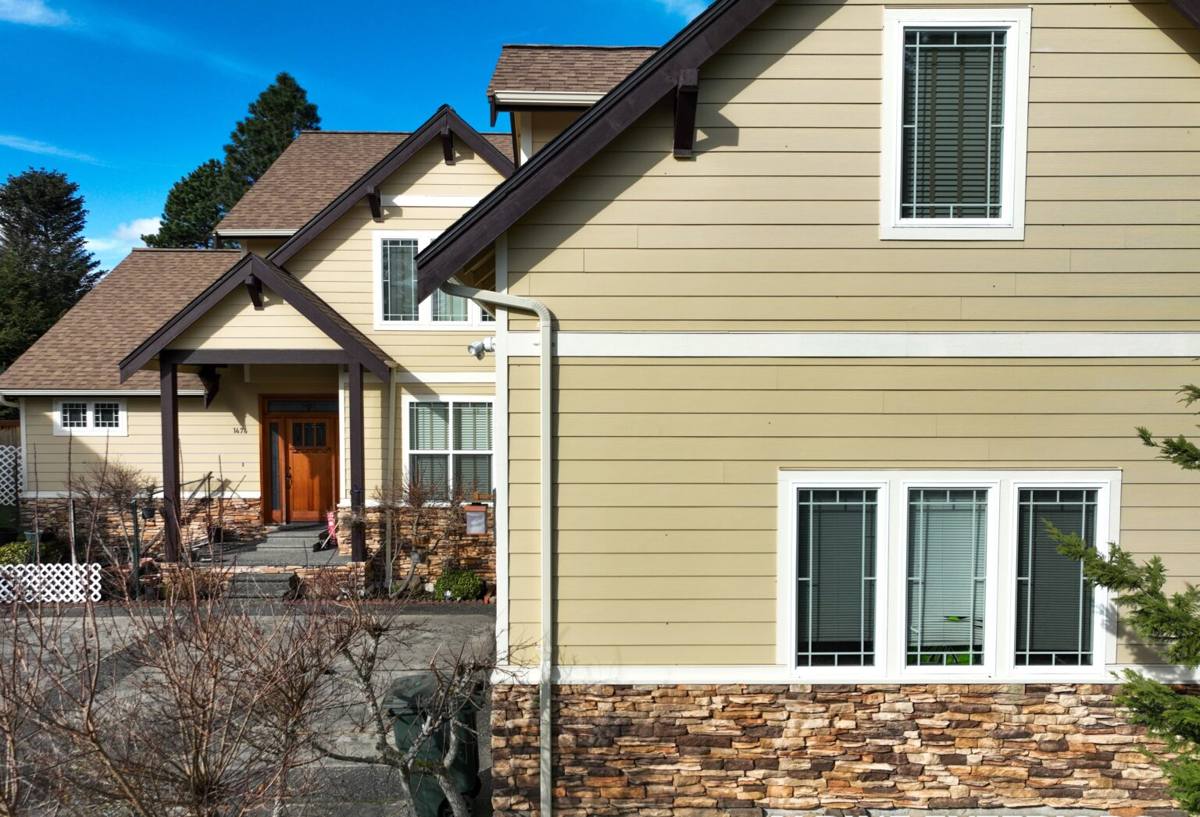
What "Correct" Window Installation Actually Means Here
Anyone can pull an old window and drop a new one into the opening. Whether that job holds up in Bellingham's climate for the next 20 years comes down to details most homeowners never see once the trim goes back on.
Flashing and Moisture Management
The single biggest factor in window failure isn't the window — it's what happens behind it. Every opening needs proper flashing tape and a water-resistant barrier integrated with the house wrap, layered so that any water that does get past the exterior sheds down and out, never behind the sheathing. In a region with as much driving rain as ours, a sill pan at the bottom of the opening is not optional. It's the difference between a window that sheds water and one that slowly rots the framing around it.
Sealant Placement
Sealant belongs on the sides and top of a window unit, never a continuous bead across the bottom. A fully sealed sill traps any water that gets past the exterior caulking, with nowhere to drain. It's a small detail that causes a lot of hidden damage over a few wet Whatcom County winters.
Shimming and Squaring
A window that isn't shimmed level and square will bind, won't seal fully when closed, and puts uneven stress on the frame — which shows up later as air leaks and premature hardware wear.
Insulation at the Gap
The gap between the window frame and the rough opening needs a low-expansion foam or backer rod and sealant, not the standard high-expansion foam that can bow a frame out of square as it cures.
Signs a Barkley Home's Windows Need Attention
- Condensation or fogging between the panes of a double-pane window — the seal has failed and the gas fill is gone
- Soft or discolored trim and sill wood, especially on north- and west-facing exposures that stay shaded and damp longer
- Visible daylight or a draft at the frame edge when the window is closed and locked
- Difficulty opening, closing, or locking — often a sign the frame has shifted out of square
- Moss or dark streaking on the exterior trim, a signal that water is sitting rather than shedding
- A noticeable rise in heating costs without any other obvious cause
How Our Process Works
We keep the process straightforward and explain what we're doing at each stage, because most homeowners are trusting us with the single largest weak point in their home's exterior envelope.
- On-site assessment: We check existing framing condition, look for hidden moisture or rot, and measure each opening individually — older Barkley homes are rarely perfectly square.
- Product selection: We walk through frame material, glass packages, and grille options based on the home's exposure, age, and your budget — not a one-size-fits-all recommendation.
- Removal: Old units come out carefully so we can inspect the opening underneath before anything new goes in.
- Repair as needed: Any soft framing or existing moisture damage gets addressed before a new window goes in — installing a new window over a compromised opening just hides the problem.
- Flashing and installation: Sill pan, flashing tape, and house wrap integration first, then the window is set, shimmed square, and fastened per manufacturer spec.
- Sealing and trim: Sealant goes on the sides and top only, insulation fills the gap, and interior and exterior trim get reinstalled or replaced.
- Final walkthrough: We test operation, locking, and seal on every window before we consider the job done.
Comparing Frame Materials for This Climate
There's no single "best" window material — the right choice depends on exposure, maintenance appetite, and budget. Here's how the common options hold up in Bellingham's damp, salt-air conditions:
| Frame Material | Moisture Resistance | Maintenance | Typical Lifespan |
|---|---|---|---|
| Vinyl | Very good — won't rot, doesn't corrode from salt air | Low — occasional cleaning | 20-30 years |
| Fiberglass | Excellent — dimensionally stable, resists warping | Low | 30-40 years |
| Wood | Fair — needs a well-maintained exterior clad or paint finish to hold up to driving rain | High — regular inspection and refinishing | Varies widely with upkeep |
| Wood-clad (wood interior, aluminum or vinyl exterior) | Good — exterior shell protects the wood from direct weather exposure | Moderate | 25-35 years |
| Aluminum | Good structurally, but a poor insulator and prone to condensation in our humidity without a thermal break | Low | 20-30 years |
For most Barkley homes, we lean toward vinyl or fiberglass for their combination of low maintenance and strong moisture performance — not because other materials are inferior products, but because they hold up with the least ongoing homeowner effort in exactly the conditions this neighborhood sees most: sustained damp, limited sun exposure on shaded sides, and salt-bearing wind.
What Drives Cost
Every home and opening is different, so exact numbers only come from an in-person look, but the main cost factors are consistent:
| Factor | Why It Matters |
|---|---|
| Frame material | Vinyl is generally the most budget-friendly; fiberglass and wood-clad cost more up front but often less over time in maintenance |
| Glass package | Double vs. triple pane, low-E coatings, and gas fill all affect both price and long-term energy performance |
| Opening condition | Hidden rot or framing repair adds labor that isn't visible until the old window comes out |
| Number and size of openings | Larger units and specialty shapes (bay, picture, custom) cost more to fabricate and install |
| Full-frame vs. insert replacement | Full-frame replacement (removing the exterior trim and flashing entirely) costs more but is the right call when the existing frame is compromised |
Full-Frame Replacement vs. Insert Replacement
An insert replacement fits a new window into the existing frame and is faster and less invasive — a reasonable option when the existing frame is still sound and square. A full-frame replacement removes the old frame down to the rough opening, which costs more but is the only correct option when there's any sign of moisture damage, rot, or an out-of-square opening. Given how much driving rain this area gets, we always check for hidden damage before recommending the less invasive option — an insert installed over a wet or compromised frame just seals the problem in rather than fixing it.
What to Look for in a Window Contractor
- Willingness to explain flashing and moisture-management details, not just talk about the window brand
- A written estimate that itemizes materials and labor, not a single lump number
- Manufacturer-backed product warranties plus a clear installation labor warranty from the contractor
- Local references and a track record of jobs in this specific climate, not just a regional franchise name
- Proper licensing and insurance, verifiable through Washington's L&I contractor lookup
- A process for handling unexpected rot or damage discovered once old windows come out
Why Local Experience in Barkley Matters
A crew that already works in and around Bellingham knows what to expect before the first window comes out. We know which orientations in this neighborhood tend to hold moisture longest, what typical framing and construction looks like in homes of this area's common build eras, and how to sequence a job around the wetter months so openings aren't left exposed longer than necessary. That's not something a contractor unfamiliar with Whatcom County weather patterns picks up on the first visit — it comes from doing this work here, repeatedly, and seeing which shortcuts come back to bite homeowners a few winters later.
If you're weighing whether it's time to replace aging windows, dealing with a persistent draft, or just want a straight answer on what a correct installation involves for your home, we're happy to take a look. Reach out for a free, no-pressure estimate using the form below — we'll walk the property, answer your questions honestly, and give you a clear picture of what the job actually requires.