 Bellingham
 Siding in Sunnyland: What Bellingham's Marine Climate Does to Your Home's Exterior
Sunnyland is one of Bellingham's older, established residential neighborhoods, with a mix of homes ranging from mid-century builds to newer infill construction. Like the rest of the city, it sits close enough to Bellingham Bay to catch salt-laced air, and close enough to the surrounding hills and tree canopy to stay shaded and damp through much of the year. That combination is exactly what wears down exterior siding faster than homeowners expect, and it's why the material choice on a Sunnyland home matters more than it would somewhere drier and more inland.
We work throughout Whatcom County, and we see the same pattern street after street: siding that looked fine from the curb but was quietly failing underneath — trapped moisture, soft trim boards, or paint that couldn't hold a finish past a couple of years. None of that is a mystery once you understand what this climate actually does to building materials over time.
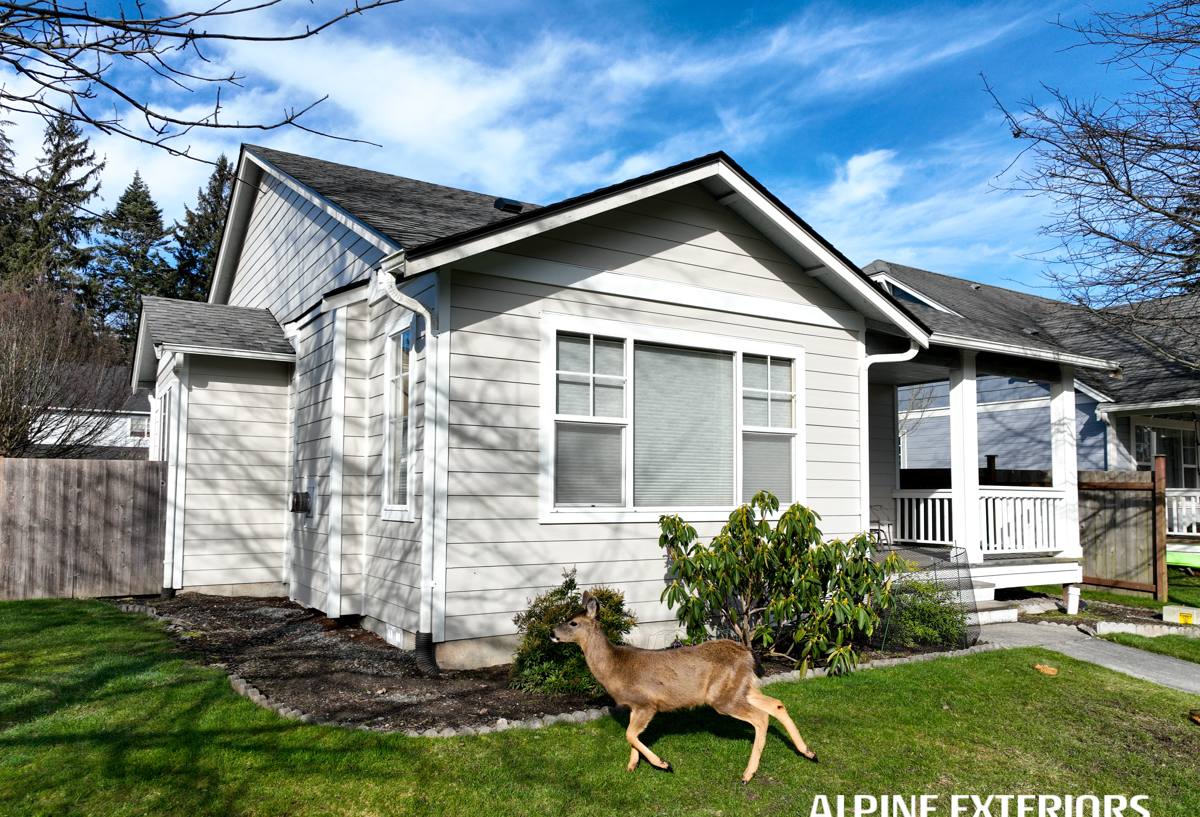
What Sunnyland Homes Are Up Against
Salt Air and Coastal Moisture
Bellingham Bay isn't far from any point in the city, and the airborne salt it carries accelerates corrosion on fasteners, staples, and any exposed metal trim. It also raises the moisture content of the air itself, which matters for siding materials that absorb water rather than shed it. Over years, that steady low-level exposure adds up on siding that wasn't engineered to handle it.
Driving Rain
Pacific storm systems don't just drop rain straight down here — wind-driven rain hits siding at an angle, working into seams, laps, and butt joints that would stay dry in a calmer climate. Any siding installation in this area has to account for that lateral water intrusion, not just vertical runoff. Flashing details, caulk joints, and drainage planes carry more weight here than they would in a drier region.
A Long Moss and Algae Season
Shade, moisture, and mild temperatures are a perfect combination for moss, algae, and mildew growth on exterior surfaces. In neighborhoods like Sunnyland with mature trees and partial shade, north-facing walls and areas under eaves can stay damp for weeks at a stretch. Porous or absorbent siding materials give organic growth something to hold onto; dense, factory-finished materials give it much less to work with.
Temperature Swings and Wood Movement
Whatcom County doesn't see extreme heat, but the freeze-thaw cycles of a Pacific Northwest winter still stress siding materials that expand and contract with moisture content rather than temperature alone. Wood-based products move more than fiber cement does, and that movement is what eventually cracks paint films and opens up seams for water to get in.
Why We Install Only James Hardie Fiber Cement
We get asked regularly why we don't offer vinyl, LP SmartSide, cedar, primed spruce, or other fiber cement brands like Allura or Cemplank. It's a fair question, and the honest answer is that after years of installing and repairing siding in this exact climate, we standardized on one product system because it holds up better here than the alternatives, not because it's the cheapest or the easiest to install.
| Material | How It Handles This Climate |
|---|---|
| Vinyl | Sheds water reasonably well but can warp in temperature swings, fades over time, and doesn't hold paint if a color change is wanted later |
| LP SmartSide (engineered wood) | Strand-based wood product; performs well when installed and maintained correctly, but any breach in the coating exposes wood fiber to moisture |
| Cedar / primed spruce | Natural wood movement, needs regular refinishing, and is a food source for moss and mildew in shaded, damp conditions |
| Other fiber cement (Allura, Cemplank) | Similar base material to Hardie, but we've standardized on one supply chain, one warranty structure, and one factory finish system we know and trust |
| James Hardie fiber cement | Non-combustible, dimensionally stable, factory-baked ColorPlus finish, engineered HZ product lines for wet climates |
James Hardie's fiber cement is made from cement, sand, and cellulose fibers, which makes it dimensionally stable — it doesn't expand and contract with moisture the way wood-based sidings do. That matters directly in a climate with this much sustained dampness. The ColorPlus factory finish is baked on under controlled conditions, which gives it far better resistance to fading and peeling than a field-applied paint job, and it holds up better against the mildew and algae growth that this region's shade and moisture practically guarantee.
Hardie also builds region-specific product lines (their HZ5 line, for example, is engineered for colder, wetter climates like the Pacific Northwest), which is a level of climate-specific engineering the other options on that list don't offer. It's also non-combustible, which is worth noting given the wildfire smoke and dry-season fire risk that's become a more regular part of late summers in Washington.
What a Siding Project in Sunnyland Actually Looks Like
Inspection and Assessment
We start by looking at what's actually happening behind the existing siding, not just the surface. In an older neighborhood like Sunnyland, that often means checking for trapped moisture, soft sheathing, or house wrap that's failed or was never properly installed in the first place. This step tells us whether it's a straightforward re-side or whether there's substrate repair to plan for first.
Water Management Details
Given how much of this region's siding damage traces back to water intrusion rather than the siding material itself, we pay close attention to flashing around windows, doors, and rooflines, along with proper drainage planes behind the new siding. This is where a lot of installation quality gets decided — the siding itself is only as good as what's happening behind it.
Installation to Manufacturer Spec
James Hardie's warranty depends on installation following their specifications — proper fastener spacing, clearances, and joint treatment. We install to that spec as a baseline, not an upsell, because it's what keeps the product performing and the warranty valid.
Coordinating Other Exterior Work
Siding, roofing, windows, and decks all interact with each other on the exterior of a home, and problems in one often show up as symptoms in another — a roof leak that's actually damaging siding below it, or window flashing that needs to be addressed before new siding goes on around it. Because we handle all four, we can look at a Sunnyland home's exterior as one system rather than tackling problems piecemeal.
Signs Your Sunnyland Home May Need Attention
- Paint that's peeling, bubbling, or needs repainting more often than every 5-7 years
- Visible moss or algae staining, especially on shaded or north-facing walls
- Soft or spongy spots when you press on siding or trim boards
- Warping, buckling, or gaps opening up at seams and corners
- Increased heating bills that may point to compromised insulation behind failing siding
- Visible rust streaking from fasteners or metal trim pieces
- Musty smells near exterior walls, which can indicate moisture getting behind the siding
Cost Factors for a Sunnyland Siding Project
| Factor | Why It Matters |
|---|---|
| Home size and wall complexity | More corners, dormers, and trim details mean more labor and material |
| Substrate condition | Rot or moisture damage found during tear-off adds repair scope |
| Siding profile and accessories | Lap width, trim style, and color selections affect material cost |
| Access and site conditions | Steep lots, mature landscaping, or tight setbacks affect labor time |
| Scope bundling | Combining siding with window, roofing, or deck work can improve overall efficiency |
We don't publish blanket pricing because every home's condition and scope is different, but we're upfront about ranges once we've actually looked at the project, and we won't pad a quote with work that isn't needed.
Why a Local Crew Matters
Whatcom County's climate isn't uniform even within a few miles — a Sunnyland lot with mature shade trees behaves differently than an open lot closer to the water, and both are different from homes further inland toward Deming or the Nooksack valley. A crew that works this region regularly recognizes those differences on sight and adjusts flashing, ventilation, and product selection accordingly, rather than applying a generic approach. Local knowledge also means knowing which older Bellingham homes are more likely to have hidden moisture issues behind existing siding, and planning the job with that in mind from the start.
Ready to Talk About Your Home's Exterior?
If you're noticing wear on your Sunnyland home's siding, or you're planning ahead for a project down the road, we're happy to take a look and give you an honest read on what's actually going on. There's no pressure and no cost to get our assessment — just use the form below to request a free estimate.