 Bellingham
 Exterior Work in Cordata, Bellingham
Cordata sits in north Bellingham, close enough to the water and to Whatcom County's marine weather patterns that homes here take a steady beating from the elements year-round. It's not dramatic weather most of the year — no hurricanes, no hailstorms — but it's relentless. Salt-tinged air off the Georgia Strait and Bellingham Bay, driving horizontal rain that comes in sideways off winter storms, and a moss season that can stretch from October through May all work on a home's exterior in ways that are easy to underestimate until you're dealing with rot, staining, or a siding system that's failed from the inside out.
We're a local crew that works this specific climate, not a national outfit that treats Bellingham like any other zip code. That matters more than most homeowners realize when it comes to siding, roofing, windows, and decks — the four systems that actually keep water out of your house.
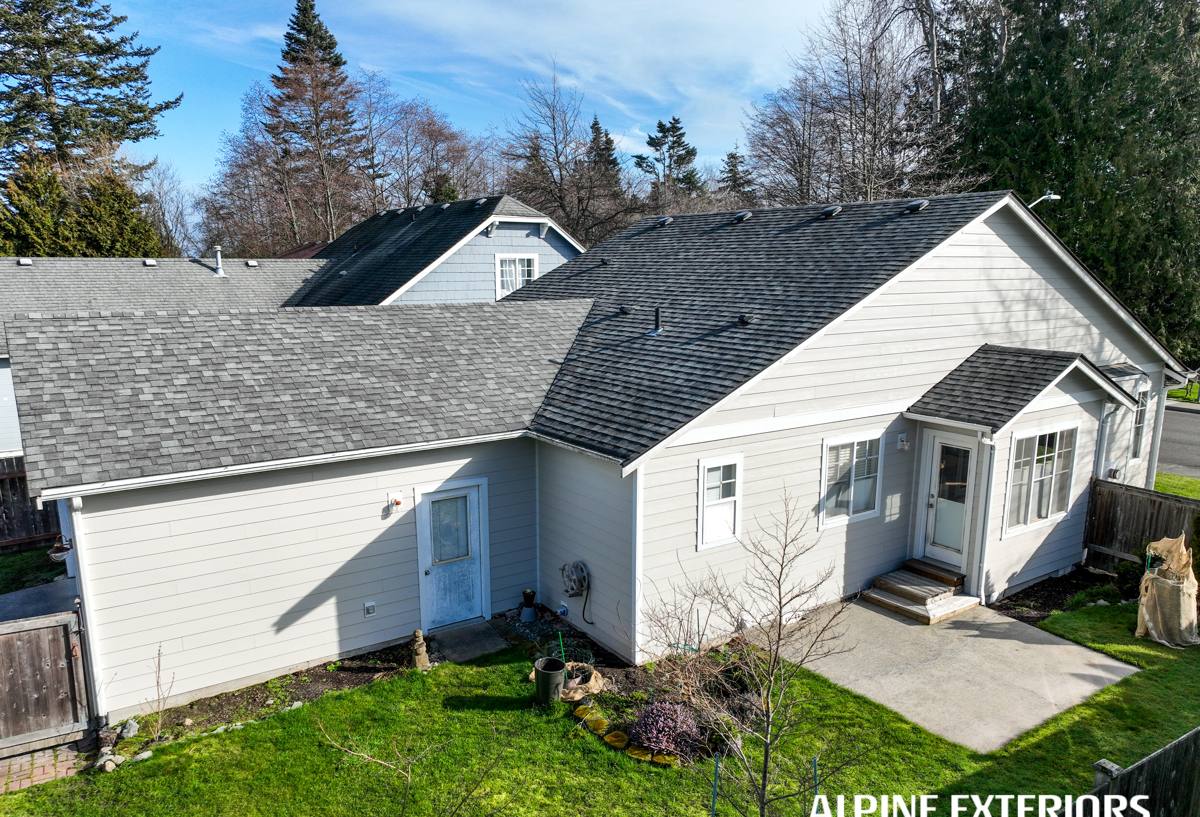
What Cordata Homes Are Up Against
Salt Air and Metal Fatigue
Proximity to salt water accelerates corrosion on fasteners, flashing, and any exposed metal trim. Over years, that corrosion can compromise the small details that keep a siding system watertight — nail heads, J-channel, kick-out flashing above windows and doors. Materials and hardware that aren't rated for coastal exposure fail faster here than they would inland.
Driving Rain
Whatcom County doesn't just get a lot of rain — it gets a lot of wind-driven rain, which behaves differently than a straight-down downpour. Wind-driven rain gets pushed up under laps, into seams, and behind poorly sealed trim. A siding system's water-management details — how each course overlaps the one below it, how corners and penetrations are flashed — matter as much as the material itself.
Moss, Algae, and Constant Moisture
Long stretches of damp, low-sun weather create ideal conditions for moss and algae growth on north-facing walls, roof lines, and anywhere siding stays shaded and wet. Some siding materials resist this better than others. Wood-based products are especially vulnerable because moss and algae hold moisture against the surface, which speeds up rot in exactly the spots you can't see from the ground.
Why the Siding Material You Choose Matters More Here Than in Drier Climates
In a dry climate, a mediocre siding install might go a decade before problems show up. In Cordata's climate, water finds every weakness fast. That's why we don't treat siding material as a style decision — it's a performance decision first, appearance second.
We install James Hardie fiber cement siding exclusively. We don't install vinyl, LP SmartSide (an engineered wood product), Cemplank, Allura, or primed spruce and cedar. That's not a marketing angle — it's a standard we set because of what we've seen these materials do, and not do, in this exact climate over time.
- Vinyl can warp, fade, and become brittle with temperature swings and UV exposure, and it relies heavily on caulking and flashing details that degrade over time in wet climates.
- Engineered wood products (like LP SmartSide) perform well when installation and maintenance are perfect, but they're wood-based, which means moisture intrusion at cut edges, fastener holes, or failed caulk joints can lead to swelling and rot — a real risk in a climate this wet.
- Primed spruce and cedar require ongoing painting and caulk maintenance to stay watertight. In a region with this much rain and moss pressure, that maintenance schedule is demanding, and a missed cycle can mean hidden rot before you see a visible problem.
- Other fiber cement brands (Cemplank, Allura) are legitimate fiber cement products, but we've standardized on one manufacturer so our crews, our installation details, and our warranty conversations stay consistent — and Hardie's HZ product lines are specifically engineered for climate zones like ours.
Why James Hardie Fiber Cement Fits This Climate
James Hardie siding is fiber cement — a mix of cement, sand, and cellulose fibers, not wood and not vinyl. That composition is what makes it relevant to Cordata's climate specifically:
- It doesn't rot. There's no organic wood fiber for moisture to break down over time.
- It's non-combustible. Not a climate factor directly, but a real advantage in Whatcom County given regional wildfire smoke seasons and general fire risk.
- It holds paint and factory finish far longer than wood. Hardie's ColorPlus finish is baked on at the factory and is engineered to resist fading and cracking, which reduces the repaint cycle that wood and primed products demand.
- HZ5 and climate-specific engineering. Hardie manufactures siding formulated for specific climate zones, including wetter, colder regions — meaning the product going on a Cordata home isn't a one-size-fits-all national spec.
- Moss and algae resistance. Fiber cement doesn't feed organic growth the way wood-based siding can, and it holds up better to the periodic washing needed to keep a north-facing wall clean.
We're upfront that Hardie siding costs more upfront than vinyl and is comparable to or slightly more than engineered wood, depending on the project. We think the difference shows up in year fifteen and year twenty-five, not year one — which is the timeframe that actually matters for a home you're not planning to re-side again soon.
How We Approach a Cordata Project
Every exterior project starts with an honest look at what's actually happening behind the current siding, not just what it looks like from the curb.
Assessment
We check for existing moisture damage, especially around windows, doors, deck ledger boards, and any north- or west-facing walls that take the brunt of driving rain. In this climate, hidden rot at penetrations is common enough that we look for it as a matter of course, not an afterthought.
Water Management First
Correct house-wrap, flashing, and drainage plane details matter as much as the siding material. A perfect Hardie install over bad flashing will still leak. We build the water-management layer correctly before the visible siding goes on.
Installation to Spec
James Hardie's warranty depends on installation following their published specifications — proper fastening, clearances, and caulking at the right joints only (not everywhere, which is a common mistake). We install to that spec so the manufacturer warranty stays intact, not just so it looks right on install day.
The Whole Envelope
Siding doesn't work in isolation. We also handle roofing, windows, and decks, because a home's exterior is one connected water-management system. A new siding job paired with old, failing window flashing or a roof edge that dumps water onto a wall will still cause problems — so when it makes sense, we look at the whole envelope, not just one component.
Cost Factors for a Cordata Siding Project
Every home is different, but these are the variables that actually move the number on a siding project in this area:
| Factor | Why It Matters Here |
|---|---|
| Home size and wall complexity | More corners, gables, and dormers mean more cutting, flashing, and labor time |
| Existing damage | Hidden rot from past water intrusion needs to be repaired before new siding goes on |
| Siding profile and trim | Lap siding, shingle-style panels, and trim boards vary in material and labor cost |
| Removal and disposal | Tear-off of old vinyl, wood, or engineered siding adds labor and disposal cost |
| Window and door count | Every penetration needs flashing and trim work, which adds time |
| Access and site conditions | Slopes, tight lot lines, and staging space affect scaffolding and labor efficiency |
We give straightforward, itemized estimates rather than vague ballpark numbers, because homeowners deserve to know what they're actually paying for.
Maintenance Expectations After Installation
One of the real advantages of switching to fiber cement in this climate is what maintenance looks like afterward compared to wood or vinyl:
- Periodic gentle washing to keep moss and algae from establishing on shaded walls
- Occasional caulk inspection at the specific joints designed to be sealed (not every seam — over-caulking Hardie siding is a common installation mistake that traps moisture)
- Visual checks after major storms for any impact damage or loose trim
- No repainting on the ColorPlus-finished surface itself for a long stretch of years, since the finish is factory-applied and warrantied separately from the substrate
Compare that to a wood-based product needing repainting or recaulking every few years to keep water out, and the maintenance gap becomes one of the clearer reasons homeowners in wetter climates lean toward fiber cement.
Choosing a Contractor for Cordata Exterior Work
Not every crew that installs siding in Whatcom County installs it the same way, and not every product sold as "premium" performs the same in this climate. Before hiring anyone for a siding, roofing, window, or deck project, it's worth asking:
- Is the crew James Hardie certified, and can they explain their flashing and water-management approach in detail — not just the siding brand?
- Do they carry current Washington contractor licensing and insurance, and will they provide proof without being asked twice?
- Will they put the manufacturer's actual warranty terms in writing, not just a verbal promise?
- Do they have experience specifically with this region's wind-driven rain and moss conditions, or are they applying a generic install process?
- Are they willing to walk you through why they recommend a specific material for your home rather than upselling the most expensive option by default?
A local crew that works Whatcom County year-round has already seen how different products and installation details hold up through multiple wet seasons — that's not something a traveling crew or a one-time regional job can offer.
Get a Straightforward Estimate
If you're weighing a siding replacement, or dealing with an aging roof, drafty windows, or a deck that's starting to show wear, we're happy to take a look and give you an honest read on what's actually going on and what it would take to fix it right. Reach out for a free, no-pressure estimate — we'll walk the property, answer your questions plainly, and give you real numbers, not a sales pitch.