 Bellingham
 The Appeal of Primed Wood Siding Is Real
We'll say this upfront: primed wood siding earns its reputation. Real wood grain, crisp factory-primed edges ready for the color of your choice, and a traditional look that a lot of Bellingham homeowners want, especially on older Fairhaven bungalows, Craftsman-style homes near Sehome, or new builds trying to match a historic streetscape. If you've fallen in love with the look of clean cedar or fir clapboard, we understand the pull. Wood is a material people have sided homes with for generations, and there's nothing dishonest about wanting that look on your own house.
The problem isn't the look. It's what happens to that look, and to the wall behind it, after five Whatcom County winters.
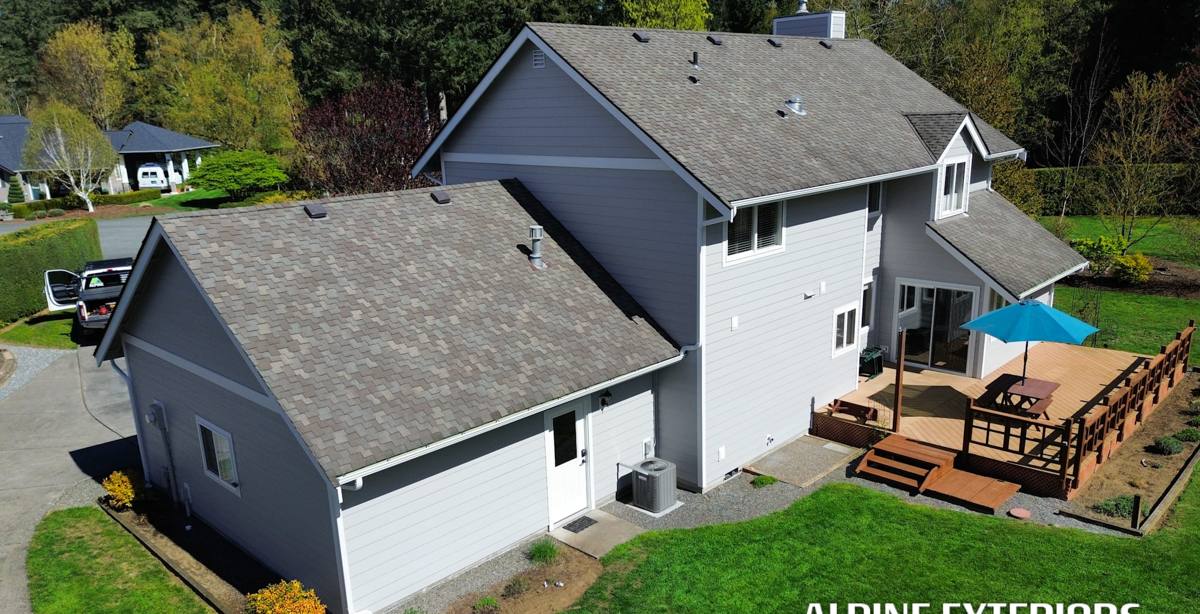
What "Primed Wood" Actually Means
Primed wood siding is solid wood — usually cedar, fir, or occasionally pine or spruce — that arrives from the mill with a factory primer coat already applied. The primer is meant to seal the wood and give paint something stable to grip, cutting down on the on-site prep work a painter would otherwise need to do. It's a step up from raw, unprimed lumber, but it is still, at its core, a solid wood board. Everything that makes wood wood — it expands, contracts, absorbs moisture, and eventually rots if water gets past the finish — is still true after priming. Primer buys you a better paint job. It doesn't change the material underneath.
Why Bellingham's Climate Is Hard on Wood Siding
Driving Rain and Long Wet Seasons
Bellingham sits in a marine climate with a wet season that runs long — steady, low-intensity rain for months at a stretch, often pushed sideways by wind off Bellingham Bay. That kind of driving rain finds every seam, every nail hole, and every hairline crack in a paint film. Wood siding depends entirely on an intact paint or finish layer to keep water out. Once water gets behind that layer, wood doesn't dry out quickly in our climate — humidity stays elevated for weeks at a time, especially on north- and west-facing walls that don't get much direct sun.
Salt Air Along the Bay
Homes closer to the water — around Boulevard Park, South Hill, or out toward Chuckanut — deal with salt-laden air on top of the rain. Salt is hygroscopic, meaning it actually pulls moisture out of the air and holds it against surfaces. On wood siding, that means the finish takes on wet-dry cycling more often than an inland home would see, which accelerates checking and cracking in the paint film years before it would otherwise fail.
Moss Season
Whatcom County's long, cool, damp stretch from fall through spring is effectively a moss-growing season for anything shaded or north-facing. Moss and algae hold moisture directly against the siding surface for extended periods. On fiber cement that's a cosmetic issue you wash off. On wood, sustained moisture contact in the same spot, season after season, is exactly the condition that leads to soft, rotting boards — usually starting at butt joints, under window sills, and near ground contact where airflow and sun exposure are already lowest.
Where Primed Wood Siding Actually Fails
In our experience walking Bellingham-area homes, primed wood siding problems don't show up randomly. They show up in predictable places, for predictable reasons:
- Butt joints and seams — every horizontal joint between boards is a place water can wick in behind the paint film, and it's the first place we look on any wood-sided home.
- Lower courses near grade — splashback from roof runoff and ground moisture keeps the bottom few feet of siding wetter, longer, than everything above it.
- Under windows and sills — poor flashing details or minor caulk failure sends water straight down the face of the board.
- North and shaded elevations — the sides of the house that get the least sun dry the slowest, and in Bellingham's climate that can mean staying damp for most of the wet season.
- Nail heads and fastener penetrations — every fastener is a small breach in the finish, and repeated wet-dry cycling works those points loose over time.
None of this means wood siding is a scam or that every wood-sided house is doomed. It means wood siding's performance is almost entirely dependent on paint maintenance, and in a climate this wet, that maintenance window is shorter and less forgiving than it is in drier parts of the country.
The Maintenance Commitment Nobody Mentions at Purchase
This is the part that gets glossed over. Primed wood siding is not a "prime it once and forget it" product — the factory primer is a base layer, not a finish coat, and it still needs a proper topcoat of exterior paint applied promptly after installation. After that, realistic maintenance on a Bellingham-area home looks like:
| Task | Typical Frequency Here | Why It Matters in This Climate |
|---|---|---|
| Full repaint | Every 5-8 years (often sooner on sun/salt-exposed walls) | Paint film breaks down faster under UV plus salt-air cycling |
| Caulk inspection/renewal | Annually | Seam gaps let driving rain behind the siding |
| Moss and algae removal | 1-2x per year | Sustained moisture contact accelerates rot at contact points |
| Spot repair of soft/rotted boards | As found, often 8-15 years in | Once rot starts, it spreads to adjacent boards if untreated |
| Full board replacement (worst areas) | Variable, often within 15-20 years | Lower courses and shaded walls fail first |
Added up over a 20-year ownership window, that's a real, recurring cost — and it's labor-intensive work, not a quick pressure wash. For homeowners who genuinely enjoy that maintenance rhythm and want the authentic wood look badly enough to keep up with it, we're not going to tell them they're wrong. We just won't be the company installing it.
Why We Made This a Standard, Not a Judgment Call Per Job
We install James Hardie fiber cement siding exclusively, on every job, in every neighborhood we work in — from downtown Bellingham to the county line. That's a deliberate standard, not a sales pitch we default to when a customer doesn't ask for something else. We stopped offering primed wood siding because we were the crew called back out to diagnose soft boards, failing caulk joints, and moss-driven rot on homes that were painted on schedule and reasonably well maintained. The material's failure points weren't a workmanship problem we could install our way around — they're inherent to solid wood in a climate this wet, this salty, and this shaded for so much of the year.
What Fiber Cement Does Differently
James Hardie fiber cement siding is cement, cellulose fiber, and sand — there's no organic wood fiber for moisture to rot or moss to feed on. The ColorPlus factory finish is baked on and warrantied against fading and peeling separately from the product warranty, so you're not repainting on a five-to-eight-year cycle. Hardie's HZ5 product line is engineered specifically for climates like ours, with freeze-thaw and moisture-cycling performance built into the formulation rather than added on. It's also non-combustible, which matters more each wildfire season even here on the wet side of the state.
None of that makes fiber cement maintenance-free — it still needs periodic washing and the occasional caulk check like any siding system. But the maintenance burden and failure points are fundamentally different: you're not fighting a race against a paint film's UV clock, and moss sitting on a shaded wall for a few months isn't feeding on the material underneath it.
A Practical Checklist If You're Comparing Wood vs. Fiber Cement
- Ask any contractor quoting wood siding what their expected repaint cycle is for your specific exposure — south wall versus north wall matters.
- Ask who is responsible for caulk maintenance after installation, and how often it should be inspected.
- Ask what the manufacturer's warranty actually covers — many wood siding warranties are limited compared to Hardie's transferable coverage.
- Walk the lower courses and shaded elevations of any existing wood-sided home nearby and look for soft spots, checking, or moss buildup.
- Factor a realistic 20-year maintenance cost into your comparison, not just the install-day price.
It Comes Down to What You're Signing Up For
Primed wood siding isn't a bad product because someone marketed it poorly — it's a product whose real-world performance depends on a maintenance schedule that a lot of homeowners underestimate, especially in a climate that gives wood so little time to dry out between storms. We'd rather tell you that plainly before you commit than have you find out from a soft board under a window five years from now. If low-maintenance, non-combustible siding engineered for a wet marine climate is what you're after, that's the entire reason we standardized on James Hardie.
If you're weighing wood against fiber cement for a home anywhere in the Bellingham area, we're happy to walk your property, point out the exposure factors that matter for your specific walls, and put together a free, no-pressure estimate — no obligation either way.