 Bellingham
 Edgemoor's Exterior Challenge: Salt Air, Rain, and Moss
Edgemoor sits close enough to Bellingham Bay that salt-laden air is a daily fact of life for the homes there, not an occasional nuisance. Add in Whatcom County's long, wet winters and the deep tree canopy that shades many Edgemoor lots, and you get a combination that's genuinely tough on exterior building materials. Salt air accelerates corrosion of fasteners and metal trim. Driving rain off the water finds every gap in flashing and caulk. And shade plus moisture is exactly the recipe moss and algae need to take hold on roofs, siding, and decking.
None of this is unique to any one house — it's the shared reality of living near the water in this part of Washington. But it does mean that exterior materials and installation details that might get away with sloppy work in a drier, sunnier climate simply won't hold up the same way here. That's the lens we bring to every Edgemoor project.
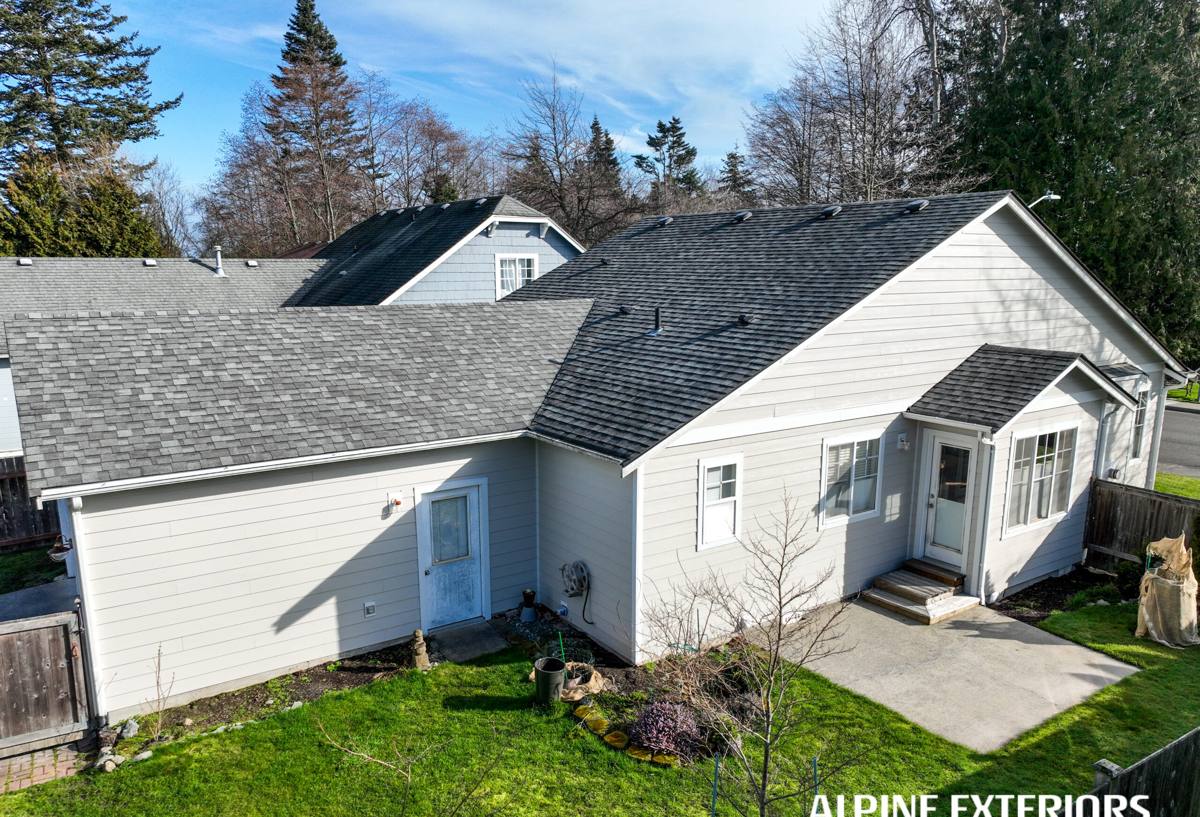
Why Waterfront-Adjacent Homes Age Differently
Salt Air and Metal Fatigue
Airborne salt speeds up oxidation on anything metal — nails, screws, flashing, gutter hardware, even some paint formulations that aren't built to resist it. Over years, that shows up as rust streaking, failing fasteners, and trim that looks tired well before it should. Materials and hardware rated for coastal exposure aren't a luxury upgrade in Edgemoor — they're the baseline.
Wind-Driven Rain
Storms coming off the Salish Sea don't just fall straight down — wind pushes rain sideways into wall assemblies, especially on west- and south-facing elevations. That means seams, laps, and penetrations (where siding meets windows, trim, or roofline) need to be detailed correctly the first time. A siding product that looks fine on a calm day can still let water in in a wind-driven downpour if the installation cut corners.
Shade, Moss, and Slow Drying
Mature trees are part of what makes Edgemoor desirable, but they also mean less direct sun reaching roofs and walls, longer drying times after rain, and a steady supply of organic debris that feeds moss and mildew. Surfaces that stay damp longer are more prone to rot (in wood-based products) and surface staining (on almost everything) if they aren't cleaned and maintained.
Siding That Actually Holds Up Here
We install James Hardie fiber cement siding exclusively — not as a sales preference, but because after years of doing exterior work across Whatcom County we've settled on it as the product that best matches this climate's demands. Fiber cement doesn't rot, it isn't a food source for moss or insects, and it holds paint and factory finish far more consistently through wet-dry cycles than wood-based or vinyl alternatives.
We do not install LP SmartSide, vinyl siding, Cemplank, Allura, primed spruce, or cedar. Each of those products has legitimate uses and loyal fans, and we're not going to tell you they're junk — they're not. But we've made a professional decision that, for the maintenance burden, moisture behavior, and long-term performance we want to stand behind in a climate like this one, James Hardie is what we put on homes. That's a standard we apply everywhere we work, not just in Edgemoor.
Why We Standardized on James Hardie
- Non-combustible core — fiber cement doesn't burn, which matters for insurance and peace of mind alike.
- ColorPlus factory finish — baked-on color that resists fading and chipping far better than field-applied paint, which matters when a house is getting hit with salt air and UV.
- Climate-engineered HZ product lines — Hardie makes region-specific formulations for moisture and freeze-thaw conditions, and the Pacific Northwest HZ5 line is built for exactly the wet, coastal-influenced climate Edgemoor sits in.
- A strong, transferable warranty — backed by a manufacturer with decades of fiber cement manufacturing behind it, not a startup formulation still proving itself.
- Proven longevity when installed to spec — the material only performs as promised if the flashing, clearances, and fastening are done correctly, which is why installation quality matters as much as the product choice.
Roofing, Windows, and Decks: The Whole Exterior Envelope
Siding is only one piece of how a home in Edgemoor handles moisture. We also handle roofing, windows, and decks, because these systems all interact — a roof that's shedding water improperly, a window that's not flashed correctly, or a deck ledger that's trapping moisture against the house will undermine even the best siding job.
Roofing
A roof in this area needs to shed wind-driven rain efficiently and resist moss buildup under a shaded canopy. We look at ventilation, flashing details around chimneys and valleys, and how the roofline transitions into the siding — that transition is one of the most common places water finds its way in.
Windows
Window flashing is one of the highest-stakes details on any exterior, and it's often invisible once the job is done — which is exactly why it needs to be done right the first time. We integrate window flashing with the siding installation rather than treating them as separate trades, so water management is continuous around every opening.
Decks
Decks in a shaded, damp environment face the same moss and slow-drying issues as siding and roofing, plus the added stress of ledger connections against the house — a common point for hidden rot if it's not built and flashed properly.
Why a Local Crew Matters in Edgemoor
Whatcom County's coastal microclimates aren't uniform. A crew that mostly works drier inland areas can miss details that matter right along the bay — the extra attention to fastener corrosion resistance, the additional flashing at wall penetrations, the moss-prevention steps that a shaded, humid lot demands. A local crew that regularly works this specific stretch of Bellingham knows what tends to fail here and builds around it, rather than applying a generic approach and hoping it holds.
Working locally also means shorter response times if something needs a look after a big storm, and a crew that's accountable to a reputation built in this community — not a name that shows up for one job and disappears.
Comparing Common Siding Options
Homeowners in Edgemoor often ask how the major siding materials stack up for a coastal, tree-shaded lot. Here's an honest comparison based on how each material generally behaves in this kind of climate:
| Material | Moisture/Salt Air Behavior | Maintenance | Typical Longevity |
|---|---|---|---|
| James Hardie fiber cement | Resists rot, moss, and salt corrosion well; factory finish holds up to UV and moisture cycling | Low — periodic washing, no repainting for many years | Decades, with strong warranty backing |
| Vinyl | Doesn't rot, but can warp or fade; seams can be a moisture path if installed poorly | Low, but limited repair options if damaged | Variable, shorter-lived finish life than fiber cement |
| Cedar | Attractive but absorbs moisture; needs consistent sealing/staining to resist rot and moss in shaded, damp settings | High — regular refinishing required | Shorter without diligent upkeep |
| Primed spruce / engineered wood | Vulnerable to swelling and edge deterioration if moisture gets past the finish | Moderate to high — finish maintenance is critical | Depends heavily on installation and upkeep |
Cost Factors for Edgemoor Exterior Projects
Every home is different, but a few factors consistently move the price of siding, roofing, window, or deck work in this area:
- Home size and the number of stories (scaffolding and access add time on taller homes)
- Existing exterior condition — hidden rot or moisture damage discovered during tear-off
- Amount of trim, window, and roofline detail work required
- Tree cover and site access, which can affect setup, staging, and cleanup
- Whether siding is being installed over existing material or requires full removal
We give straightforward, written estimates so you know what's driving the number — not vague ranges with surprises added later.
A Simple Maintenance Checklist for Edgemoor Homes
Whatever siding a home currently has, a few habits go a long way in this climate:
- Rinse siding and trim periodically to remove salt residue and organic buildup
- Keep gutters clear so water isn't overflowing onto siding or trim
- Trim back tree limbs that keep sections of the house in constant shade and damp
- Check caulking around windows and trim annually for gaps or cracking
- Address any moss or algae growth promptly rather than letting it spread
- Have flashing and roof-to-wall transitions inspected after major storms
What to Expect When You Work With Us
We start with an honest look at your home's current exterior condition, walk you through what we're seeing and why, and give you a clear estimate before any work begins. If siding replacement makes sense, we'll explain why James Hardie is the product we recommend and install — not as a sales pitch, but based on how it holds up in exactly the kind of coastal, shaded conditions Edgemoor sees. The same goes for roofing, window, and deck work: we tell you what we find and what we'd do about it in plain terms.
If you're noticing moss buildup, fading trim, soft spots, or just want a second opinion on the condition of your home's exterior, we're glad to take a look. Reach out for a free, no-pressure estimate — there's no obligation, just an honest assessment of what your Edgemoor home actually needs.