 Bellingham
 Birchwood sits close enough to Bellingham Bay and the Nooksack lowlands that its homes take on a particular set of exterior challenges: salt-tinged air moving in off the water, long stretches of driving rain through fall and winter, and a moss season that seems to start earlier and last longer every year. If you've owned a house in this part of Whatcom County for more than a winter or two, you already know what that combination does to siding, trim, roofing, and anything wood-adjacent that isn't properly protected.
We're a local exterior contractor working siding, roofing, windows, and decks across Bellingham and the surrounding communities, including Birchwood. This page walks through what the climate here actually does to a house, how we approach exterior work to account for it, and why we've standardized on one siding product instead of offering the usual lineup of options.
What Birchwood's Climate Does to a House
Whatcom County's marine climate is mild compared to inland Washington, but "mild" doesn't mean easy on materials. The real stressors are moisture and time — not any single dramatic storm, but months of damp air, intermittent rain, and short winter days that don't give surfaces much chance to fully dry out between weather events.
Salt Air and Slow Corrosion
Proximity to Bellingham Bay means a steady low-level exposure to salt-laden air, especially on west- and south-facing elevations that catch prevailing weather off the water. Salt air accelerates corrosion on fasteners, flashing, and any metal trim that isn't rated for coastal exposure. It also has a way of finding its way into hairline gaps in caulking and paint film, which is one reason why trim and siding seams need real attention during installation, not just a bead of caulk and hope.
Driving Rain and Wind-Driven Moisture
Rain here rarely falls straight down. Wind off the water pushes it sideways into wall assemblies, which means vertical siding joints, window flashing, and butt joints between siding courses are under more pressure than they would be in a drier, calmer climate. A siding system that looks fine on paper can still fail in the field if the flashing details and water-management layer behind it aren't done correctly.
Moss, Algae, and Prolonged Dampness
Shaded lots, mature trees, and long damp stretches make moss and algae growth a near-constant background condition on north-facing walls, rooflines, and anywhere airflow is restricted. Moss itself doesn't destroy siding overnight, but it holds moisture against the surface for extended periods, which is exactly the condition that causes rot in wood-based products and accelerates coating breakdown on anything with a weaker factory finish.
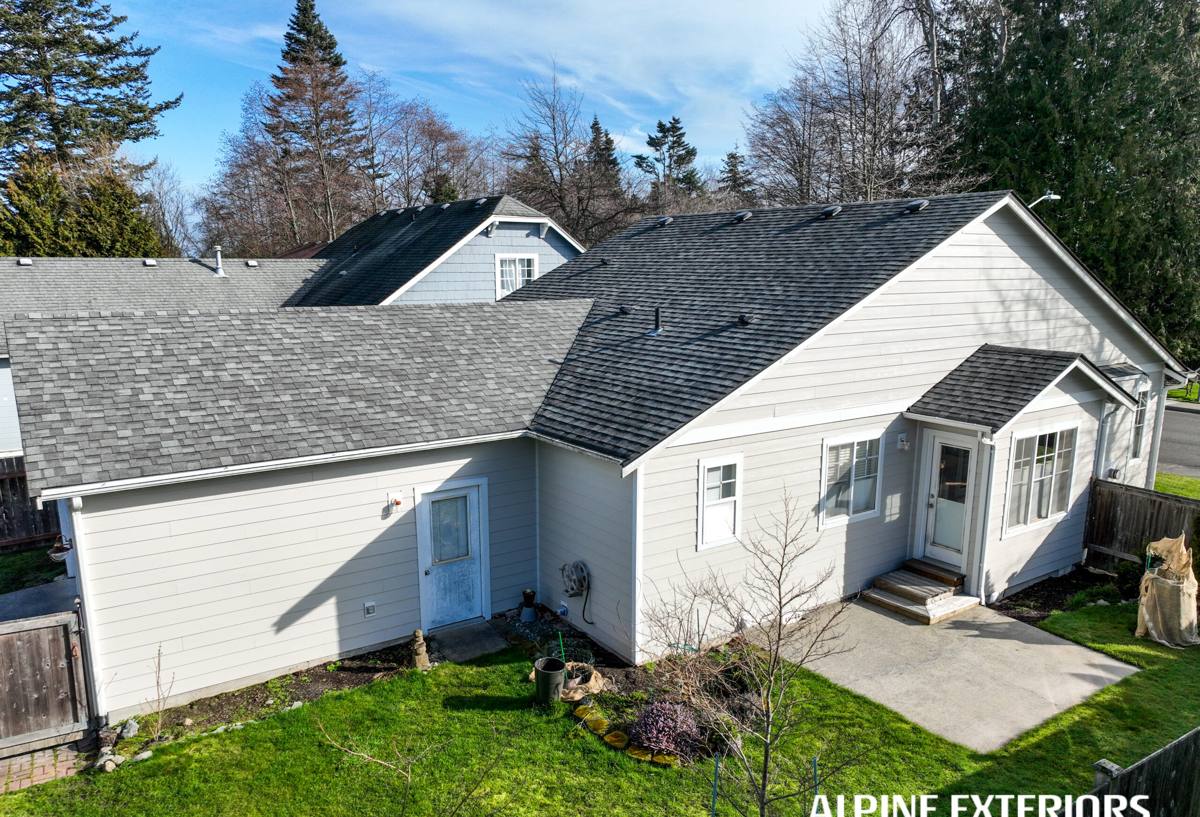
Why We Install James Hardie Fiber Cement — and Nothing Else
We get asked fairly often why we don't offer vinyl, LP SmartSide, Cemplank, Allura, or primed wood species like spruce or cedar. It's a fair question, and the honest answer is that we made a standard for our own work, not a judgment of every homeowner who has one of those products on their house already.
What We Ruled Out, and Why
- Vinyl siding is affordable and low-maintenance in dry climates, but it expands and contracts significantly with temperature swings, can warp or crack in wind-driven rain conditions, and its seams and J-channels give wind-blown moisture more opportunities to get behind the cladding over time.
- LP SmartSide is an engineered wood product with a resin-treated strand substrate. It performs reasonably well when detailed and maintained correctly, but it's still wood-based, meaning cut edges, fastener penetrations, and any coating failure expose it to moisture absorption and swelling — a real liability in a climate with this much sustained dampness.
- Cemplank and Allura are fiber cement competitors to Hardie and share the same basic composition. Our reservations there are less about the core material and more about factory finish consistency, regional support, and warranty structure compared to what Hardie offers.
- Primed spruce and cedar are traditional, attractive, and genuinely renewable, but they require the most ongoing maintenance of anything on this list — regular repainting, caulk inspection, and vigilance against rot, especially on the shaded, moss-prone elevations common around Birchwood.
Why Hardie Fits This Climate
James Hardie fiber cement is non-combustible, doesn't swell or rot the way wood-based products can, and holds paint and factory finish far longer than primed wood or many engineered alternatives. Hardie's ColorPlus factory-applied finish is baked on under controlled conditions, which gives more consistent, longer-lasting color adhesion than field-applied paint — a meaningful advantage when a house is going to spend a decade or more in damp, algae-prone air. Hardie also manufactures HZ5-rated product specifically engineered for climates with more moisture exposure, which lines up well with what Whatcom County actually throws at a house.
How We Approach Siding Work in Birchwood
Correct installation matters more than the product label on the box. Fiber cement siding installed with the wrong flashing details, insufficient clearances, or poor fastener placement can still develop moisture problems, regardless of brand. Our process is built around getting the water-management layer right first, then installing the cladding on top of it.
Our General Process
- Assessment — we walk the exterior, check existing siding, trim, and flashing condition, and look specifically at moss and moisture patterns on shaded or wind-exposed walls.
- Water-resistive barrier and flashing — house wrap, window and door flashing, and drip caps are installed or verified before any siding goes up, since this layer does most of the real work keeping water out.
- Siding installation — Hardie panels or lap siding installed to manufacturer spec, with correct fastener spacing, clearances from grade and roof lines, and properly lapped and caulked joints.
- Trim and detailing — corners, window trim, and butt joints finished so that wind-driven rain sheds away from seams instead of collecting at them.
- Final walkthrough — checking coverage, finish consistency, and making sure nothing was left exposed to the weather before we consider the job done.
Roofing, Windows, and Decks — The Rest of the Envelope
Siding doesn't work in isolation. A house is a system, and the same moisture pressures that affect siding show up in the roof, windows, and any exterior deck structure.
Roofing
Roofs in this area deal with the same moss and algae pressure as walls, plus the added stress of sustained rain volume. Proper underlayment, flashing at valleys and penetrations, and adequate ventilation all matter more here than they would in a drier climate, since a roof that traps moisture underneath its surface will show problems eventually, even if the shingles themselves look fine from the ground.
Windows
Window flashing integration with siding is one of the most common failure points we see on older homes in this area — not because the windows themselves failed, but because the flashing and siding around them weren't properly integrated when installed. When we replace windows, we treat the flashing details as part of the siding water-management plan, not a separate task.
Decks
Decks take the moss and moisture problem head-on since they're horizontal, often shaded, and exposed to standing water after rain. Proper board spacing, ledger flashing, and material choice all affect how long a deck holds up before rot or slip hazards from algae growth become a real issue.
Comparing Common Siding Options for This Climate
| Material | Moisture Resistance | Maintenance | Typical Lifespan |
|---|---|---|---|
| Vinyl | Fair — seams vulnerable to wind-driven rain | Low | 15-25 years |
| Primed Wood (cedar/spruce) | Weak without diligent upkeep | High — regular repainting | 10-20 years depending on care |
| LP SmartSide | Moderate — sensitive at cut edges and fasteners | Moderate | 20-30 years |
| James Hardie Fiber Cement | Strong — non-combustible, factory-finished | Low | 30-50+ years with correct install |
These are general ranges, not guarantees — actual performance depends heavily on installation quality, orientation, and how well a home is maintained, not just the material itself.
Why a Local Crew Matters Here
Birchwood's mix of mature trees, shaded lots, and proximity to the bay means every property has its own microclimate. A wall that's baked by afternoon sun on one lot might sit in near-constant shade two streets over, with a completely different moss and moisture profile. A crew that works across Whatcom County regularly — not one flying in from out of the area for a single job — has a better feel for which elevations need extra attention, how local permitting and inspection processes work, and what actually holds up here versus what just looks good on a spec sheet.
A Practical Maintenance Checklist for Birchwood Homes
- Inspect north- and shade-facing walls for moss buildup at least once a year, ideally before the wettest months set in.
- Keep gutters clear so roof runoff doesn't sheet down siding and concentrate moisture at wall bases.
- Trim back vegetation that keeps siding or roof sections in constant shade and slows drying.
- Check caulking at trim joints, window perimeters, and butt joints annually — failed caulk is one of the most common entry points for wind-driven rain.
- Have deck ledger and flashing connections checked periodically, since these are hidden failure points that don't show symptoms until damage is advanced.
- Address any soft spots, staining, or persistent damp patches promptly rather than waiting for a full season to pass.
What to Expect When You Call Us
We start with a straightforward walkaround of your home's exterior, not a sales pitch. We'll point out what we actually see — moisture patterns, moss buildup, flashing condition, siding wear — and explain what we'd recommend and why, including where Hardie is the right fit and where a smaller repair might be all that's needed right now. Not every house needs a full re-side, and we'd rather tell you that upfront than oversell a job.
If you're in Birchwood or elsewhere around Bellingham and want an honest look at your siding, roofing, windows, or deck, we're happy to come take a look. Reach out for a free, no-pressure estimate using the form below.