 Bellingham
 Exterior Work Built for South Hill's Hillside Exposure
South Hill sits up on the slope above downtown Bellingham, and that elevation cuts both ways. The views are part of what makes the neighborhood desirable, but the same exposure that gives South Hill homes their outlook also puts them in the direct path of weather rolling in off Bellingham Bay and the Strait of Georgia. Wind-driven rain hits these homes at angles that flatter siding on more sheltered lots never has to deal with, and the older, established tree canopy throughout the neighborhood keeps large sections of many roofs and north-facing walls shaded and damp for long stretches of the year. If you own a home in South Hill, your exterior is doing more work than it looks like from the street.
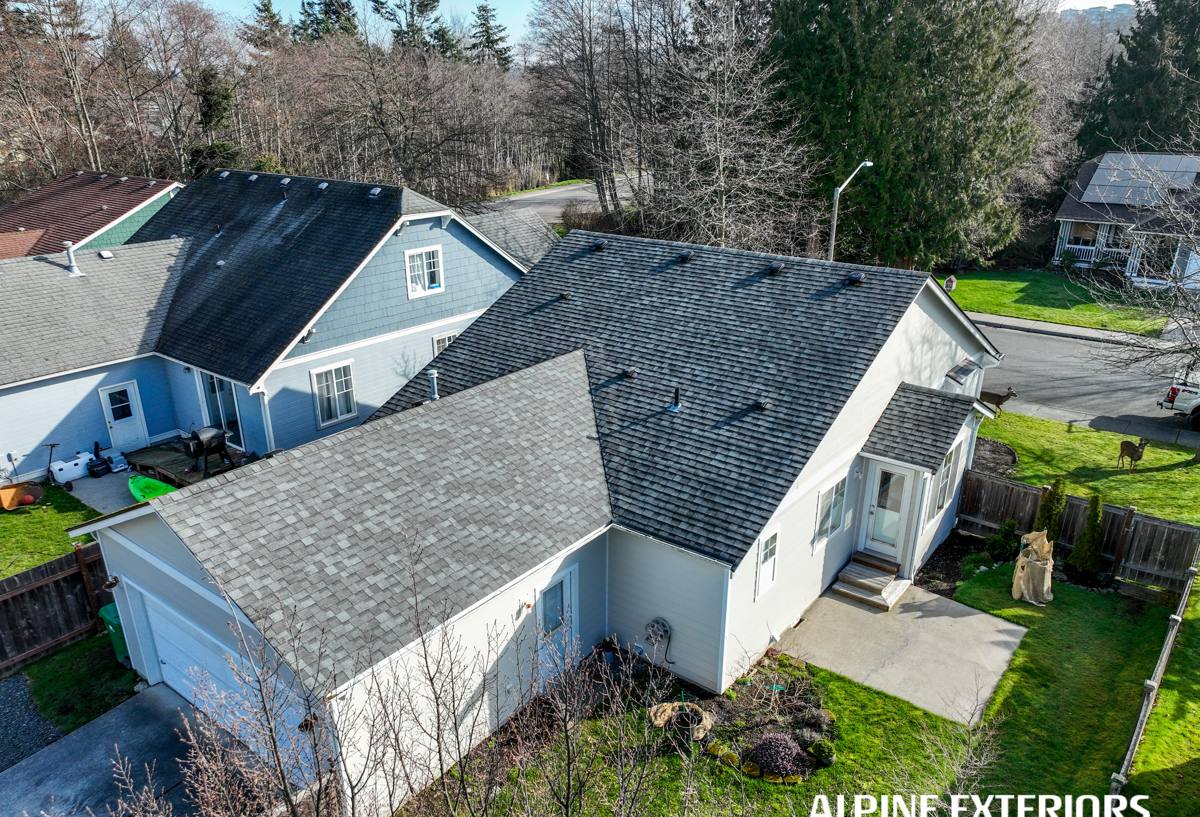
What Whatcom County Weather Does to a Home's Exterior
Bellingham's climate is mild compared to a lot of the country, and that's exactly what causes problems. We don't get brutal cold snaps or scorching summers that force homeowners to think about their exterior. What we get instead is a long, low-grade grind: months of overcast skies, steady rain, salt-laden air off the water, and a moss season that can run from early fall through late spring. None of that shows up as a dramatic failure. It shows up as slow rot behind trim, moss creeping across shaded roof slopes, paint that chalks and fails years early, and siding that stays damp long enough between rain events to start absorbing moisture instead of shedding it.
Salt Air
Proximity to saltwater accelerates corrosion on fasteners, flashing, and any metal exterior components. It also breaks down lower-quality paint films faster than inland exposure would, which is one of the reasons factory-applied, baked-on finishes hold up better here than field-applied paint.
Driving Rain
Wind off the water doesn't just drop rain straight down — it drives it sideways into wall assemblies, especially on upper stories and gable ends that face west and northwest. Siding laps, caulk joints, and window flashing take the brunt of this, and any weak point becomes a moisture entry path.
Moss and Shade
South Hill's mature trees are one of the neighborhood's best features, but they mean plenty of homes get filtered or indirect light on parts of their roof and siding for much of the year. Moss and algae thrive in that combination of shade and moisture, and once established, they hold water against the surface underneath them — whether that's roofing, trim, or siding.
Why We Install Only James Hardie Fiber Cement
We made a decision years ago to stop installing several common siding products, and we stand by it on every job we quote in Bellingham, including South Hill. We install James Hardie fiber cement exclusively — not vinyl, not LP SmartSide, not Cemplank, not Allura, not primed spruce or cedar. That's not a marketing position; it's a standard we hold because of what we've seen these products do in exactly this climate over time.
Vinyl siding is inexpensive and easy to install, but it's not rigid, it expands and contracts with temperature swings, and its seams and J-channels give wind-driven rain more opportunities to get behind the cladding. In a marine climate with regular gusty weather, that matters. Engineered wood products like LP SmartSide perform reasonably well when installed and maintained exactly to spec, but they're wood-based, which means the cut edges, seams, and any compromised caulk joint are vulnerable to moisture intrusion and swelling — a real risk in a climate where things stay damp for days at a time. Other fiber cement brands, like Cemplank and Allura, are chemically similar to Hardie in some respects, but we've standardized on Hardie specifically for its factory-applied ColorPlus finish, its HZ5 product engineering for wet climates, and the depth of its installer network and warranty support in this region. Primed spruce and cedar require the most ongoing maintenance of any option — regular repainting, careful caulk upkeep, and vigilance against rot — which is a tall order for a home that already has to fight moss and salt air.
James Hardie fiber cement is non-combustible, dimensionally stable across our wet-to-dry seasonal swing, and finished at the factory under controlled conditions rather than relying on field-applied paint to hold up against years of driving rain. It's not the cheapest option on the market, and we tell homeowners that upfront. But for a hillside home in South Hill that's going to face decades of this exact weather pattern, we think it's the product that actually earns its keep.
Siding Options We Install
| Product Line | Best Suited For | Notes |
|---|---|---|
| HardiePlank Lap Siding | Most South Hill homes, traditional and updated styles | Available in several exposures and textures; most common choice |
| HardiePanel Vertical Siding | Modern builds, accent walls, gable ends | Clean lines, often paired with lap siding for contrast |
| HardieShingle | Craftsman and cottage-style homes | Staggered or straight-edge shingle profiles |
| HardieTrim | Window and door surrounds, corners, fascia | Matches siding finish, resists the rot common to wood trim here |
Roofing, Windows, and Decks — The Rest of the Building Envelope
Siding is only one piece of what keeps a South Hill home dry. We also handle roofing, window replacement, and deck construction, and on hillside lots we usually recommend looking at all four together rather than one at a time.
Roofing
Shaded, moss-prone roof slopes need periodic moss treatment and gutter maintenance regardless of roofing material, but a roof nearing the end of its service life combined with failing siding is a common combination we see on older South Hill homes. If you're already planning siding work, it's worth having your roof looked at in the same visit.
Windows
Window flashing is one of the most common failure points behind siding damage — a poorly integrated window can leak for years before the damage becomes visible on the interior. When we replace siding, we check window flashing at the same time, and we replace windows outright when they're contributing to the problem rather than patching around them.
Decks
Elevated and view-oriented decks are common on South Hill's sloped lots. Ledger board connections, flashing where the deck meets the house, and drainage underneath elevated decks are the details that matter most in a climate this wet — a deck built without those details right will eventually leak into the wall or framing below it.
What a South Hill Siding Project Typically Involves
- On-site inspection of existing siding, trim, and any visible moisture or moss damage
- Check of window and door flashing integration, since these are common leak points
- Removal of old siding and inspection of the wall sheathing underneath for hidden rot
- Repair or replacement of any compromised sheathing before new siding goes on
- Installation of a proper weather-resistive barrier and flashing details at every penetration
- Installation of James Hardie siding, trim, and accessories to manufacturer spec
- Final walkthrough covering maintenance expectations and warranty registration
Cost Factors for South Hill Homes
Every home is different, and we don't quote sight-unseen, but a few factors consistently drive cost on hillside properties in this neighborhood:
| Factor | Why It Matters |
|---|---|
| Access and slope | Steep or narrow lots can require more setup time, staging, and care for scaffolding or lifts |
| Existing hidden damage | Rot discovered under old siding adds sheathing and framing repair before new siding can go on |
| Siding profile and trim complexity | Multiple siding textures, extensive trim work, or shingle accents take more labor than a single lap profile |
| Home height and stories | Multi-story homes on sloped lots add complexity for safe, proper installation |
| Scope bundled with roofing, windows, or decks | Combining projects can reduce redundant setup costs compared to doing each separately over time |
Why a Local Crew Matters Here
A siding contractor who only shows up in Bellingham a few times a year doesn't have a feel for how this specific stretch of coastline behaves — which slopes hold shade longest, which exposures take the worst of the wind-driven rain, or how fast moss reestablishes itself on a north-facing wall. Our crews work across Whatcom County regularly, and that means we're not guessing about how South Hill's particular mix of elevation, tree cover, and marine exposure affects an exterior over time. It also means when a warranty question or a maintenance concern comes up years after installation, there's a local crew that installed the job and can come back out.
Get a Local, No-Pressure Estimate
If you're noticing moss buildup, fading or damaged siding, a roof that's due for attention, or windows that aren't performing the way they should, we're happy to take a look and walk you through honest options for your home. Fill out the form below to schedule a free estimate — no pressure, no obligation, just a straight assessment from a crew that knows this neighborhood's weather firsthand.