 Bellingham
 Why We Standardized on One Product
Most siding contractors will install whatever a homeowner asks for — vinyl, LP SmartSide, cedar, a generic fiber cement panel — because saying yes to everything is easier than saying no to some things. We went the other way. We install James Hardie fiber cement siding, full stop. No exceptions for a lower bid, no "we can source that too" for a product a homeowner saw online.
That's not a marketing position. It's a maintenance and callback position. After enough years watching which siding holds up on homes exposed to Pacific Northwest weather and which siding turns into a repeat service call, we stopped installing the products that consistently caused problems and put our crews' training, our warranty relationships, and our reputation behind one system. This page explains what that system actually is, not just why we like it.
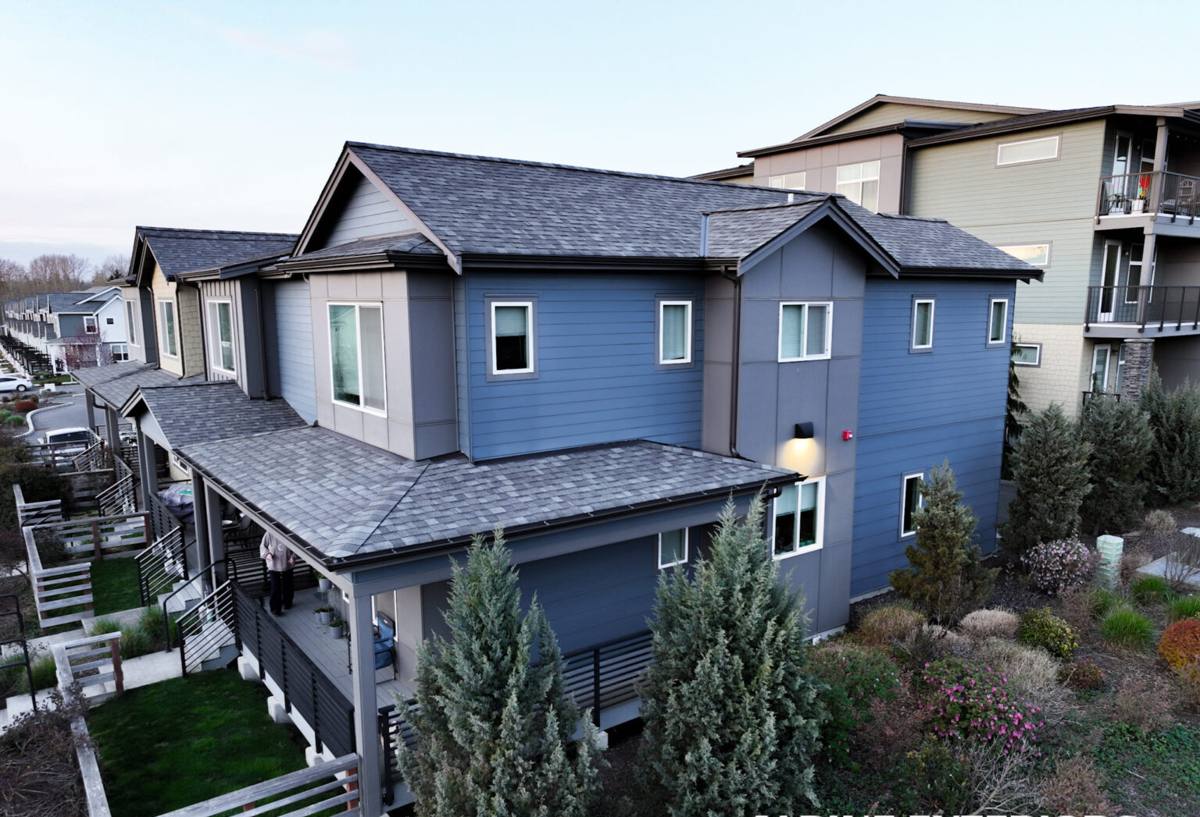
What Fiber Cement Actually Is
James Hardie siding is made from Portland cement, sand, and cellulose fiber, cured under pressure into dense, dimensionally stable boards. It's not plastic (like vinyl), and it's not wood or wood-derived (like LP SmartSide or cedar). That distinction matters more than most sales materials explain:
- It doesn't expand and contract with humidity the way wood-based products do, so it holds paint and caulk lines longer.
- It's non-combustible — a real factor for insurance conversations and for homes near wildland-urban interface areas east of town.
- It doesn't rot, and it isn't a food source for the fungi and insects that go after wood fiber.
- It's heavy and rigid, which is exactly why it has to be installed to a written spec — more on that below.
None of this makes fiber cement magic. It's a manufactured material with its own installation rules, and skipping those rules is how a good product gets a bad reputation. We'll get into that too.
Bellingham's Climate Is Harder on Siding Than It Looks
Whatcom County doesn't get hurricanes or extreme heat, and that lulls people into thinking siding here has it easy. It doesn't. What we actually deal with is worse in a slower, more corrosive way:
Salt air off Bellingham Bay and the Sound
Homes anywhere near the water — Fairhaven, Edgemoor, Sudden Valley's lakeside lots, or out toward Chuckanut — take on airborne salt that accelerates corrosion of fasteners and finishes not rated for it, and slowly degrades cheaper coatings faster than inland siding of the same age.
Driving rain, not just rain
Bellingham gets wind-driven rain off the Strait, which pushes water sideways into laps, seams, and trim joints that a calm, straight-down rain would never reach. Siding systems that rely on face-sealing (caulk and paint alone, no drainage plane behind them) fail here faster than they do in drier climates, because the water finds every gap and stays wet longer once it's in.
A long moss and algae season
Shaded north-facing walls, tree cover, and our extended damp season give moss, mildew, and algae a long runway to establish on any surface that stays wet. Some siding materials resist that biological growth at the finish level; others need regular washing and re-coating to keep it off.
Put those three together and you get a climate that rewards a dense, factory-finished, properly drained siding system — and punishes anything that depends on the homeowner staying on top of caulk and paint maintenance every few years.
HZ5: Built for Exactly This Weather
James Hardie makes climate-specific product formulations rather than one national product. The HZ5 formulation is engineered for the Pacific Northwest's freeze-thaw cycles and sustained moisture exposure — it's the version we order for jobs in Whatcom County, not a generic national spec swapped in because it's what's on the truck.
The practical difference shows up over time: a siding formulation matched to our climate resists moisture-related swelling and cracking better than an off-spec product installed in the wrong region. It's a small thing on a spec sheet and a real thing fifteen years later.
The ColorPlus Factory Finish System
This is the part of the Hardie system that does the most unglamorous work. ColorPlus is a baked-on, multi-coat finish applied at the factory under controlled conditions, not brushed or sprayed on a jobsite ladder in whatever weather that day allows.
| Factory finish (ColorPlus) | Field-applied paint |
|---|---|
| Cured under controlled heat and humidity for consistent adhesion | Applied outdoors, subject to that day's temperature and moisture |
| Uniform color and sheen across every board in the batch | Coverage and thickness vary by crew, weather, and coat count |
| Touch-up system designed to match factory color long-term | Re-painting eventually needed to keep color consistent |
| Backed by a dedicated finish warranty from the manufacturer | Warranty, if any, comes from the painter or paint brand |
Primed products — including primed spruce trim and unfinished fiber cement — still need field paint, and field paint in a marine climate is a maintenance line item, not a one-time task. ColorPlus doesn't eliminate maintenance entirely, but it moves the first repaint conversation out by many years compared to a field-painted board.
James Hardie Product Lines We Install
"James Hardie siding" isn't one product — it's a system of coordinated pieces designed to work together, which is part of why we don't mix it with other brands' trim or accessories.
| Product | What it's for |
|---|---|
| HardiePlank lap siding | The most common profile — horizontal lap siding in smooth or cedar-textured finishes |
| HardiePanel vertical siding | Board-and-batten and modern vertical looks, often paired with lap on the same home |
| HardieShingle | Staggered or straight-edge shingle profiles for a traditional Northwest look without the maintenance of real cedar shingle |
| HardieTrim boards | Fascia, corner boards, and window/door trim finished to match the field siding |
| HardieSoffit | Vented and non-vented soffit panels for eave and porch ceilings |
Using one manufacturer's system across siding, trim, and soffit keeps expansion rates, fastening requirements, and finish warranties aligned. Mixing brands at the trim line is a common source of the caulk-joint failures we get called out to fix on other contractors' work.
The Warranty, Explained
James Hardie backs its siding with a non-prorated limited warranty on the substrate and a separate finish warranty on ColorPlus coatings, and — this is the part homeowners actually care about — the warranty is transferable to a subsequent owner within the coverage terms. For a home that might sell in the next decade, that's a real closing-table detail, not fine print.
The manufacturer's warranty is conditioned on installation to Hardie's written specifications. That's the reason we don't treat installation as an afterthought — an improperly installed product can void the coverage the homeowner is paying for, regardless of how good the material itself is.
What Correct Installation Involves
Fiber cement is unforgiving of shortcuts in a way vinyl often isn't, because it's rigid and doesn't flex to hide a mistake. A correct install follows a specific sequence:
- A code-compliant weather-resistive barrier installed first, with all penetrations and transitions properly flashed and lapped shingle-style so water always drains outward and down.
- Correct fastener type, spacing, and embedment depth — fiber cement requires specific nail or screw specs, and under- or over-driven fasteners are a common cause of cracking.
- Proper clearance at the bottom edge — siding held off decks, patios, and grade so it isn't wicking moisture from standing water or splash-back.
- Butt joints and seams treated per manufacturer spec, not just caulked and hoped for.
- Rainscreen or drainage gap detailing on walls where it's warranted, so any moisture that does get behind the cladding has somewhere to go.
- Factory-cut edges sealed where field cuts expose raw substrate, protecting against moisture intrusion at trim returns and corners.
This is also why we're candid that a Hardie install is not a good DIY or bargain-crew project. The material cost of getting it right and the material cost of getting it wrong are the same — the labor and detailing are what separate a fifteen-year callback list from a siding job you forget about.
Cost Factors to Expect
We don't publish flat per-square-foot pricing because every home's trim complexity, story height, existing wall condition, and access change the labor side of the estimate. What we can tell you are the variables that move the number:
| Factor | Why it affects cost |
|---|---|
| Existing siding removal | Tear-off, disposal, and any sheathing repair found underneath |
| Home shape and trim detail | More corners, gables, and window/door trim means more cutting and flashing labor |
| Story height and access | Second-story and steep-lot homes require more scaffolding and staging time |
| Product line and profile | Lap vs. shingle vs. panel, plank width, and ColorPlus color selection |
| Underlying moisture damage | Rotted sheathing or framing found during tear-off adds repair scope |
The only way to get a real number is a site visit — anyone quoting a firm price over the phone for a full re-side hasn't seen your walls.
If You're Comparing Options
If you're currently weighing James Hardie against vinyl, LP SmartSide, or another fiber cement brand, that's a reasonable thing to research before committing — it's a long-term exterior decision. We're happy to walk through what we see on Whatcom County homes across products, explain why we standardized where we did, and give you a straight answer even if part of that answer is "here's what another product does better in some situations."
If you'd like an honest look at your home's siding and a no-pressure estimate for a James Hardie re-side, the form below gets you a site visit, not a sales script.