 Bellingham
 Why Early Detection Matters More Here Than Most Places
Whatcom County homes take a beating that a lot of the country never deals with. We're close enough to salt water that airborne salt reaches siding on many properties, we get long stretches of driving rain pushed sideways by wind off the Strait, and our mild, wet winters keep moss and algae growing on north-facing walls for months at a time. None of that means your siding is doomed — it means small problems don't stay small very long. A hairline crack or a soft spot that would sit quietly for years in a dry climate can turn into a rot pocket or a hidden moisture problem in one Bellingham winter.
The good news: almost every siding failure we get called out for gave the homeowner warning signs for months, sometimes years, before it became a real repair. This page walks through what those signs look like, which materials are most prone to which problems, and what's worth a phone call versus what you can keep an eye on yourself.
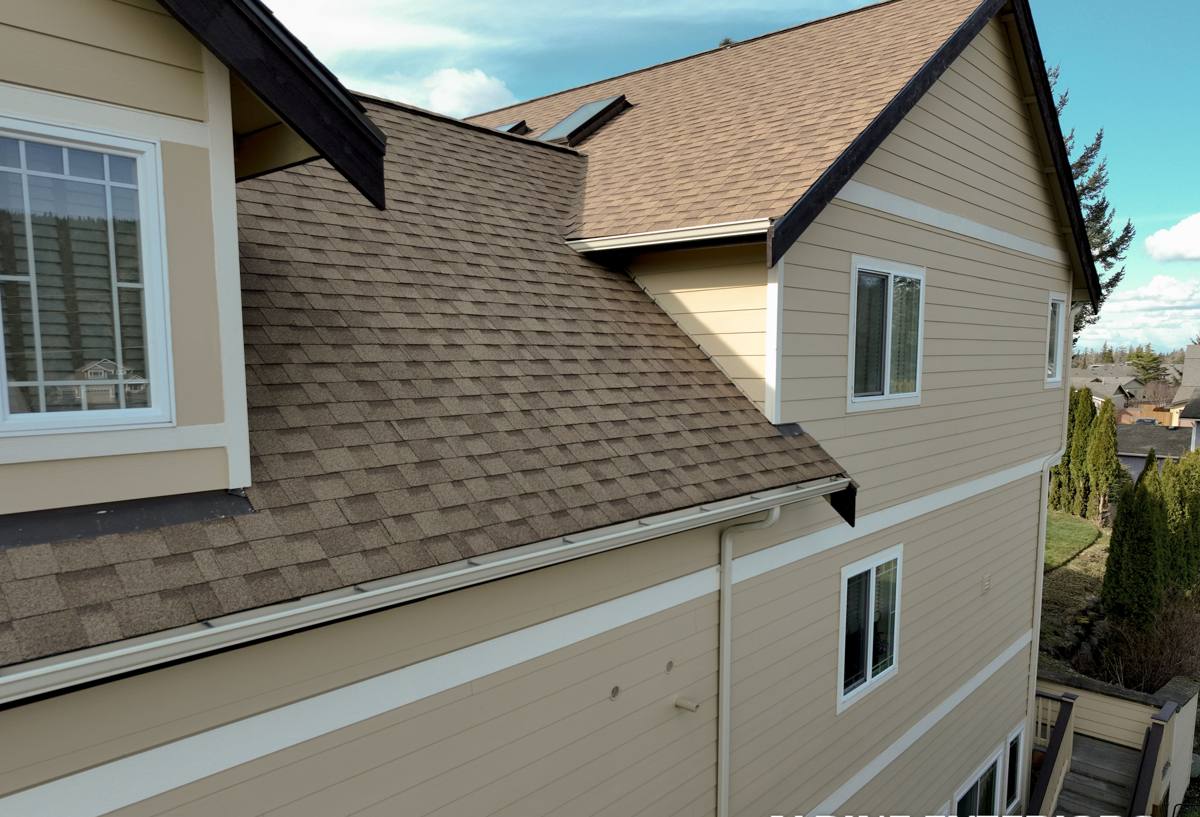
The Warning Signs Worth Learning
Bubbling, Peeling, or Bleeding Paint
Paint failure is almost never really about the paint. It's usually moisture trying to escape from behind the siding. When water gets trapped — from a failed seal, a clogged gutter dumping water against a wall, or vapor moving out from inside the house — it pushes against the paint film from underneath. You'll see bubbling, peeling in sheets rather than flakes, or a yellowish "bleed" stain around nail heads or seams. Catch this early and it's a caulking or drainage fix. Ignore it and you're often looking at what's underneath being compromised too.
Swelling, Soft Spots, or Edge Flare
Press a gloved thumb or the handle of a screwdriver gently against suspect siding, especially near the bottom of walls, around window trim, and anywhere downspouts discharge nearby. If it gives easily or feels spongy, moisture has already gotten into the material. On wood-based products this is the single biggest tell — swollen or flared panel edges (the corners curling outward, especially along butt joints) mean the substrate is absorbing water it was never engineered to handle long-term.
Visible Gaps, Warping, or Buckling
Siding that no longer sits flat against the wall — waviness you can see when you sight down a wall in low light, or panels that have pulled away enough to show a gap — is a sign the material or its fasteners have moved. Sometimes it's thermal expansion and contraction that's exceeded what the product can handle; sometimes it's fastener corrosion letting go. Either way, gaps behind siding are an open door for wind-driven rain, and Bellingham gets plenty of that.
Cracking, Especially at Corners and Seams
Fine hairline cracks at butt joints, corner boards, or anywhere two pieces meet are worth tracking. A crack that stays the same size over a season is low priority. A crack that's visibly wider than it was last fall, or that's started to show a dark stain trailing from it, means water is getting behind the plane of the siding and needs attention before winter.
Moss, Algae, and Persistent Dark Streaking
Some surface algae on a shaded, north-facing wall in a marine climate is close to unavoidable and mostly cosmetic. What's worth noting is moss that's gaining a real foothold — thick enough to hold moisture against the surface rather than just staining it. That constant dampness accelerates whatever's happening underneath, especially on wood-based products, and it's a maintenance item worth staying on top of every year or two rather than letting it build for a decade.
Fastener Staining or Corrosion
Rust-colored streaks running down from nail or screw heads are a giveaway that the fasteners aren't holding up to the coastal air here. Once a fastener starts corroding, it loses holding strength, which is how you end up with siding that's technically still attached but no longer sealed tight against the wall behind it.
How Warning Signs Differ by Material
We install James Hardie fiber cement exclusively, but most Bellingham homes we walk still have LP SmartSide, vinyl, cedar, or primed spruce on them somewhere, and each one fails in its own characteristic way. Knowing which pattern applies to your siding tells you how urgently to act.
| Material | Signature Early Warning | What It Usually Means |
|---|---|---|
| LP SmartSide / OSB-based | Edge flare, swelling at butt joints, soft spots near grade | Engineered wood substrate absorbing moisture — needs prompt attention |
| Primed spruce / cedar | Cupping, checking, paint bleed, visible grain raising | Solid wood moving with moisture cycles; repaint and caulk maintenance overdue |
| Vinyl | Warping/waviness in sun, brittleness and cracking in cold, faded color | UV and temperature cycling breaking down the material over time |
| Older or uncoated fiber cement | Hairline surface cracking, chalky faded finish, caulk joint failure | Field-applied paint or coating reaching end of service life |
| James Hardie ColorPlus | Caulk joint wear at trim, minor efflorescence after heavy rain | Normal maintenance items — the factory finish itself is warrantied and non-combustible |
Where Problems Actually Start
In our experience, siding failures rarely start in the middle of a wall. They start at the transitions — places where the siding meets something else, or where water naturally concentrates.
- Where siding meets roofline flashing or a lower roof section
- Around window and door trim, especially the bottom corners
- Anywhere a deck, porch roof, or attached structure ties into the wall
- The bottom courses of siding near grade, splash zones, and sprinkler overspray
- Outside corners and butt joints where two pieces of siding meet
- Behind gutters and downspouts that overflow or have started to sag
If you only have time to check a few spots, check these first. They're where driving rain off the Sound finds its way in, and where a five-minute look twice a year saves a much bigger job later.
A Simple Twice-a-Year Check
You don't need a ladder or any special tools for most of this. Walk the perimeter of the house in spring after the wet season and again in fall before it starts, and look for the following.
- Any new staining, streaking, or discoloration since your last walk-around
- Caulk joints that have shrunk, cracked, or pulled away from the edge
- Panels or boards that look wavy, gapped, or out of plane with the wall
- Soft or spongy spots when gently pressed near the bottom of walls
- Moss or algae thick enough to hold visible moisture against the surface
- Paint that's bubbling, peeling in sheets, or chalking heavily when you run a hand across it
- Rust streaking from fastener heads
- Any gap or daylight visible where siding meets trim, corners, or flashing
Photograph anything you're unsure about and note the date. A crack or stain that isn't changing year to year is low priority. One that's visibly worse than the last photo is worth a call.
What We See Most Often on LP SmartSide and Wood Siding Calls
The majority of the urgent siding calls we get in Whatcom County trace back to engineered wood or solid wood products that were sound when installed but weren't built for decades of marine-climate moisture cycling. LP SmartSide and similar OSB-based sidings use resin-treated wood strands, and that treatment is very good at resisting moisture until an edge, cut, or fastener hole is exposed and stays wet — which is exactly the condition driving rain and long moss seasons create. Cedar and primed spruce have their own honest trade-off: they're beautiful and repairable, but they move with humidity and need a repaint and recaulk cycle that a lot of owners fall behind on. None of this is a knock on those products used correctly with disciplined maintenance — it's why, when we're asked to replace failing siding, we standardize on James Hardie fiber cement instead. It's non-combustible, engineered specifically for climates like ours through Hardie's HZ10 product line, holds a factory-applied ColorPlus finish that isn't relying on field paint to do the sealing work, and carries a strong transferable warranty. It doesn't eliminate maintenance entirely — nothing does in this climate — but it removes the failure modes that generate most of the "warning sign" calls we get.
Cost Factors When a Warning Sign Turns Into a Repair
What a warning sign costs to fix depends less on the sign itself and more on how long it sat before someone looked at it.
| Stage Caught | Typical Scope | Relative Cost |
|---|---|---|
| Surface only (paint, caulk, minor moss) | Spot caulking, cleaning, repaint of affected area | Low — routine maintenance |
| Localized moisture intrusion | Remove and replace a section of siding and sheathing | Moderate — a focused repair |
| Long-term hidden moisture | Repair or replace framing, sheathing, insulation, and siding | High — structural repair, not just cosmetic |
That's the entire case for the twice-a-year check: it's the difference between a caulk gun and a contractor pulling siding off the wall to see how far the damage goes.
When to Call a Pro vs. Keep Watching
Some things are genuinely fine to monitor for a season. Others are worth a call now, before the next round of driving rain finds the opening. Get an inspection promptly if you see soft or spongy siding anywhere, a gap you can see daylight or feel air movement through, staining that's visibly spread since you last looked, or any sign of moisture inside the home on a wall that backs up to exterior siding — a musty smell, a soft spot in interior drywall, or a stain on an interior wall near an exterior corner. Those are signs that whatever's happening outside has already made it inside the wall assembly, and that's not a wait-and-see situation.
Get a Second Set of Eyes
If you've spotted something on this list, or you just haven't had anyone look at your siding in a while, we're happy to come take a look. We'll tell you straight whether it's a minor maintenance item, a repair worth scheduling, or something that's still fine to keep an eye on — no pressure, no scare tactics. Reach out for a free estimate using the form below.