 Bellingham
 Exterior Work Built for Life Near Lake Whatcom
Sudden Valley sits in a different microclimate than a lot of the Bellingham area. Lakeside humidity, heavy tree cover, and steep, shaded lots mean homes here hold moisture longer than a house out in the open. Add in the long, wet stretch of fall through spring that defines Whatcom County weather, and you've got siding, trim, and roofing that are under near-constant pressure for months at a time. Out toward the Sound and the more exposed parts of the county, salt-laden air off the water adds its own toll on exterior materials; even where that's a smaller factor for a specific lot, it's part of the broader climate picture homeowners in this region are building against.
We work on homes throughout Sudden Valley and the surrounding Lake Whatcom communities, and the pattern is consistent: houses tucked under fir and cedar canopy deal with moss, algae, and slow-drying surfaces in a way that open, sunny lots simply don't. That changes what "good siding" actually means out here. It's not just about color and style — it's about how a material handles months of shade, damp, and organic buildup without breaking down.
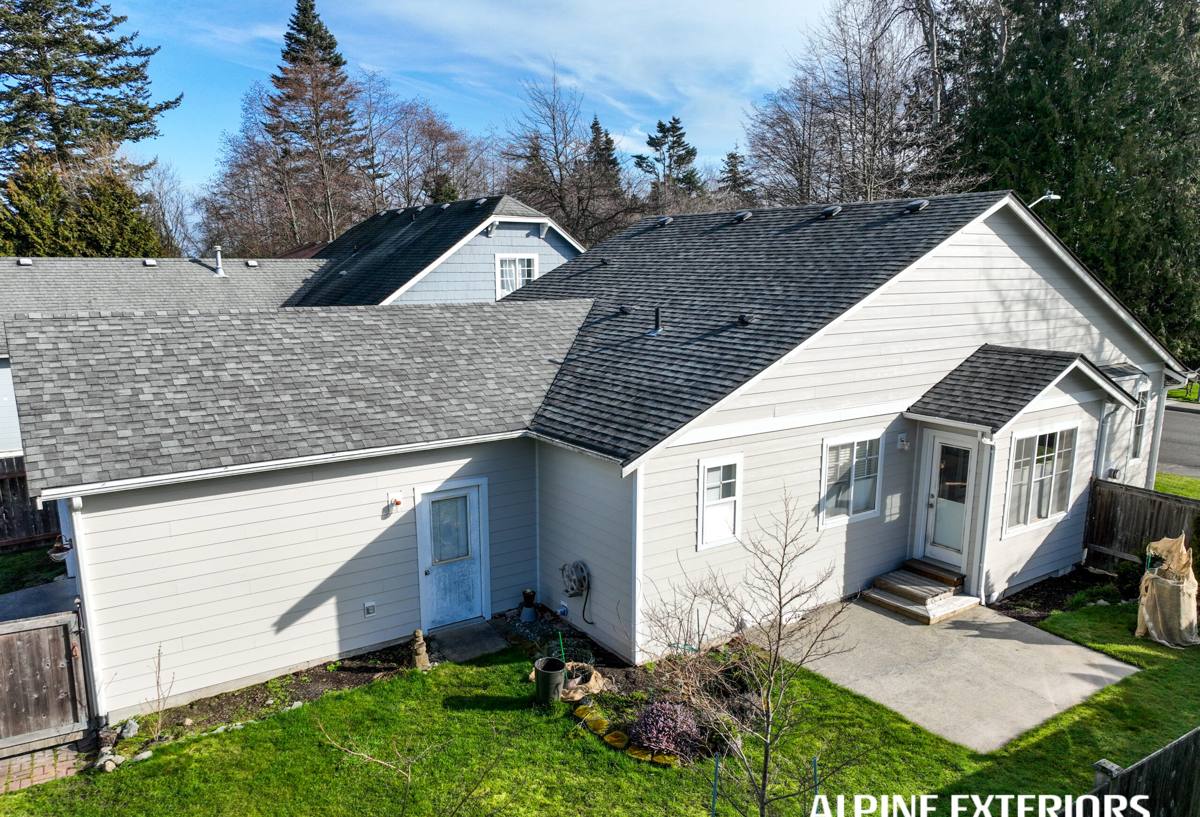
What This Climate Does to Siding Over Time
Moss and Algae in Shaded Areas
Wooded lots with limited direct sun stay damp longer after every rain. On siding materials that absorb moisture or have seams and laps that trap it, that dampness becomes a growing medium. Moss and algae aren't just cosmetic — sustained organic growth holds water against the surface, which accelerates rot in wood-based products and can degrade paint and caulking on almost anything.
Driving Rain and Wind-Loaded Walls
Storms moving through the county don't always fall straight down. Wind-driven rain gets forced sideways into wall assemblies, testing every seam, joint, and piece of flashing on a home's exterior. Siding that isn't dimensionally stable, or that wasn't installed with correct clearances and flashing details, is where that water finds its way in.
Freeze-Thaw and Moisture Cycling
Whatcom County doesn't see deep freezes often, but it does see repeated cycles of saturation, cold snaps, and thaw through the winter months. Materials that swell when wet and shrink when they dry — like solid wood or engineered wood products — go through that cycle over and over, which is where cracking, cupping, and paint failure usually start.
Why We Only Install James Hardie Fiber Cement
We made a deliberate decision as a company to install one siding system: James Hardie fiber cement. We don't install vinyl, LP SmartSide, Cemplank, Allura, primed spruce, or cedar. That's not a marketing position — it's the product we trust to hold up on homes in this specific climate, and we'd rather say no to a job than install something we don't believe will perform here long-term.
Fiber cement is made from cement, sand, and cellulose fibers, pressed and cured into a dense, stable board. It doesn't absorb water the way wood-based siding does, it doesn't warp or swell with humidity swings, and it's non-combustible — a real consideration given how many Sudden Valley properties sit close to tree lines and dry-season wildfire risk in the broader region. James Hardie's ColorPlus finish is baked on at the factory under controlled conditions, which gives it more consistent coverage and better fade resistance than field-applied paint, and it comes with a real, transferable warranty backing both the substrate and the finish.
None of that makes fiber cement maintenance-free. It still needs correct installation — proper clearances off grade and roof lines, sealed and caulked joints, factory-cut edges wherever exposed cuts would let water in. But it removes the biggest failure points we see on wood and engineered-wood products in this climate: moisture absorption at edges and seams, and finish breakdown from years of damp shade.
How Hardie Compares to What Else Is Out There
| Material | Moisture behavior in shaded, wet conditions | Maintenance | Fire resistance |
|---|---|---|---|
| James Hardie fiber cement | Doesn't swell or absorb water like wood-based products; stable in sustained damp | Occasional wash; factory finish holds color | Non-combustible |
| Vinyl | Doesn't rot, but can warp, crack in cold, and fade unevenly with sun/shade differences | Low, but repairs mean full panel replacement | Combustible, can melt/deform near heat |
| Cedar / primed wood | Absorbs moisture readily; prone to rot and moss growth in shaded, damp areas | Regular repainting, caulking, and moss treatment | Combustible |
| LP SmartSide (engineered wood) | Better than solid wood but still wood-based; edge and cut-end exposure is a moisture risk | Field-applied finish needs monitoring over time | Combustible |
This isn't a claim that the other products are junk — vinyl and engineered wood both have real uses and reasonable track records elsewhere. It's that for the specific mix of shade, moisture, and sustained damp we see on Whatcom County lots like the ones around Sudden Valley, we don't think they hold up as well as fiber cement, and we're not willing to install something on your home that we wouldn't want on our own.
The Hardie Product Lines We Use Here
James Hardie makes region-specific product lines engineered for different climate zones, and we spec the HZ5 line for Whatcom County installations — it's built for the wetter, colder Pacific Northwest climate zone rather than the version made for hot, dry regions. For most Sudden Valley homes, that means:
- HardiePlank lap siding — the most common choice, available in several exposure widths and textures (smooth, cedar-grain)
- HardiePanel — vertical panel siding, often used for accent sections or a more modern look
- HardieTrim — matching trim boards for corners, window and door surrounds, and fascia
- ColorPlus Technology finishes — factory-applied color baked on for better UV and fade resistance than site-applied paint
Color choice matters more here than people expect. On heavily shaded lots, darker colors can hold heat and moisture differently than lighter ones, and we'll talk through that with you based on how much direct sun your specific lot actually gets.
Beyond Siding: Roofing, Windows, and Decks
Siding is rarely the only thing showing wear on a Sudden Valley home. Roofs under tree cover deal with moss and debris buildup that shortens their service life if it's not managed. Windows on older homes often have failed seals or worn weatherstripping that let in the same driving rain that tests the siding. Decks — especially uncovered ones under partial tree canopy — take a beating from standing moisture and moss on the walking surface itself.
We handle all four as one contractor: siding, roofing, windows, and decks. That matters on a home like this because these systems interact. Bad roof flashing can send water behind siding. A failing window can rot the trim around it. A deck ledger attached without proper flashing can rot the wall behind it. Looking at the whole exterior at once, rather than one component in isolation, is how problems actually get caught before they become bigger repairs.
What a Local Crew Means for a Community Like This
Sudden Valley has its own character — private roads, an amenity-driven community layout, and a mix of lot types from lakeside to heavily wooded hillside. A crew that's worked here before knows what that means practically: navigating the community's access points, working respectfully in a tight-knit residential area, and understanding that a lot backing onto trees is going to need different moisture and moss considerations than one out in the open.
We're a Bellingham-based, Whatcom County crew. That's not a sales pitch — it's the reason we standardized on a product engineered for this specific climate zone rather than a national-average recommendation, and it's why we can speak specifically to what a Sudden Valley lot needs rather than a generic answer.
Planning a Siding, Roofing, Window, or Deck Project
A few things worth thinking through before you start:
- How much shade and tree cover does your home actually get, and does that line up with visible moss or algae on current siding, roofing, or decking?
- Is there existing damage — soft spots, peeling paint, visible warping — that suggests moisture has already gotten behind the current material?
- Are gutters and downspouts routing water away from the foundation and siding base, or contributing to the problem?
- Do trim, window flashing, and deck ledgers need attention alongside the siding itself?
- What's the realistic timeline — full replacement, phased sections, or repair-and-monitor for now?
Cost Factors Worth Understanding
Every home is different, but the biggest cost drivers we see on Sudden Valley projects are the amount of existing damage to repair before new siding goes on, the complexity of the home's shape (dormers, multiple gables, wraparound decks add labor), and how much trim and flashing work is bundled into the job. A straightforward re-side costs less per square foot than a project that also involves rotted sheathing repair or full window replacement — which is exactly why an honest, in-person look at your specific home matters more than a generic estimate.
If you're weighing a siding, roofing, window, or deck project on a home in Sudden Valley, we're happy to take a look and walk you through what we're seeing — no pressure, no obligation. Use the form below to request a free estimate.