 Bellingham
 Exterior Work for Barkley Homes
Barkley sits close enough to Bellingham Bay and the surrounding wetlands that its homes deal with a specific mix of weather stress: salt-tinged air moving in off the water, wind-driven rain that doesn't just fall straight down but gets pushed sideways into walls, and a moss season that, in Whatcom County, can stretch from October well into spring. None of that is unique to one street or one subdivision in the neighborhood — it's the reality for exterior surfaces across this part of Bellingham. What matters is how a home's siding, trim, and roofing are built and installed to handle it.
We work on homes throughout Barkley and the surrounding Bellingham area, and this page walks through what the local climate actually does to a house over time, how we approach siding replacement and repair here, and why we've standardized on one siding product instead of offering a menu of options.
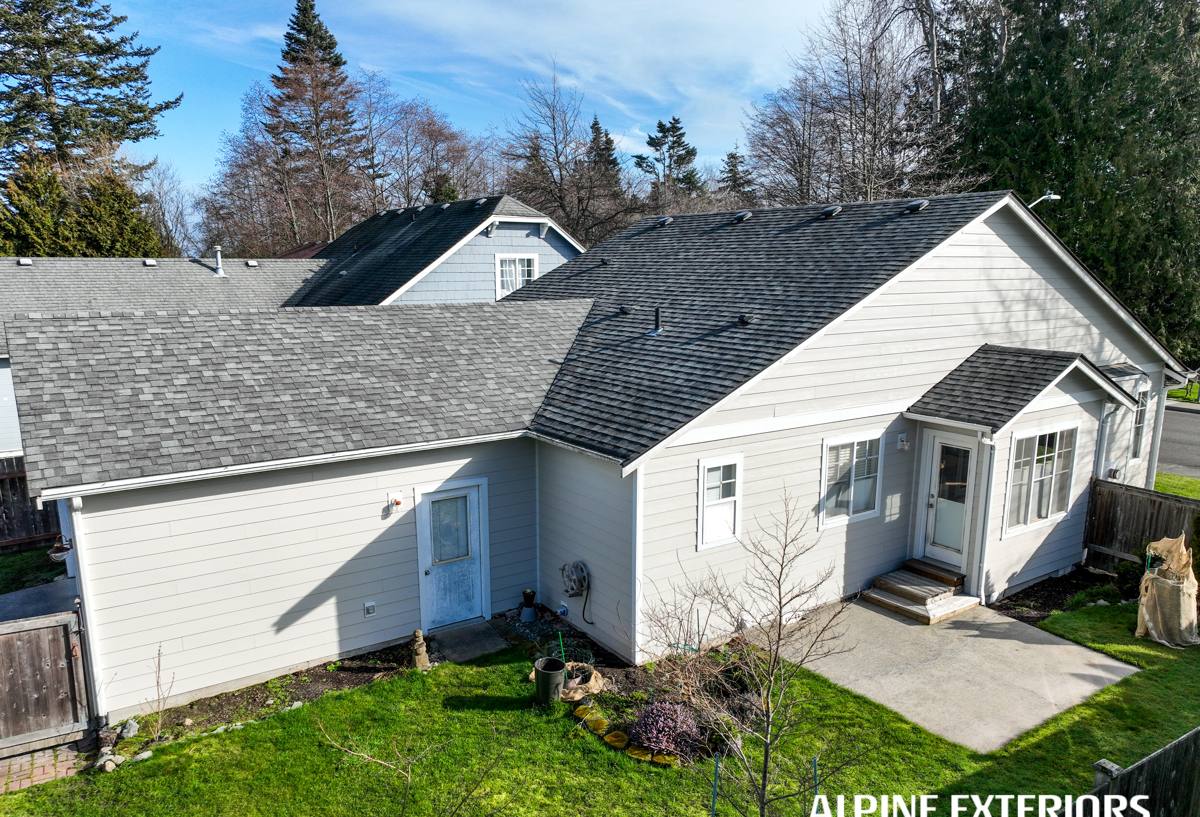
What the Bellingham Climate Does to Siding
Salt Air
Proximity to Puget Sound means airborne salt and moisture settle on exterior surfaces even well inland from the shoreline. Over years, that combination accelerates corrosion on fasteners and metal trim, and it speeds up the breakdown of finishes that weren't engineered to resist it. Paint on wood siding tends to fail faster in this environment than it would in a drier inland climate.
Driving Rain
Bellingham gets a lot of rain, but the bigger issue for siding isn't total rainfall — it's wind-driven rain that hits walls at an angle, especially during winter storm systems. That kind of exposure finds every weak seam, every gap in flashing, and every spot where caulk has started to crack. Siding that isn't installed with the right clearances, laps, and flashing details will eventually let moisture behind it, and once water gets behind siding in a marine climate, it doesn't dry out quickly.
Moss and Sustained Dampness
Whatcom County's long wet season means north-facing walls, shaded areas under trees, and anything close to grade stay damp for extended stretches. That's ideal for moss and algae growth. On porous or absorbent siding materials, sustained dampness also means more swelling, more paint failure, and a higher risk of rot at joints and butt seams over the life of the product.
Why the Siding Material Choice Matters Here
A lot of siding problems we see on Bellingham homes trace back to a material that wasn't well matched to this climate, or that was installed without enough attention to moisture management. The table below is a general comparison of how common siding materials tend to perform under the conditions Barkley homes actually face — it's not about brand loyalty, it's about what holds up.
| Material | Moisture Behavior | Moss/Algae Resistance | Salt Air Durability | Maintenance |
|---|---|---|---|---|
| Vinyl | Doesn't absorb water, but seams and panels can warp or gap over time, letting moisture behind the surface | Moderate — algae can grow on the surface, especially in shaded spots | Can become brittle and discolor faster with UV and salt exposure | Low, but repairs and color-matching are limited |
| Primed spruce / cedar | Absorbs moisture readily; prone to swelling, cupping, and rot at joints if not perfectly maintained | Low — organic wood surface is a natural host for moss and mildew | Finish breaks down faster in salt air | High — repainting and caulk maintenance on a recurring cycle |
| LP SmartSide / engineered wood | Better than raw wood but still an engineered wood product — edges and cut ends are vulnerable if not sealed and maintained | Moderate — factory finish helps, but still an organic substrate | Reasonable if properly maintained | Moderate — seams and cut edges need ongoing attention |
| James Hardie fiber cement | Non-combustible, dimensionally stable fiber cement resists swelling and warping; engineered for wet climates | High — factory ColorPlus finish and dense material resist moss and algae growth better than wood-based products | Formulated to hold up to coastal and marine-influenced climates | Low — no repainting on the factory finish for years; occasional wash-down |
This is a general comparison, not a claim that every product in a given category will fail — installation quality matters enormously across all of them. But it explains why, after years of exterior work in this climate, we made a decision about what we'd put our name behind.
Why We Only Install James Hardie
We install James Hardie fiber cement siding exclusively. We don't offer vinyl, LP SmartSide, Cemplank, Allura, primed spruce, or cedar as options — not because those products don't have a place in the market, but because we'd rather stand fully behind one system we trust for this specific climate than offer a menu and let quality vary by material.
A few reasons Hardie is that system for us:
- Non-combustible material — fiber cement doesn't feed a fire the way wood-based or many engineered wood products can.
- Climate-engineered product lines — Hardie's HZ5 formulation is built specifically for colder, wetter climate zones like ours, which matters when driving rain and prolonged dampness are the norm.
- ColorPlus factory finish — baked-on color that resists fading and chipping far better than field-applied paint, which cuts down on the repainting cycle homeowners in this area are used to with wood siding.
- Dimensional stability — fiber cement doesn't swell, cup, or warp with moisture cycling the way wood and engineered wood products can over time.
- Strong transferable warranty — backed by the manufacturer, and transferable if you sell the home, which matters for resale value.
None of that means other products are without merit — vinyl is inexpensive, cedar has a look some homeowners specifically want, engineered wood has improved a lot. But for the way Bellingham weather treats a house over 15, 20, 30 years, fiber cement is what we've seen hold up best, and it's what we're willing to warranty our workmanship on.
How We Approach a Siding Job in Barkley
The install itself is where a lot of the long-term performance gets decided, regardless of material. Our process on Barkley homes generally includes:
- On-site inspection — checking existing siding, sheathing, and trim for hidden moisture damage before any material goes up.
- Weather-resistive barrier — a proper drainage plane behind the siding so any moisture that does get past the surface has somewhere to go.
- Correct flashing at every penetration — windows, doors, vents, and roof-wall intersections are where wind-driven rain most often finds a way in.
- Manufacturer-spec fastening and clearances — Hardie's performance depends on installation to spec, including proper gaps at grade and at trim.
- Final detailing — caulking, touch-up, and a walk-through so you know what was done and why.
We install to manufacturer specification because that's what keeps the warranty valid and what actually determines how the siding performs in weather like ours — a well-made product installed poorly will still fail early.
More Than Siding: The Full Exterior Envelope
Siding doesn't work in isolation. We also handle roofing, windows, and decks, because those systems all interact with each other in a wet climate. A roof that's shedding water improperly, a window that's not flashed correctly, or a deck ledger board that's trapping moisture against the house can all undermine even the best siding job. When we're on-site for a siding estimate, we'll flag anything we see on the roofline, window flashing, or deck structure that's contributing to moisture problems — that's part of looking at the house as a whole system rather than one component at a time.
Signs a Barkley Home May Need Siding Attention
Some of the more common warning signs we see on homes in this part of Bellingham:
- Persistent moss or algae streaking, especially on north-facing or shaded walls
- Paint that's peeling, bubbling, or chalking faster than expected
- Soft or spongy spots when you press on wood siding, particularly near the bottom courses or around windows
- Visible gaps, warping, or cupping in panels or boards
- Rising utility bills that may point to compromised insulation behind failing siding
- Cracked or missing caulk at seams, corners, and trim
Any one of these on its own might not mean much. Several together, especially on a home that's had wood or engineered wood siding for a decade or more in this climate, are usually worth a closer look.
Why a Local Crew Matters
Whatcom County's weather isn't generic Pacific Northwest weather — the combination of marine air off the Sound, the specific storm patterns that move through Bellingham, and the amount of shade and dampness in older, tree-lined neighborhoods like parts of Barkley all shape how a house should be built and maintained. A crew that works in this area regularly knows which details actually matter here — where moss tends to build up, which wall orientations take the worst of the driving rain, what the local permitting and inspection process looks like — instead of applying a one-size-fits-all approach borrowed from a drier climate.
Get a Free, No-Pressure Estimate
If you're noticing moss buildup, paint failure, or general wear on your Barkley home's exterior, we're happy to take a look and give you an honest read on what's going on and what your options are — no pressure, no obligation. Use the form below to request a free estimate.