 Bellingham
 What LP SmartSide Actually Is
LP SmartSide is an engineered wood siding product. At its core, it's strand-based wood — similar in concept to OSB sheathing — that's treated with zinc borate for insect and fungal resistance, then coated with a resin-saturated overlay and factory primer. It comes in lap boards, panels, and trim, and it's been on the market for decades under different generations of the SmartSide brand. It is not vinyl, and it is not fiber cement. It's wood, engineered to behave better than solid wood siding used to.
We get asked about it often enough that it's worth a straight answer: we don't install it. Not because it's a scam or a bad product on paper, but because of how it performs over time in a place like Bellingham, and because of the installation discipline it demands to hold up here. Below is our honest reasoning, not a takedown.
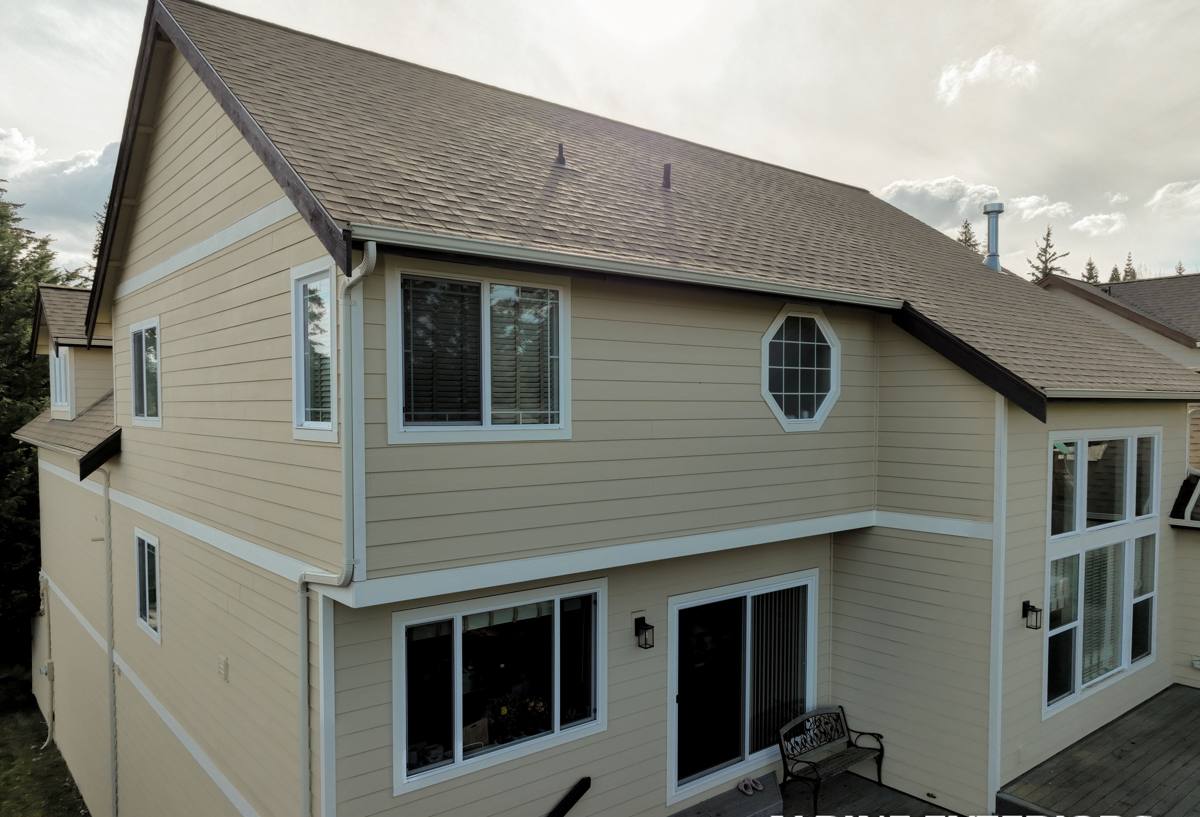
What LP SmartSide Gets Right
Credit where it's due. LP SmartSide solved real problems that plagued older solid-wood and hardboard sidings:
- It's noticeably lighter than fiber cement, which makes it faster and less physically demanding to install.
- It cuts and fastens more like traditional lumber, so crews familiar with wood framing pick it up quickly.
- The zinc borate treatment genuinely improves resistance to rot and insects compared to untreated wood.
- Upfront material cost is usually lower than fiber cement siding of comparable style.
- LP backs it with a warranty that reads well on the sales sheet.
For a drier climate, or a project where budget is the deciding factor and the installer is meticulous about sealing every cut edge, SmartSide can be a reasonable choice. We're not going to pretend otherwise.
The Trade-Off We Can't Get Past: It's Still Wood
Engineered or not, LP SmartSide's core material is wood strand and resin. Wood swells when it absorbs moisture and shrinks when it dries. The entire performance of the product depends on an intact factory coating and airtight field sealing at every cut, joint, and fastener. The moment water finds a way into an exposed edge — through a missed caulk line, a nail that split the substrate, or years of UV breaking down a sealant bead — the wood underneath starts absorbing moisture the way any wood does.
That's a manageable risk in a place with a short, dry, predictable weather window. It's a much harder bet in Whatcom County. Bellingham sits right on the water, which means salt-laden air working on every exposed surface, plus a wet season that isn't really a season here — it's most of the year. Add in the moss and algae growth that thrives in our shaded, damp, low-sun-angle winters, and you have a climate that's actively working against any wood-based product's weak point: edge exposure and moisture cycling.
We've seen SmartSide installations elsewhere in the Pacific Northwest fail not because the product was defective, but because caulk joints that need annual inspection didn't get it, or because a single missed edge seal on a cut board let moisture in behind the coating. Once that starts, it's a slow, hidden failure — you often don't see it until paint is bubbling or a board has gone soft.
Where Moisture Gets In
- Field-cut ends and rip cuts that expose raw substrate if not sealed immediately with the manufacturer-specified sealant
- Butt joints and seams where caulk has shrunk, cracked, or been skipped
- Fastener penetrations where the coating has been compromised
- Bottom edges near grade, decks, or roof-to-wall transitions where splash-back and standing moisture are constant
- Areas with reduced sun exposure, where moss and algae hold moisture against the surface for weeks at a time
Installation Sensitivity
SmartSide's manufacturer instructions are detailed and specific for good reason — this product does not tolerate installation shortcuts. Every cut edge has to be primed or sealed before the board goes up. Gaps at joints and penetrations have to be caulked to spec, not just for looks but for function. Clearance from grade, decks, and roofing has to be maintained precisely. Skip any one of these steps and you've created a moisture entry point that may not show a problem for a year or two — long after the crew that installed it has moved on to other jobs.
That's the core of our concern: the product's real-world durability rests almost entirely on installer discipline, on every single board, for the life of the siding. We'd rather not put a homeowner's investment on a system where one missed caulk bead in year one becomes a rot repair in year six.
Maintenance Burden Over Time
LP SmartSide is a paint-grade product, and it needs repainting on a cycle — typically similar to painted wood trim, so figure roughly every 7 to 10 years depending on sun exposure and coastal conditions, sooner in harsher spots. Caulk joints need periodic inspection and renewal, not a one-time install-and-forget. In a marine climate with salt air accelerating coating breakdown and a long damp season keeping surfaces wet longer between dry-outs, that maintenance schedule tends to compress rather than stretch.
For homeowners who enjoy staying on top of exterior maintenance, that's a manageable rhythm. For most people who want to reside a house and not think about it again for a couple of decades, it's a mismatch with expectations.
Warranty Structure — Read the Fine Print
LP's warranty covers manufacturing defects, but like most siding warranties, it includes conditions around proper installation according to their specifications, proper maintenance, and finish upkeep. If a failure traces back to an unsealed cut edge, a skipped caulk joint, or a maintenance gap, that's typically treated as an installation or maintenance issue, not a covered defect — regardless of how the wood underneath actually looks. That's not unique to LP; most manufacturers structure warranties this way. But it does mean the paper warranty offers less real protection than it appears to, especially on a wood-based product where installation and maintenance are doing most of the work to prevent failure in the first place.
How It Stacks Up Against James Hardie Fiber Cement
| Factor | LP SmartSide | James Hardie Fiber Cement |
|---|---|---|
| Core material | Engineered wood strand + resin overlay | Cement, sand, and cellulose fiber — non-combustible |
| Moisture behavior | Wood substrate; performance depends on intact seal at every edge | Doesn't rot, warp, or absorb moisture like wood |
| Coastal/marine durability | Vulnerable at exposed cuts and aging caulk joints | Engineered to hold up in wet, coastal conditions when installed to spec |
| Finish | Paint-grade; needs repainting on a recurring cycle | ColorPlus factory-baked finish available, extends repaint intervals |
| Fire performance | Combustible wood-based material | Non-combustible |
| Upfront cost | Generally lower | Generally higher |
| Long-term maintenance | Caulk and paint upkeep is load-bearing for durability | Lower ongoing maintenance when installed correctly |
Why We Standardized on James Hardie
We made a decision to install only James Hardie fiber cement siding, and it comes down to fit for this region. Hardie's HZ5 product line is engineered specifically for climates like ours — freeze-thaw cycling, sustained moisture, and salt air off the water. Fiber cement doesn't have a wood substrate that can swell, split, or rot if a caulk joint eventually fails. The ColorPlus factory finish holds up to UV and salt exposure far longer than field-applied paint, which matters on a house exposed to Bellingham's version of a wet season for most of the calendar year. It's non-combustible, which matters more every year as wildfire smoke seasons stretch longer even here on the coast. And Hardie backs it with a strong, transferable warranty structure that isn't as dependent on a perfect caulk bead surviving a decade of salt air and moss growth.
We're not saying every wood-based product is doomed to fail — plenty of SmartSide installations perform fine for years under the right conditions and diligent upkeep. We're saying that after weighing the maintenance burden, the installation sensitivity, and the way our specific climate stacks the deck against wood-based substrates, we decided we'd rather install one product we can stand behind completely than offer several and hope the installation and upkeep go perfectly on the ones with more exposure to failure.
A Practical Checklist If You're Comparing Siding Options
- Ask what the substrate is made of, and how it behaves when it gets wet and stays wet for days
- Ask what happens at every cut edge and joint during installation, and who is responsible if that detail is missed
- Ask about the realistic repainting or refinishing cycle for your specific exposure — south-facing walls, shaded walls, and areas near the water all age differently
- Read the warranty's exclusions, not just the headline years — installation and maintenance clauses matter more than the number on the brochure
- Ask whether the product is rated non-combustible, especially if you're in a wildfire-smoke-prone area
- Get a straight answer about why a contractor installs what they install — not just a sales pitch
Our Honest Bottom Line
LP SmartSide isn't a bad product — it's a wood-based product with real strengths, sold with a warranty that looks better on paper than it performs once you factor in installation-dependent exclusions. In Whatcom County's combination of salt air, driving rain, and a moss season that doesn't really end, we've seen enough real-world outcomes to know we don't want to gamble a homeowner's siding on flawless caulking holding for 20 years. That's why every house we side gets James Hardie fiber cement, installed to manufacturer spec, every time.
If you're weighing your options and want a straight answer about what will actually hold up on your specific house, in this specific climate, we're happy to walk the exterior with you and give you our honest take. Reach out for a free, no-pressure estimate — no upsell, just what we'd actually put on our own house.