 Bellingham
 Why Decks in Columbia Wear Out Faster Than Homeowners Expect
Columbia is one of Bellingham's older residential pockets, close enough to Bellingham Bay that salt-laden air is a constant, not an occasional thing. Combine that with Whatcom County's long wet season and the shade thrown by mature trees on many of these lots, and you get a set of conditions that are genuinely tough on outdoor structures. A deck that would last two or three decades in a dry inland climate can start showing structural problems in half that time here if it wasn't built — or isn't being replaced — with this specific environment in mind.
Salt Air and Metal Fasteners
Proximity to the bay means airborne salt settles on everything, including the nails, screws, joist hangers, and structural connectors holding a deck together. Standard galvanized fasteners can corrode faster near salt water than the same fasteners would inland. Once a fastener starts to rust, it loses grip strength long before the rust is visible from the surface, which is part of why decks in this area sometimes look fine from a distance while the framing underneath is quietly failing.
Moss, Shade, and Trapped Moisture
Whatcom County's moss season runs long — often eight or nine months of the year in shaded spots. On a deck, moss isn't just a cosmetic nuisance. It holds moisture directly against the wood surface, keeps boards from drying out between rain events, and creates a slick, slippery walking surface. Decks tucked under tree cover or on the north side of a house are especially prone to this cycle of wet-moss-wet that accelerates rot far faster than open, sun-exposed decks nearby.
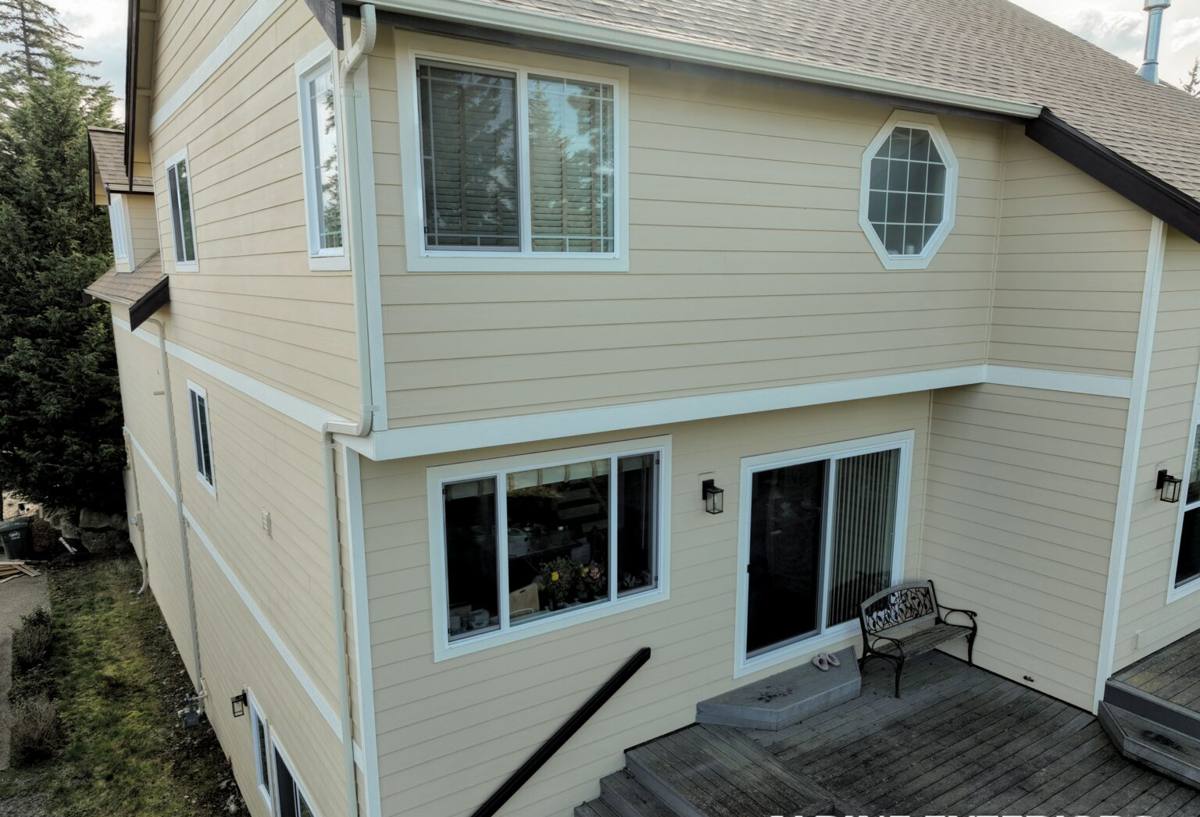
Signs a Columbia Deck Needs Replacement, Not Just Repair
Not every deck problem means a full rebuild. But there's a point where patching individual boards or sistering a joist is just delaying an inevitable, more expensive job — and in some cases, patch repairs on a structurally compromised deck can create a false sense of security. Here's what tells us a deck has crossed that line:
- A screwdriver or awl sinks into the ledger board, rim joist, or posts with light pressure — a sign of internal rot
- Noticeable bounce, sway, or give when walking across the deck, especially near the outer edge
- Fasteners that are visibly rusted, staining the wood around them with reddish-brown streaks
- Persistent moss or algae growth that returns within weeks of cleaning
- Gaps opening up between the ledger board and the house, or daylight visible where flashing should be sealed
- Posts that wobble at the base, or footings that have shifted or heaved
- More than a handful of boards cupping, splitting, or delaminating at the same time
- The deck is original to a home built more than 20-25 years ago and has never had major structural work
If you're only seeing one or two of these, a repair may still make sense. If you're seeing several at once, that's usually a sign the framing itself has reached the end of its service life, and replacement will cost less over time than repeated patchwork.
What a Correct Deck Replacement Actually Involves
A deck replacement is more than swapping old boards for new ones. The parts you can't see — framing, flashing, and fasteners — matter more to how long the deck lasts than the decking material itself.
Substructure and Framing
We evaluate the ledger board, joists, beams, posts, and footings independently of the surface decking. In our experience, footings on older Columbia lots are sometimes undersized or set at a shallower depth than current code calls for, particularly on decks built before more recent code updates. Replacement is the right time to correct that, rather than building a new deck surface on top of a substructure that was already marginal.
Ledger Board and Flashing
The connection where the deck meets the house is the single most common point of hidden rot we find, and it's directly tied to how much driving rain this area gets. Wind-driven rain pushes water sideways and upward under poorly flashed ledger boards, where it sits against the house's rim joist with no way to dry out. A correct installation uses proper flashing — ideally a self-adhering membrane behind a metal drip flashing — installed in the right order so water sheds outward and down, never trapped behind the board.
Fastener and Hardware Selection
Given the salt air, we don't treat fastener choice as an afterthought. Structural connectors, screws, and joist hangers rated for coastal or high-corrosion environments cost more upfront but avoid the slow hardware failure that undermines otherwise sound framing years down the road.
Decking Surface Installation
Proper board spacing for drainage and expansion, correct fastening pattern for the specific material, and attention to airflow underneath the deck all affect how well the new surface resists the moss-and-moisture cycle described above. Tight, poorly spaced boards trap debris and moisture between them; that's a common shortcut that shows up as premature staining and rot within a few seasons.
Choosing a Decking Material for Bellingham's Climate
There's no single "best" decking material — the right choice depends on budget, how much sun exposure the deck gets, and how much maintenance you're willing to do. Here's how the common options compare for a shaded, salt-air, high-rainfall property like many in Columbia:
| Material | Moisture & Moss Resistance | Maintenance | Typical Lifespan |
|---|---|---|---|
| Pressure-treated wood | Moderate — needs sealing to perform well | Annual cleaning and re-sealing recommended | 10-15 years |
| Cedar | Good natural rot resistance, but softer surface | Regular staining/sealing to maintain color and protection | 12-18 years |
| Composite decking | Very good — doesn't absorb moisture like wood | Periodic washing to prevent surface mold/moss | 25-30 years |
| PVC/capped composite | Excellent — fully sealed surface | Occasional washing only | 25-30+ years |
In shaded, moss-prone spots we frequently steer clients toward composite or capped PVC boards, simply because the maintenance burden of keeping a wood deck moss-free under tree cover is significant. That said, plenty of homeowners prefer the look and feel of real wood and are willing to keep up with sealing — that's a legitimate choice as long as it's a maintenance schedule you'll actually stick to, not a one-time task.
Permits and Code Requirements
Deck replacement in Bellingham typically requires a permit when the work involves structural changes — new footings, a rebuilt frame, or any change to the deck's size or height. Requirements can vary based on deck height, attachment to the house, and guardrail specifications, so we handle the permit application and inspection scheduling as part of the job rather than leaving it to the homeowner to sort out. This also matters at resale — an unpermitted deck rebuild can complicate a home sale down the line.
Our Deck Replacement Process
- On-site assessment. We inspect the existing deck's framing, ledger connection, footings, and hardware to determine what's salvageable versus what needs to go.
- Written estimate. You get a clear breakdown of scope, material options, and cost — no vague allowances that turn into surprises later.
- Permit filing. We submit the permit application and handle scheduling of any required inspections.
- Demolition and disposal. Old decking, framing, and debris are removed and hauled off responsibly.
- Framing and flashing. New or corrected substructure goes in first, with proper flashing at the house connection before any decking is installed.
- Decking installation. Boards are installed with correct spacing and fastening for the chosen material.
- Final walkthrough. We go over the finished deck with you, including care and maintenance specific to the material you chose.
Maintaining Your New Deck Through Bellingham's Wet Months
A well-built deck still needs some seasonal attention in this climate. A short annual routine goes a long way toward protecting the investment:
- Sweep leaves and debris off the surface regularly through fall, especially between boards where moisture collects
- Clean moss and algae off the surface at the first sign of growth rather than waiting until it's established
- Check that gutters and downspouts near the deck are directing water away, not onto the deck surface
- For wood decking, plan on re-sealing or re-staining on the schedule the product manufacturer recommends
- Confirm underneath the deck stays ventilated — trimming back vegetation that blocks airflow reduces trapped moisture
- Have the ledger connection and fasteners visually checked every couple of years, since that's where hidden problems start
Why Hiring a Crew That Already Works in Columbia Matters
A deck built to a generic national standard isn't necessarily built for this specific combination of salt air, shade, and sustained wet weather. Crews who work regularly in Columbia and the surrounding Bellingham neighborhoods already know which fastener grades hold up, where flashing details tend to fail on older homes, and which lots need extra attention to drainage and moss control because of tree cover or proximity to the water. That local pattern recognition tends to show up in fewer callbacks and a deck that's still solid well past the point where a corner-cut job would be showing problems.
We also know the practical side of working in this area — permit timelines with the City of Bellingham, typical lot access challenges on older streets, and how to sequence a project around this region's rainy stretches so the framing isn't left exposed to weather longer than necessary.
If your deck is showing any of the warning signs above, or you're simply ready to replace an aging deck with something built for the long run, we're happy to take a look and walk you through your options. Reach out for a free, no-pressure estimate using the form below.