 Bellingham
 Composite Decking Built for Cordata's Weather, Not Just Its Style
Cordata sits in north Bellingham, inside the same marine climate belt that shapes building decisions across Whatcom County: mild temperatures, heavy annual rainfall, salt-tinged air moving in off Bellingham Bay and the Strait of Georgia, and a moss season that can stretch from October well into spring. A deck in this neighborhood doesn't fail because of one bad storm. It fails slowly, from months of standing moisture, shaded north-facing corners that never fully dry, and organic growth that holds water against the surface longer than the material was ever designed to tolerate.
Composite decking exists largely to solve that problem. It won't rot, splinter, or need yearly staining the way wood does, and it handles the freeze-thaw swings and constant damp of a Pacific Northwest winter better than most alternatives. But composite is not maintenance-free, and it is not installation-proof — a poorly built composite deck will trap moisture and grow moss just as readily as a poorly built wood one. The material only performs as promised when the structure underneath, the drainage plan, and the fastening details are done right for this specific climate.
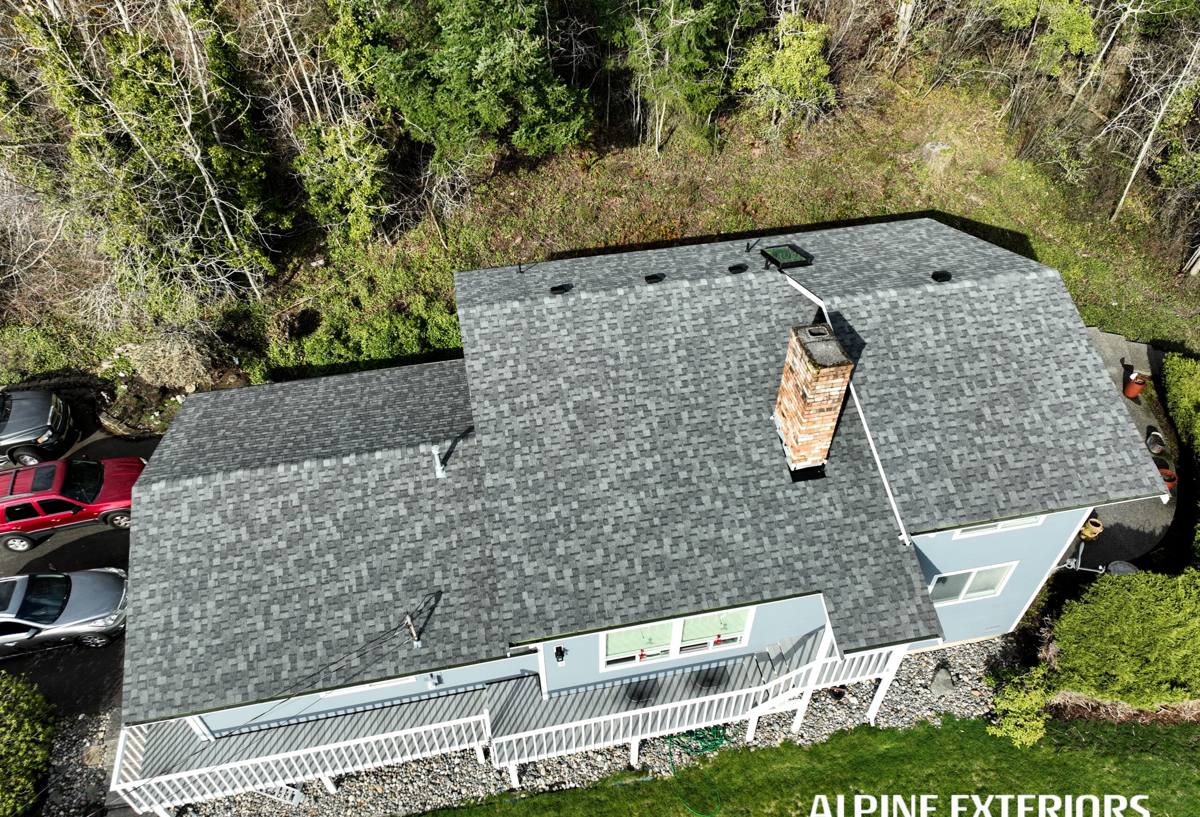
What Cordata Homes Specifically Need From a Deck
Homes in this part of Bellingham tend to deal with a few recurring conditions that should shape how a deck is designed, not just what it's built from:
- Extended damp periods: Long stretches of drizzle and overcast days mean decking rarely gets a full, fast dry-out between rain events — airflow underneath and between boards matters as much as the board material itself.
- Shaded and north-facing exposures: Mature landscaping and closer lot spacing common in newer Cordata developments create shaded zones that stay damp longer, which is exactly where moss and algae take hold first.
- Salt-influenced air: Being near Bellingham Bay means fasteners, ledger connections, and any exposed metal hardware are exposed to a mild corrosive element over time, even a few miles inland.
- Freeze-thaw cycling: Whatcom County winters aren't brutally cold, but repeated freeze-thaw on wet lumber accelerates rot in a way a single hard freeze doesn't.
None of these conditions are unique to Cordata, but together they define what "correct" means for a deck built here, as opposed to a deck built in a drier climate where these details matter less.
What a Correct Composite Deck Installation Actually Involves
The Structure Underneath
Composite decking is only as good as the frame it sits on. Pressure-treated joists rated for ground contact where relevant, proper joist spacing (often tighter than manufacturers' minimums for composite boards, which flex more than wood over long spans), and joist tape or flashing at every cut and fastener point to stop water from wicking into the lumber are all non-negotiable in a climate this wet.
Ledger and House Connection
Where a deck attaches to the house, proper flashing integration with the existing siding and wall assembly is the single most common point of failure we see on older decks in this region — not the decking material itself. Water finds the gap between a poorly flashed ledger board and the wall, and it stays there.
Drainage and Airflow
Ground clearance, gaps at board ends and around posts, and in some cases a drainage or vent detail underneath the deck all reduce how long moisture sits trapped against the structure. This is where a lot of "budget" installations cut corners, because it doesn't show up in the finished look.
Fasteners and Hardware
Given the salt air exposure common across Bellingham's coastal-influenced neighborhoods, stainless steel or coated corrosion-resistant fasteners and structural hardware are worth the modest upcharge over standard galvanized options, especially on ledger bolts and post bases that are difficult to replace later.
Composite, Wood, and PVC: An Honest Comparison for This Climate
| Factor | Composite | Pressure-Treated Wood | PVC/Capped Polymer |
|---|---|---|---|
| Moisture resistance | Strong; core resists rot but board ends need capping or sealing | Weakest; needs regular sealing to resist Bellingham's rainfall | Excellent; fully synthetic, unaffected by moisture |
| Moss/algae resistance | Good on capped boards; textured surfaces can hold grime | Poor; rough grain holds moisture and organic growth | Very good; smooth, non-porous surface |
| Maintenance | Occasional wash; no staining or sealing | Annual cleaning, sanding, and re-staining/sealing | Minimal; occasional wash |
| Upfront cost | Moderate to higher | Lowest | Highest |
| Long-term cost | Low, once installed correctly | Highest, due to recurring upkeep and earlier replacement | Low |
| Feel underfoot | Wood-like, warmer than PVC in cooler weather | Natural, but rougher over time | Can feel more plastic; varies by product line |
We install composite for most Cordata homeowners because it hits the practical middle ground: it holds up to the climate far better than wood without the premium cost and sometimes colder, more plastic feel of full PVC systems. But we'll say plainly when PVC or a different approach makes more sense for a specific site — heavy shade, a pool deck, or a very tight budget can all shift that answer.
Moss and Long-Term Care in a Wet Climate
Even a well-installed composite deck in this region benefits from a basic seasonal routine. This isn't unique upkeep we invented — it's standard guidance that matters more here than in drier parts of the country because of how long moisture sits on surfaces through a typical Whatcom County fall and winter.
- Sweep debris and fallen leaves off the deck regularly through autumn — trapped organic matter is what feeds moss growth, not the board material itself.
- Rinse the deck surface a few times a year, more often in shaded areas, using plain water or a manufacturer-approved cleaner.
- Check gaps between boards periodically to make sure debris hasn't packed in and blocked drainage.
- Inspect fasteners, post bases, and ledger flashing annually for any early corrosion or gaps, particularly after the first heavy winter storms.
- Avoid pressure washing at close range or high PSI on composite surfaces — it can damage the cap layer on some products.
Our Process for a Cordata Composite Deck Project
We treat every deck as a structure first and a finish product second. In practice, that means:
- On-site assessment: We look at drainage patterns, shade exposure, existing structure condition (for replacements), and how the deck will actually be used before recommending a board line or layout.
- Design and material selection: We walk through composite options at different price points honestly, including where a cheaper board line will show its age faster in this climate.
- Framing and flashing: Ledger flashing, joist protection, and proper spacing are built to hold up to sustained Whatcom County rainfall, not just pass a one-time inspection.
- Board installation: Hidden or exposed fastening depending on the product, with attention to expansion gaps composite boards need as temperatures shift.
- Final walkthrough: We go over basic seasonal care specific to the site's sun and shade exposure before we consider the job finished.
What Drives Cost on a Cordata Deck Project
| Cost Factor | Why It Matters Here |
|---|---|
| Board tier and brand | Entry-level composite costs less upfront but may show fading or surface wear sooner under sustained PNW rain and UV cycling |
| Deck size and layout | Complex shapes, multiple levels, or built-in features add labor beyond straightforward square footage |
| Substructure condition | Replacing decking on an older frame often costs less than it looks if the joists are sound, but rot from prior water intrusion can add real framing cost |
| Ledger and flashing work | Proper integration with existing siding sometimes requires siding repair or adjustment, especially on older homes |
| Railing and fastener choice | Corrosion-resistant hardware and composite or metal railing systems cost more than basic wood but hold up longer in this air |
| Site access | Sloped lots or limited equipment access, common on some Cordata properties, can add labor time |
A Simple Checklist for Vetting Any Decking Contractor in This Area
- Do they explain their flashing and ledger connection details, not just which brand of board they install?
- Do they ask about sun exposure and drainage on your specific lot before recommending a product?
- Are they licensed and insured to work in Washington, with a physical presence in Whatcom County?
- Do they give you an honest maintenance expectation instead of calling composite "zero maintenance"?
- Will they put fastener type, board brand, and structural details in writing before work starts?
Why It Matters That We Already Work in Cordata
A crew that installs decks across different climates might build a technically sound deck by a generic standard and still miss what this specific area needs — the shade patterns of established neighborhood landscaping, the moisture behavior against Bellingham's siding styles, or how quickly moss establishes itself on a north-facing corner here compared to a drier region. Working regularly in and around Bellingham means we're not guessing at what holds up through a Whatcom County winter; we're building to what we've already seen succeed and fail on decks like yours.
If you're planning a new composite deck or replacing an aging one in Cordata, we're glad to take a look and talk through what your specific site actually needs. Fill out the form below for a free, no-pressure estimate.