 Bellingham
 Why Siding Fails Faster in Fairhaven's Marine Climate
Fairhaven sits close to Bellingham Bay, and that proximity to open water shapes everything about how siding ages here. Salt-laden air moves off the water and settles on exterior walls day after day, working into seams, fastener heads, and any gap in a weather barrier. Combine that with the driving rain that comes off Puget Sound during the fall and winter storm season, and you get a wall assembly that's under near-constant moisture pressure for months at a time.
Then there's moss. Whatcom County's long, wet, mild winters create ideal conditions for moss and algae to establish themselves on north-facing walls, shaded siding, and anywhere water lingers instead of draining away. Once moss takes hold on a porous or absorbent material, it holds moisture against the surface, which accelerates rot, staining, and finish breakdown. Homes in Fairhaven, tucked between the bay and wooded hillsides, often get less direct sun and more shade than homes elsewhere in Bellingham, which stretches the moss season even longer.
None of this means siding is doomed here — it means the material and the installation both have to be chosen with this specific combination of salt air, driving rain, and moss exposure in mind, not with a generic "siding is siding" mindset.
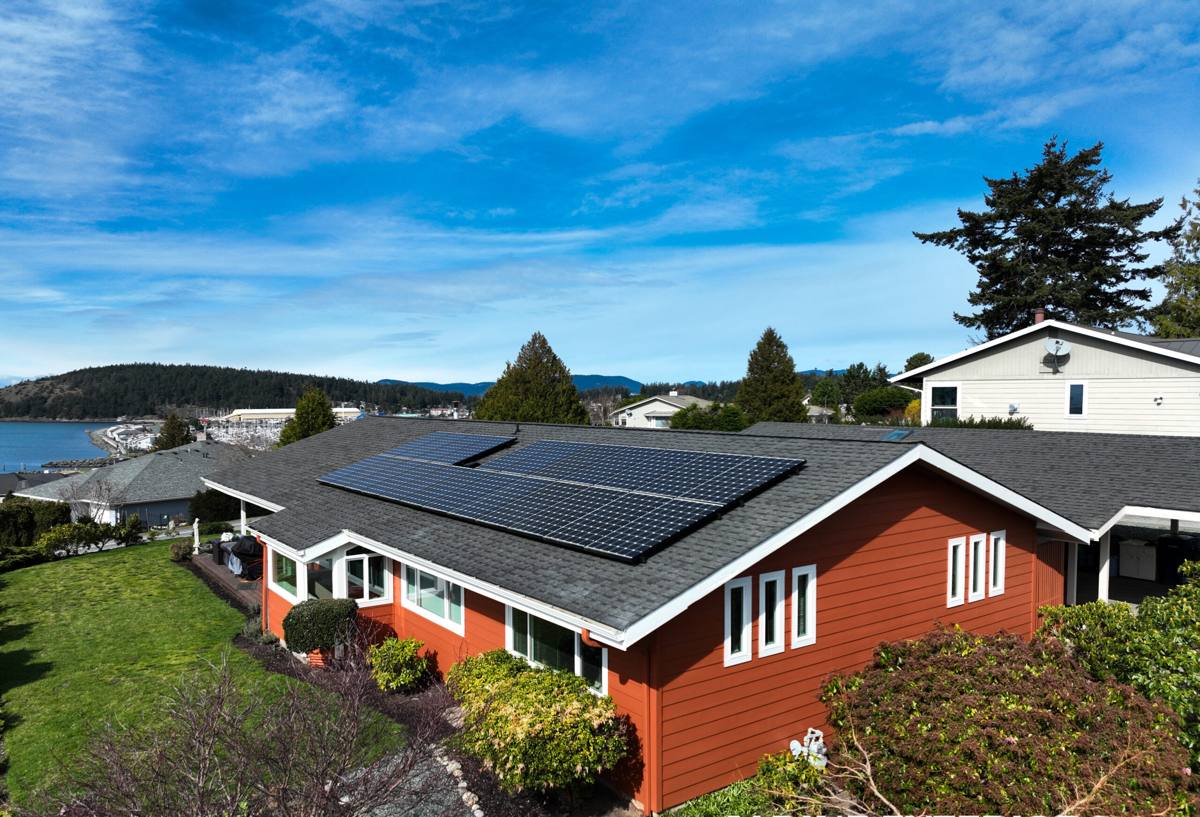
What a Correct Siding Replacement Actually Involves
Replacing siding is not a cosmetic swap. Done right, it's a full reassessment of how water moves across and away from the wall. Skipping steps here is exactly how a ten-year-old repaint job hides five years of hidden rot.
Tear-Off and Inspection
Every old course of siding comes off so the sheathing underneath can be inspected directly. In a climate like Fairhaven's, this step regularly turns up soft sheathing, rusted fasteners, or trapped moisture behind old siding that looked fine from the street. Any of that damage gets addressed before a single new panel goes up — covering it over just relocates the problem.
Weather Barrier and Flashing
A correctly installed water-resistive barrier, properly lapped and taped, combined with flashing at every window, door, and roofline intersection, is what actually keeps driving rain out of the wall cavity. Siding itself is the second line of defense, not the first. Given how much wind-driven rain Fairhaven sees off the bay, flashing details at horizontal trim and butt joints deserve extra attention rather than the bare minimum.
Fastening and Installation to Spec
Fastener type, spacing, and depth matter more near salt air than almost anywhere else. Under-driven or over-driven fasteners, wrong nail spacing, or the wrong fastener material can shave years off a siding job's life regardless of how good the siding product itself is. Manufacturer installation instructions exist for a reason, and in a marine climate, deviating from them is where premature failures start.
Why This Crew Installs Only James Hardie Fiber Cement
We made a deliberate call to install James Hardie fiber cement siding exclusively, and we don't install vinyl, cedar, primed spruce, or engineered wood products like LP SmartSide. That's not a marketing position — it's a standard we hold because of what we've seen these products do, and not do, in wet coastal climates over time.
Vinyl expands and contracts with temperature and can warp or crack in cold snaps; it also isn't a fire-resistant material. Cedar and other wood-based sidings look great new but demand an ongoing maintenance commitment — refinishing, caulking, and moisture monitoring — that most homeowners underestimate, especially in a climate that stays damp for much of the year. Engineered wood products use wood fiber with resin binders, which means their long-term performance depends heavily on keeping water away from cut edges and exposed surfaces, something that's genuinely hard to guarantee on a real job site over years of weather.
Why Fiber Cement Suits This Specific Climate
Fiber cement is made from cement, sand, and cellulose fiber. It doesn't rot, it isn't attractive to insects, and it holds up to repeated wet-dry cycling without the swelling or delamination that wood-based products can experience. It's also non-combustible, which matters as wildfire smoke and drier summer stretches become a more regular part of Pacific Northwest weather. For a neighborhood like Fairhaven, where salt air and moss pressure are constant, a material that doesn't depend on a perfect paint film to stay protected is simply the more durable choice.
Comparing Siding Materials in a Coastal, Moss-Prone Climate
Here's how the common siding options stack up against the specific conditions Fairhaven homes face:
| Material | Moisture Resistance | Moss / Algae Resistance | Salt Air Durability | Ongoing Maintenance |
|---|---|---|---|---|
| Vinyl | Fair — can trap moisture behind panels | Moderate, but surface can stain | Fasteners and trim pieces vulnerable over time | Low, but repairs are visible and hard to match |
| Cedar / Wood | Poor without diligent upkeep | Low — absorbs and holds moisture | Salt accelerates weathering of finish | High — recoating and caulk checks needed regularly |
| Engineered Wood (LP-type) | Moderate — edge sealing is critical | Moderate | Moderate, sensitive to prolonged wetting | Moderate — edge and joint inspection needed |
| James Hardie Fiber Cement | Strong — dimensionally stable when wet | Strong with factory finish | Strong — non-organic material | Low — periodic washing and paint touch-up only |
Choosing the Right Hardie Line and Finish for a Fairhaven Home
James Hardie engineers its siding by climate zone, and the Pacific Northwest falls into the category where moisture and freeze-thaw cycling both need to be accounted for. That climate-engineered approach is a big part of why we standardized on this product rather than a one-size-fits-all siding line.
The ColorPlus factory finish is worth understanding here too. Instead of field-painting siding after installation, ColorPlus siding arrives with a baked-on, UV-cured finish that resists fading and chipping better than a job-site paint job, and it comes backed by its own finish warranty. In a neighborhood with a lot of shade and moisture like Fairhaven, a finish that doesn't rely on perfect field conditions during application is a real advantage.
Many homes in and around Fairhaven have older, character-driven architecture — think traditional lap profiles, trim-heavy facades, and a mix of classic color palettes. Hardie's lap siding, board-and-batten profiles, and trim boards are made to complement that kind of architecture without looking like a modern retrofit, which matters in a neighborhood where curb appeal and character carry real weight.
Our Process for Fairhaven Siding Replacement
Every project follows the same disciplined sequence, whether it's a small rear elevation or a full re-side:
- On-site inspection and honest assessment of current siding, trim, and any visible moisture damage
- Written estimate outlining scope, product selections, and timeline before any work begins
- Careful tear-off with sheathing inspected and documented, and any rot or damage addressed
- Weather barrier and flashing installed or repaired at every penetration and transition
- James Hardie siding installed to manufacturer fastening and clearance specifications
- Trim, caulking, and touch-up work completed to a clean, finished standard
- Final walkthrough and warranty paperwork registered in the homeowner's name
What Drives the Cost of Siding Replacement in Fairhaven
No two homes cost the same to re-side, but the variables that move the number are consistent. Before requesting quotes, it helps to know what you're being priced on:
- Total square footage of exterior wall area and number of stories
- How much hidden moisture or sheathing damage turns up once old siding comes off
- Number and complexity of windows, doors, and trim details to work around
- Site access — sloped lots, mature trees, and tight side yards common near the bay and hillsides can slow work down
- Whether the job is a full re-side or a partial replacement of specific elevations
- Product selection within the Hardie line, including profile and color
Why Local Experience in Fairhaven Matters
A crew that already works this neighborhood knows which walls take the worst of the wind-driven rain, which lots hold shade long enough to grow moss faster than others, and how to sequence a job around Bellingham's shorter dry-weather windows. That local familiarity also extends to permitting and inspection expectations with the City of Bellingham, and to working respectfully around the older homes and mature landscaping that give Fairhaven its character. Hiring a crew with no track record in this specific microclimate means paying for lessons on your house that a locally experienced crew already learned somewhere else.
After the Install: Keeping Fairhaven Siding Performing
Correctly installed Hardie siding is low-maintenance, not no-maintenance. A periodic gentle wash keeps moss and algae from establishing on shaded elevations, and keeping gutters and downspouts clear prevents water from sheeting down walls it wasn't designed to handle. An annual walk-around to check caulking at trim joints and around penetrations catches small issues while they're still small — which, in a climate like this one, is how a siding job actually reaches its full expected lifespan instead of falling short of it.
If you're weighing a siding replacement for a home in Fairhaven, we're happy to take a look and walk you through what we're seeing — no pressure, no obligation. Use the form below to request a free estimate.