 Bellingham
 Asphalt Shingle Roofing Built for Happy Valley's Climate
Happy Valley sits close enough to Bellingham Bay that homes here take on a specific mix of weather stress: salt-laden air moving off the water, long stretches of driving rain through the fall and winter, and a moss season that seems to start earlier and last longer every year. None of that is unique to any one house in the neighborhood — it's a shared condition of living in this part of Whatcom County. An asphalt shingle roof that's installed and maintained with that reality in mind will outlast one that was installed the same way you'd install it in a dry inland climate.
This page is about one thing: asphalt shingle roofing for homes in Happy Valley — new installs, tear-off and replacement, and the ongoing maintenance that keeps a shingle roof performing through everything this area throws at it. If you're comparing materials or want a broader look at asphalt shingles as a product, that's a different conversation. Here we're talking about what actually happens to a shingle roof on a Happy Valley house, year over year.
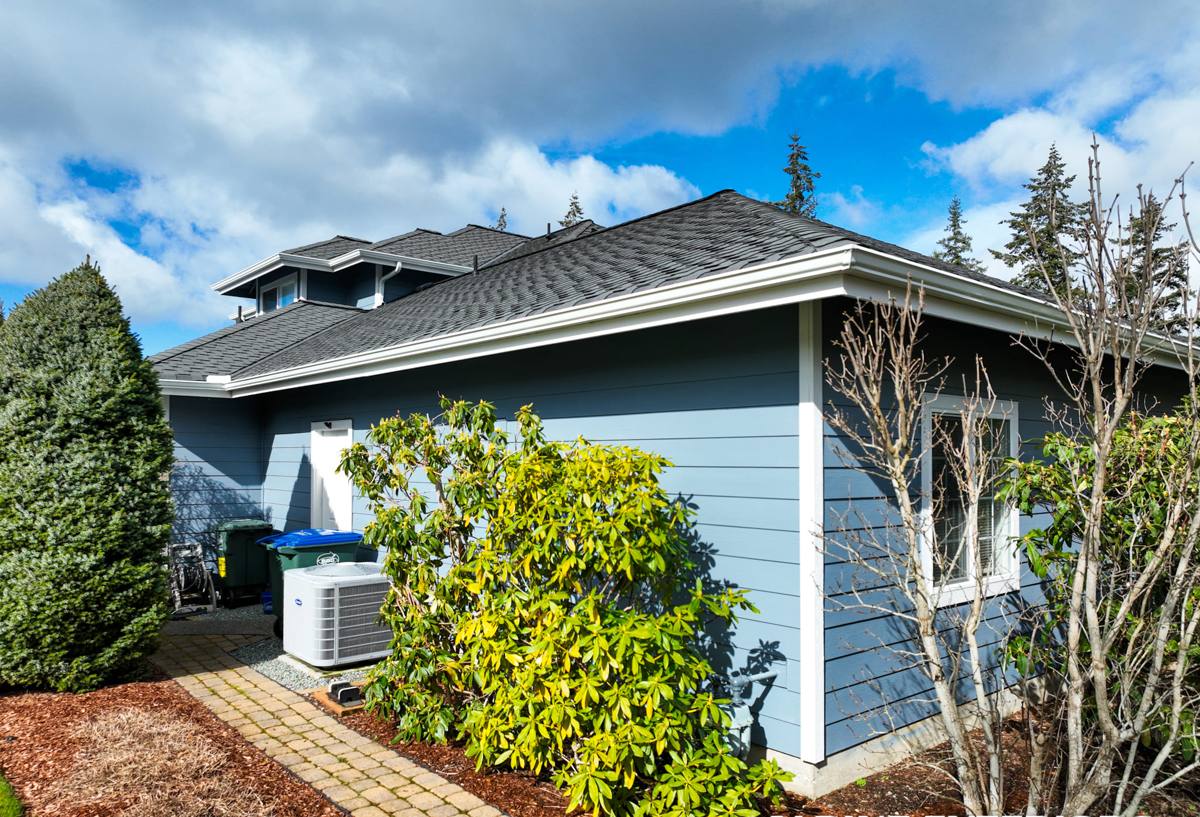
What Salt Air, Rain, and Moss Actually Do to Shingles
Salt Air and Fastener Corrosion
Homes closer to the water pick up airborne salt that settles on roofing materials and, more importantly, on exposed metal — nail heads, flashing edges, vent stacks, and gutter hardware. Standard fasteners can start to corrode faster in this environment than they would further inland. Once a fastener corrodes, it loses holding power, and a shingle that's supposed to be locked down starts working loose in wind. This is a slow, quiet failure mode — you don't see it until a shingle tab lifts or a leak shows up on a ceiling.
Driving Rain and Wind-Driven Water
Bellingham-area storms don't just rain straight down — wind pushes water sideways and up under shingle edges, into valleys, and around any penetration in the roof (chimneys, vents, skylights). A roof that's technically watertight in a calm rain can still leak in a wind-driven storm if the underlayment, flashing, and shingle overlap weren't detailed correctly. This is one of the most common causes of "mystery leaks" we get called out for — the roof looks fine, but water is finding a path sideways.
Moss, Shade, and Moisture Retention
Happy Valley's tree cover is part of what makes the neighborhood pleasant to live in, but it also means shaded roof sections stay damp longer after every rain. Moss and algae take hold in that moisture, and once established, moss holds water directly against the shingle surface and works its way under tabs and around granules. Over a few seasons, that constant dampness accelerates granule loss and shortens the shingle's usable life — especially on north-facing slopes and anywhere branches overhang the roof.
What a Correctly Installed Shingle Roof Looks Like Here
A shingle roof that's built for this climate isn't a different product — it's the same asphalt shingle system installed with attention to the details that matter locally. That includes:
- Corrosion-resistant fasteners and flashing appropriate for coastal-influenced air, not just whatever is cheapest to stock
- Full underlayment coverage, with extra attention to ice-and-water membrane at eaves, valleys, and around penetrations where wind-driven rain is most likely to intrude
- Proper shingle nailing pattern and exposure — under-nailing or high-nailing is a common shortcut that shows up as blow-offs in the first big windstorm
- Correctly lapped and sealed flashing at every chimney, skylight, vent stack, and wall intersection
- Adequate attic ventilation, so moisture from inside the house isn't adding to the moisture load the roof deck already deals with from outside
- Drip edge and gutter apron detailing that sheds water cleanly away from fascia and siding
None of these are exotic upgrades. They're standard practice done correctly, every time, instead of skipped when nobody's checking.
Our Process for Happy Valley Roofing Projects
1. On-Site Assessment
We walk the roof (or inspect from a lift when steep pitch or access makes that safer) and check the deck, existing flashing, ventilation, and any trouble spots — valleys, chimney saddles, shaded slopes with moss buildup. For repairs, we're tracing the actual water path, not just patching where the stain shows up inside.
2. A Written Scope Before Any Work Starts
You get a clear explanation of what's being done, what materials are specified, and why — including whether deck repair or additional ventilation is needed. No surprise change orders for things that should have been caught during assessment.
3. Tear-Off and Deck Inspection
On a full replacement, we remove existing roofing down to the deck and inspect for soft spots, rot, or delamination before anything new goes down. Covering up a damaged deck with new shingles just hides the problem for the next owner to find.
4. Underlayment and Flashing First
This is the layer that actually keeps water out when a shingle tab eventually fails or wind lifts an edge. We treat it as the primary defense, not a formality on the way to installing shingles.
5. Shingle Installation to Manufacturer Spec
Correct nailing pattern, exposure, and starter course installation — installed to the manufacturer's published specifications so the material warranty stays intact.
6. Final Walkthrough
We review the completed work with you, point out anything you should keep an eye on (a shaded valley prone to moss, for example), and answer questions before we consider the job done.
Repair, Replacement, or Maintenance — How to Know Which You Need
Not every roofing problem in Happy Valley requires a full replacement, and not every roof issue can be solved with a patch. Here's a general framework:
| Situation | Typical Approach | Why |
|---|---|---|
| Isolated leak, roof under 15 years old, shingles otherwise in good shape | Targeted repair | Localized flashing or fastener failure — no reason to replace a sound roof |
| Heavy moss coverage, granule loss, but deck still sound | Cleaning, treatment, and possibly partial shingle repair | Addresses the moisture problem before it causes deck damage |
| Multiple leaks, curling or cracked shingles, roof nearing or past expected lifespan | Full replacement | Patching an aging roof becomes a losing game of chasing new leaks |
| Visible deck sag, soft spots, or interior water staining spreading over time | Full replacement with deck repair | Underlying structure has been compromised and needs to be addressed, not covered |
| Roof is sound but never maintained | Annual inspection and moss/debris maintenance | Cheapest way to protect the investment you already have |
If you're not sure which category your roof falls into, that's exactly what an on-site assessment is for — we'll tell you honestly if a repair is the right call instead of pushing a replacement you don't need yet.
Maintenance That Actually Extends Roof Life Here
Given the moss and moisture conditions common in Happy Valley, a shingle roof benefits from more active maintenance than the same roof would need in a drier climate. A reasonable maintenance checklist:
- Clear overhanging branches and debris that keep shaded sections damp longer than necessary
- Remove moss growth before it establishes under shingle tabs — treating early is far less invasive than dealing with established growth
- Keep gutters and downspouts clear so water isn't backing up under the eave line during heavy rain
- Inspect flashing around chimneys, vents, and skylights every year or two — these are the most common points of failure, not the open field of shingles
- Check attic ventilation periodically, since blocked or inadequate venting traps moisture that shortens roof life from underneath
- After major windstorms, do a visual check for lifted or missing shingle tabs rather than waiting for an interior leak to show up
Why a Locally Experienced Crew Matters for This Neighborhood
Roofing crews that mostly work drier, inland regions can install a technically correct roof that still underperforms here, simply because they're not used to detailing for wind-driven rain and sustained moss pressure. A crew that regularly works Happy Valley and the surrounding Bellingham area already knows which slopes tend to hold moisture, how local wind patterns hit a roof during a fall storm, and which flashing details actually get tested by this climate instead of a mild one. That familiarity shows up in the small decisions — where extra membrane goes, how ventilation is balanced, which fasteners get specified — that determine whether a roof is still performing well in fifteen years or needs rescue repairs in five.
It also matters for accountability. A local, Bellingham-based crew is easy to reach if something needs a look after the job is done, and has a reputation in Whatcom County worth protecting — that's a different incentive structure than a crew that installed your roof and left the region.
What to Ask Before Hiring Anyone for a Shingle Roof
Whoever you hire for a roof over your head, it's worth asking a few direct questions before signing anything:
- Are you licensed and insured to work in Washington, and can you provide proof?
- Will the installation follow the shingle manufacturer's specifications closely enough to keep the material warranty valid?
- What underlayment and ice-and-water membrane will be used, and where specifically will it be applied?
- How will you handle deck repair if rot or damage is found during tear-off?
- What's included in your workmanship warranty, separate from the manufacturer's material warranty?
- Do you have experience with homes in this specific area, and can you speak to how you handle moss-prone or heavily shaded roof sections?
A contractor who answers these plainly and specifically — instead of vaguely — is generally one worth trusting with the job.
Get a Straightforward Estimate
Whether you're dealing with a leak, planning ahead for a roof that's showing its age, or just want an honest read on how much life is left in your current shingles, we're glad to take a look. Reach out for a free, no-pressure estimate using the form below, and we'll give you a straight answer about what your Happy Valley roof actually needs.