 Bellingham
 Siding Repair in Lynden: What the Local Climate Actually Does to a Wall
Lynden sits inland from Bellingham Bay, out in the flatter, farmland stretch of Whatcom County near the Nooksack River valley. That location changes what actually damages siding here compared to homes right on the water. Waterfront and near-shore properties in Bellingham deal with salt-laden air that accelerates corrosion on fasteners and trim. Lynden's bigger enemy is simpler and, in some ways, harder to escape: sustained moisture. Long stretches of drizzle, high humidity off the surrounding farmland and river bottom, and short winter daylight hours mean siding here often stays damp for days at a time. That's the exact condition moss, algae, and mildew need to take hold, and it's the condition that turns a small gap in caulk or flashing into a rot problem.
We work on homes throughout this part of the county, and the repair calls from Lynden tend to follow a pattern. It's rarely one catastrophic event. It's small failures — a cracked caulk joint, a missing kick-out flashing, a butt seam that was never sealed correctly — left alone through several wet seasons until the sheathing behind the siding starts to go soft. Getting ahead of that pattern is the whole point of a good repair.
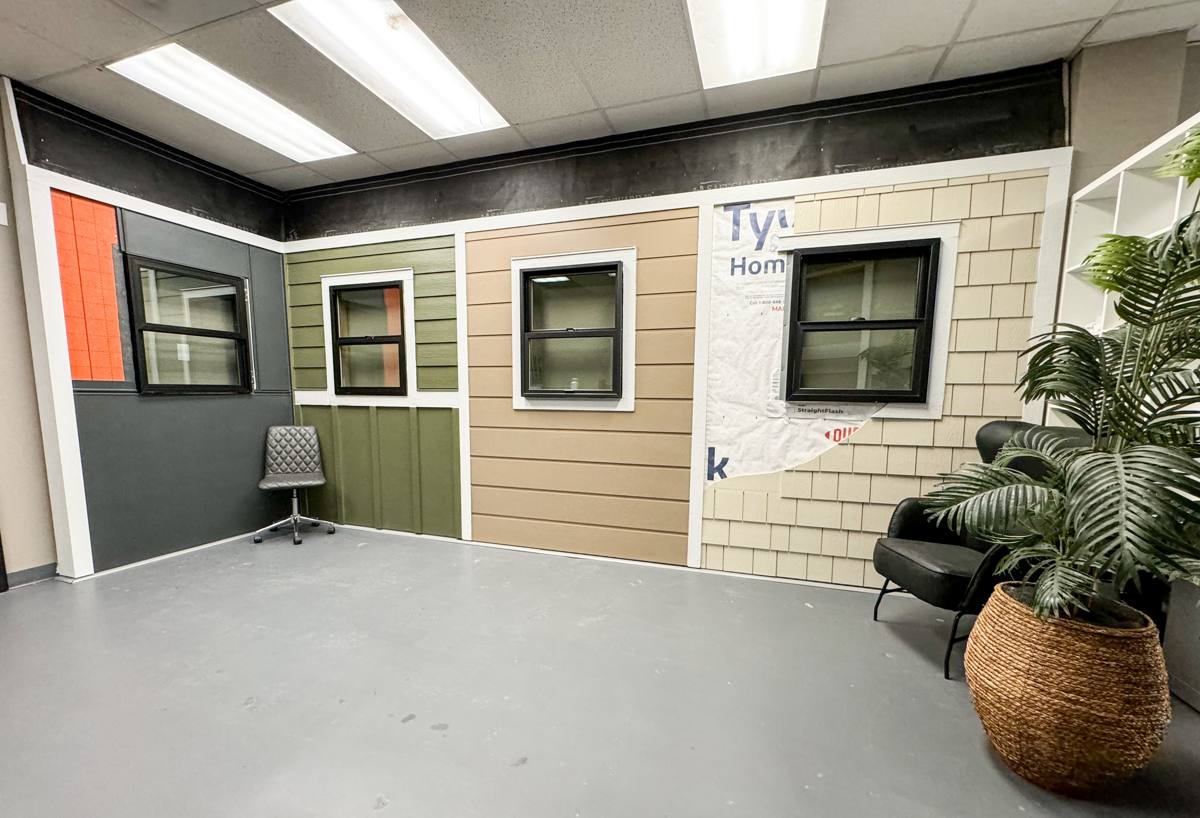
Common Damage We See on Lynden Homes
Every siding material fails differently, but in this climate the failure points cluster around the same few locations on almost every house:
- Bottom courses near grade, where splash-back and slow-draining soil keep the material wet longer than anywhere else on the wall
- Butt joints and seams where two pieces of siding meet, especially if they weren't back-primed or caulked when installed
- Window and door trim, where sealant shrinks and cracks over a few years and lets water track behind the casing
- Areas without kick-out flashing where a roofline meets a wall, sending roof runoff directly behind the siding instead of into the gutter
- North- and shade-facing walls, where moss and algae growth is heaviest because the surface never gets enough sun to dry out between rain events
On older homes finished in cedar, primed spruce, or engineered wood, these failure points often mean actual wood rot by the time we're called — not just a cosmetic problem. On vinyl, the common issue is warped or buckled panels from heat cycling combined with moisture trapped behind them. Fiber cement holds up differently at each of these points, which is part of why we standardized on it, but repair work on a Lynden home usually means dealing with whatever material is already on the house.
Why a Quick Caulk-and-Paint Fix Doesn't Hold Up Here
The most common bad repair we see is cosmetic: someone caulks over a crack, paints over a stain, and calls it done. In a dry climate that might buy a few years. In Whatcom County's wet season, it usually fails within one winter, because the moisture problem behind the surface was never addressed. If water has already gotten past the siding once, there's a good chance it's found its way to the house wrap or sheathing, and painting over the visible symptom does nothing for what's happening underneath.
A repair that's worth paying for starts with figuring out why the failure happened in the first place — bad flashing detail, missing sealant, wrong material for that location — and fixing that root cause, not just the visible crack.
What a Correct Repair Actually Involves
- Remove the damaged section cleanly, extending past the visibly damaged area to make sure surrounding material is actually sound
- Inspect the sheathing and weather-resistive barrier underneath for soft spots, staining, or mold before anything gets replaced
- Repair or replace the water-resistive barrier and flashing so the underlying moisture path is actually closed off, not just covered
- Address the missing detail that caused the failure — add kick-out flashing, correct a butt joint, re-flash a trim intersection
- Install matching material correctly, with proper fastening, clearance from grade, and back-priming or sealing on cut edges
- Finish and blend so the repair holds paint or factory finish the same way the surrounding wall does
Skipping step two is the single most common shortcut in this trade, and it's the one that costs homeowners the most in the long run. A patch over rotten sheathing just relocates the problem a few feet and a couple of years down the road.
Repair or Replace? What Actually Decides It
Not every damaged section needs a full re-side, but there's a point where patch repairs stop making financial sense. These are the factors we actually weigh on site:
| Factor | Leans toward repair | Leans toward replacement |
|---|---|---|
| Extent of damage | Isolated to one or two wall sections | Recurring failures across multiple elevations |
| Sheathing condition | Dry, sound wood behind the siding | Soft, stained, or spongy sheathing found during removal |
| Age of existing siding | Under 10-15 years, otherwise in good shape | Near or past its expected service life |
| Material match | Discontinued profile/color still sourceable or blendable | Product discontinued with no reasonable match |
| Root cause | Single fixable detail (one flashing, one seam) | Systemic issue — original install lacked proper moisture management |
We'll always tell you honestly which side of that table your house falls on. There's no incentive for us to talk a repairable wall into a full tear-off, and there's no benefit to anyone in patching a wall that's going to need replacing again in two years.
Our Process for a Lynden Repair Call
Because we're based out of the Bellingham area and already work this part of the county regularly, we're not estimating drive time and scheduling around a special trip. That matters for a repair call specifically, since siding damage tends to get worse the longer it sits.
- On-site assessment — we look at the damage from the outside and, where possible, get an idea of what's happening behind it before quoting anything
- Honest scope and price range — what needs fixing, what we suspect we might find once we open the wall, and what that would change about cost
- The repair itself — done to the standard above, not a surface patch
- Documentation of anything found — if we uncover rot or a moisture issue beyond the original scope, we show you before proceeding, not after the invoice
Why It Matters That We Already Work This Area
A crew that's worked Lynden and the surrounding parts of Whatcom County has already seen how the local moisture pattern plays out on different siding types, house orientations, and ages of construction. That's not a small thing on a repair job, where half the work is correctly diagnosing why a failure happened before touching a single board. It also means we're realistic about seasonal timing — trying to schedule exterior repair work in the wettest stretch of winter is harder here than in a lot of places, and a local crew plans around that instead of fighting it.
It also means follow-up is simple. If a repair needs a look a year or two later, we're not a company that has to be talked into coming back out.
Signs You Should Get a Repair Looked at Now
- Visible cracking or gaps in caulk lines at trim, corners, or seams
- Dark streaking, green or black staining, or moss buildup that keeps coming back after cleaning
- Soft or spongy spots when you press on the siding near the base of the wall
- Peeling paint or a chalky, deteriorating finish in one specific area rather than across the whole house
- Warped, bowed, or separated panels, especially after a stretch of heavy rain
- Interior signs — a musty smell, discoloration on an interior wall, or a slightly damp feel near an exterior corner
Any one of these on its own might be minor. Two or more together, especially near the same section of wall, usually means water has been getting in for a while.
What We Recommend When Repair Isn't Enough
When a home's siding has failed broadly enough that repair stops making sense, we only install one product going forward: James Hardie fiber cement, in the HZ product line engineered for this region's rain and humidity, finished with their factory-applied ColorPlus finish. We made that call because it's non-combustible, holds up to sustained moisture better than the wood-based and vinyl alternatives we used to see fail here, and comes with a strong, transferable manufacturer warranty. We won't push a full re-side on a wall that just needs an honest repair — but if your house is there, that's what we'll recommend and why.
If you're dealing with damaged, stained, or failing siding on a Lynden-area home, we're happy to take a look and give you a straight answer on what it actually needs. Reach out for a free, no-pressure estimate using the form below.