 Bellingham
 Roofing in Puget: A Different Kind of Wear
Homes in the Puget area of Bellingham sit close enough to the water and under enough tree cover that their roofs age differently than roofs a few miles inland. Salt-laden air off Puget Sound accelerates corrosion on any exposed metal fastener, flashing, or vent cap. Driving rain, pushed sideways by wind off the water, finds its way into laps and seams that would stay dry in a calmer storm. And a long, damp moss season each fall through spring keeps organic growth active on north-facing slopes and shaded valleys for months at a time. None of this means a roof in Puget is doomed to fail early — it means the installation has to account for these conditions from the start, not patch around them later.
A new roof installation here is a chance to correct whatever the original roof got wrong: undersized ventilation, missed ice-and-water protection at the eaves, cheap or mismatched flashing, or a shingle rated for a drier climate than Whatcom County actually delivers. Done right, it's a system — decking, underlayment, flashing, ventilation, and covering working together — not just a new layer of shingles nailed over the old problems.
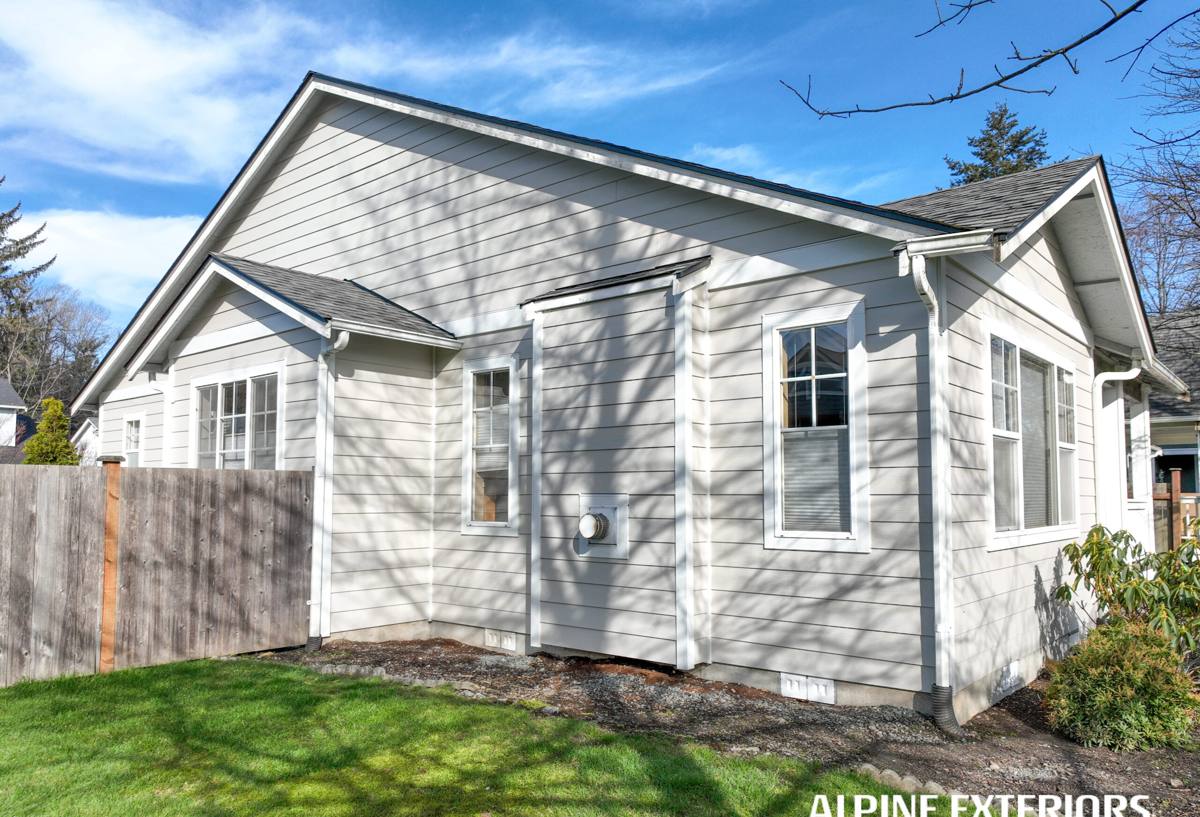
What Local Homes Actually Need From a New Roof
Every roof in this part of Bellingham deals with the same three stressors in different proportions depending on the lot: sun exposure, tree canopy, and how directly the property faces prevailing weather off the Sound. A correct installation plan starts by reading the specific roof, not applying a one-size template.
- Moss-prone slopes: north-facing and heavily shaded sections need shingles and underlayment chosen for resistance to moisture retention, plus valley and edge details that don't trap debris.
- Wind-driven rain exposure: roofs facing open water or clearings need extra-wide underlayment laps, sealed nail patterns, and flashing that doesn't rely on caulk alone to stay watertight.
- Salt air corrosion: fasteners, drip edge, vent boots, and flashing metal should be rated for coastal exposure, not the cheapest stock option.
- Attic moisture: Bellingham's humidity means poor ventilation shows up as condensation and premature decking rot long before it shows up as a leak.
Choosing the Right Material for This Microclimate
There's no single "best" roofing material for every home in Whatcom County — the right choice depends on roof pitch, tree cover, budget, and how long the homeowner plans to stay in the house. What matters most is picking a material honestly, with the trade-offs laid out up front, rather than defaulting to whatever is easiest to install.
| Material | Moss & Moisture Resistance | Wind/Rain Performance | Typical Lifespan Here | Maintenance Burden |
|---|---|---|---|---|
| Architectural asphalt shingle | Good, with algae-resistant granules | Strong when properly nailed and sealed | 25–30 years | Low — periodic moss treatment on shaded slopes |
| Standing seam metal | Excellent — sheds moisture, nothing for moss to grip | Excellent in driving rain and wind | 40–50+ years | Very low, but coastal fastener quality matters |
| Cedar shake | Poor without diligent upkeep in this climate | Moderate — vulnerable at butt joints | 20–25 years with maintenance | High — regular treatment and inspection needed |
| Synthetic/composite shake | Good — engineered to resist moisture uptake | Strong | 30–50 years | Low to moderate |
We're upfront that cedar shake, while attractive, asks more of a homeowner in a climate like this — the moisture cycling and shade common around Puget properties shorten its practical service life unless it's maintained closely. That's a maintenance and moisture-behavior trade-off, not a knock on the product; plenty of homeowners choose it anyway for the look and budget for the upkeep. Our job is to lay out what each material actually needs from the homeowner over its lifespan so the choice fits the house and the person living in it.
Ventilation and Moisture Control
Roof ventilation is where a lot of otherwise good installations quietly fail in this climate. Bellingham's damp fall-through-spring stretch means an attic without balanced intake and exhaust airflow traps moisture, and trapped moisture under a roof deck does more long-term damage than most surface leaks. On a new install, this is the point to fix it — adding or correcting ridge venting, soffit intake, and baffles so insulation doesn't block airflow.
Why This Matters More Near the Water
Higher ambient humidity off the Sound means the margin for error on ventilation is smaller here than in a drier inland climate. A roof that's technically "up to code" on ventilation can still underperform if intake and exhaust aren't balanced, or if bathroom and kitchen exhaust fans are venting into the attic instead of outside — a surprisingly common issue we find when tearing off an old roof.
Flashing and Water Management Details
Flashing is the part of a roof most likely to leak and least visible once the job is finished, which is exactly why it deserves the most attention during installation. In driving rain, water doesn't just run downhill — it gets pushed sideways and upward under wind pressure, which is why laps, step flashing, and valley details matter more here than on a calmer roof.
- Step flashing at every wall intersection, individually woven with each course — not one continuous strip caulked in place
- Chimney and skylight flashing sized and sealed for wind-driven rain, not just gravity drainage
- Open or closed valleys lined with material rated for the exposure, sized to shed debris rather than collect it
- Drip edge and eave protection extending far enough to handle wind-blown rain at the roof's most exposed edges
- Ice-and-water shield at eaves and valleys, even though hard freezes are rare here — it also guards against wind-driven rain intrusion
Our Installation Process
A full replacement follows the same core sequence on every home, adjusted for the specific roof's pitch, layout, and exposure.
- On-site assessment: we inspect the existing roof, attic ventilation, and any problem areas (moss buildup, soft decking, prior repairs) before quoting anything.
- Tear-off: complete removal down to the decking, so we can actually see what's underneath rather than covering up hidden rot or old damage.
- Decking repair: any soft, delaminated, or water-damaged plywood or sheathing gets replaced before anything new goes down.
- Underlayment and ice-and-water shield: installed with attention to laps and fastening patterns suited to wind-driven rain.
- Flashing: all valleys, walls, chimneys, and penetrations flashed individually rather than patched with sealant.
- Ventilation correction: intake and exhaust balanced to the attic's actual size and insulation, not just code minimums.
- Roofing material installation: installed to manufacturer specification, including nailing patterns rated for coastal wind exposure.
- Final walkthrough: cleanup, inspection, and a review of what was done and why, so the homeowner isn't left guessing.
Signs a Puget-Area Roof Needs Replacing, Not Patching
Not every roof problem calls for full replacement — but in this climate, some signs mean patching is just delaying a bigger repair bill.
- Granule loss heavy enough that shingles look patchy or bald in sun-exposed areas
- Moss that returns within a season or two of cleaning, especially on north-facing slopes
- Soft spots or visible sagging when walking the roof or viewing the decking from the attic
- Staining or water marks on interior ceilings, especially after wind-driven storms
- Flashing that's visibly rusted, lifted, or was caulked as a repair rather than properly re-flashed
- A roof approaching or past the upper end of its material's expected lifespan, regardless of appearance
Why a Crew That Already Works Puget Matters
Roofing crews that work Whatcom County regularly, including the Puget area specifically, build a working sense of which slopes hold moisture longest, which exposures take the worst of the wind off the Sound, and how tree cover on a given lot changes the maintenance a roof will need. That local pattern recognition shows up in small decisions — where to add extra underlayment lap, which valleys need wider flashing, how much ventilation a shaded attic actually requires — that a crew unfamiliar with the area might not think to adjust for. It also means we're not guessing at permitting or inspection expectations specific to the City of Bellingham and Whatcom County; we've been through that process enough times to keep a project moving without surprises.
After the Install: Keeping a New Roof Performing
A correctly installed roof still benefits from basic upkeep in this climate. Keeping gutters and valleys clear of needles and debris prevents water from backing up under shingles. A periodic moss treatment on shaded slopes — even on a new roof — keeps growth from taking hold in the first place, which is far easier than removing established moss later. And a quick visual check after major windstorms catches lifted shingles or flashing issues while they're still a small fix rather than an interior repair.
If your roof in the Puget area is showing its age, or you just want an honest read on whether repair or replacement makes more sense, we're happy to take a look. Reach out for a free, no-pressure estimate using the form below.