 Bellingham
 Roofing in Puget Deals With More Than Just Rain
Puget sits close enough to Bellingham Bay and the surrounding waterways that homes here take on a mix of weather stresses most inland properties never see. Salt-laden air moves in off the water and slowly works on exposed metal, fasteners, and flashing. Add Whatcom County's long stretch of driving rain each fall and winter, and a roof here is under near-constant moisture pressure for months at a time. Then there's moss. Bellingham's mild, wet climate is close to ideal moss-growing weather, and a shaded, north-facing roof slope in Puget can go from a light green tint to a thick, waterlogged mat in a couple of seasons if it's not kept in check.
None of this means a Puget roof needs to be exotic or over-built. It means the replacement has to be done with local conditions in mind — correct ventilation, corrosion-resistant fasteners and flashing, and a material and installation method that sheds water fast and doesn't give moss a foothold. A roof designed for a dry climate, or installed by a crew that doesn't normally work coastal Pacific Northwest homes, tends to show problems here years before it should.
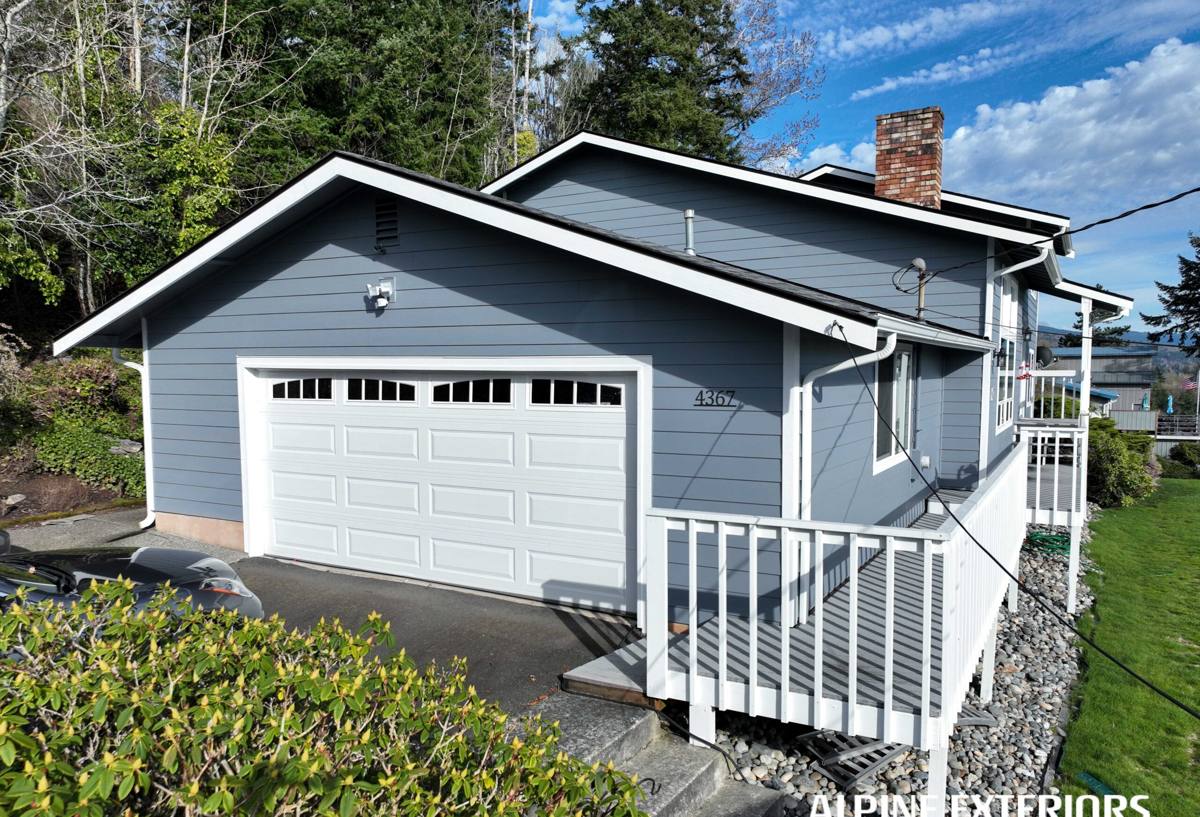
Signs a Puget Roof Has Moved Past Repair
Most roofs give warning signs before they fail outright. The trick is telling the difference between something a patch can fix and something that means the whole roof system is past its useful life.
Repair Territory
- A single area of missing or lifted shingles after a windstorm
- A localized leak traced to one flashing point (chimney, vent, skylight)
- Isolated moss growth on one shaded section, caught early
Replacement Territory
- Granule loss across large sections, leaving shingles thin and brittle
- Multiple leak points or staining spreading across the attic deck
- Widespread moss or algae staining that keeps returning after cleaning
- Soft or spongy decking felt underfoot during an attic or roof inspection
- A roof already at or past its material's expected service life, especially if it was installed with minimal underlayment or ventilation
If more than one of the replacement-territory signs is present, patching usually just delays a bigger repair bill — and in the meantime, moisture is getting into the decking and framing underneath.
What a Correct Roof Replacement Actually Involves
A roof replacement is more than swapping old shingles for new ones. Done right, it's a full system rebuild from the decking up, and skipping any of these steps is where most premature roof failures in this climate start.
Tear-Off and Deck Inspection
We remove the old roofing down to the deck rather than layering over it. That's the only way to actually see what's underneath — soft spots, rot, or old water damage that a layover would hide and let keep spreading. Any damaged decking gets replaced before anything new goes down.
Underlayment
Given how much rain Whatcom County sees, underlayment isn't a formality here — it's the roof's backup line of defense. We use a synthetic or ice-and-water underlayment appropriate to the roof's slope and exposure, with extra protection at eaves, valleys, and any low-slope transitions where water tends to pool or back up.
Flashing
Flashing around chimneys, skylights, vents, and roof-to-wall transitions is where most leaks actually originate — not the field of the roof itself. Given the salt air near the bay, we use corrosion-resistant flashing and fasteners rather than standard-grade metal that can start pitting years sooner in a coastal environment.
Ventilation
Proper intake and exhaust ventilation keeps the attic space close to outside temperature and humidity. Without it, warm moist air condenses against the underside of the deck, which rots sheathing from the inside and creates the exact damp, shaded conditions moss and algae thrive on. Ventilation is often the difference between a roof that lasts its full rated life and one that fails from the inside out early.
Final Roofing Material
The visible layer — shingles, metal panels, or another material — goes on last, installed to the manufacturer's nailing pattern and exposure specs, not shortcuts that save an hour of labor but cost years of service life.
Choosing a Material That Holds Up Here
There's no single "best" roofing material for every home — it depends on the roof's slope, the home's style, budget, and how much shade and moss exposure the roof actually gets. Here's how the common options compare for a Puget property:
| Material | Moss/Moisture Resistance | Typical Lifespan | Notes for This Climate |
|---|---|---|---|
| Architectural asphalt shingle | Good with proper ventilation and periodic cleaning | 25-30 years | Most common choice locally; algae-resistant granule options help on shaded slopes |
| Standing seam metal | Excellent — sheds water and moss struggles to hold on | 40-50+ years | Higher upfront cost; needs coastal-rated fasteners near the bay |
| Composite/synthetic shake | Good, does not absorb moisture like wood | 30-40 years | Good look for older Puget homes without wood shake's rot risk |
| Cedar shake | Poor without aggressive, ongoing maintenance | 20-30 years with upkeep | We generally steer clients away from it on shaded, coastal-exposed roofs — the maintenance burden and moisture retention don't fit this climate well |
On a shaded Puget lot, we'll usually walk through moss-resistant shingle options or a metal roof if the home's roofline supports it. On sun-exposed roofs with less moss pressure, standard architectural shingles are often the most practical and cost-effective choice.
Cost Factors Worth Understanding Up Front
Every roof is different, but the same handful of factors drive most of the price difference between jobs in this area:
| Factor | Why It Matters |
|---|---|
| Roof size and number of planes | More square footage and more valleys/hips mean more material and labor |
| Deck condition | Rot or soft decking found during tear-off adds material and labor to replace it |
| Material chosen | Asphalt, metal, and composite shingle carry very different material costs |
| Pitch and access | Steep roofs or limited access (tight lots, tall trees) affect labor and safety setup time |
| Ventilation and flashing needs | Homes needing added vents or full flashing replacement cost more than a straightforward reroof |
We give a firm, itemized quote after an on-site inspection rather than a rough phone estimate — it's the only way to price a Puget roof accurately once we've actually seen the deck condition, pitch, and moss history.
How Our Process Works
- Inspection: We walk the roof and attic to assess decking, ventilation, flashing, and current moss or moisture damage.
- Written estimate: A clear, itemized quote covering material, tear-off, decking repair allowance, and labor — no vague lump sums.
- Scheduling around weather: Given how much rain this area gets, we plan tear-off and dry-in around forecast windows to keep the home protected throughout.
- Tear-off and deck repair: Old roofing removed, deck inspected and repaired as needed before anything new goes on.
- Underlayment, flashing, and ventilation installed correctly, then the final roofing material.
- Cleanup and walkthrough: Site cleared of debris and nails, with a final walkthrough of the completed roof.
Why Local Experience in Puget Matters
A crew that only works occasional jobs in Whatcom County doesn't build the same instincts as one that roofs here regularly. Knowing which slopes in this area hold moss the longest, which flashing details tend to fail first in salt air, and how to sequence a tear-off around a wet forecast isn't something that transfers well from drier climates. It comes from doing the work here, on roofs facing the same bay air and rain patterns as the one on your house.
That local familiarity also shows up in smaller ways — recommending the right algae-resistant shingle line for a shaded lot, sizing ventilation correctly for this humidity, or simply knowing what a healthy versus failing roof looks like after a Bellingham winter.
Keeping a New Roof Healthy After Installation
A correctly installed roof still benefits from basic upkeep, especially in a moss-prone, high-rainfall area like this one.
- Have moss and debris cleared from valleys and shaded slopes before it builds up into a mat
- Keep gutters clear so water isn't backing up under the roof edge during heavy rain
- Trim back overhanging branches that keep sections of the roof shaded and damp
- Schedule a quick visual inspection after major windstorms
- Address any small flashing or fastener issues early, before salt air corrosion spreads
Get a Free Estimate for Your Puget Roof
If your roof is showing moss buildup, granule loss, or signs of age, it's worth getting an honest, no-pressure look before it turns into a bigger problem. Use the form below to request a free estimate, and we'll walk the roof, explain exactly what we find, and lay out your options in plain terms.