 Bellingham
 Why Siding Fails Faster in Blaine
Blaine sits right on the water at the northern edge of Whatcom County, and that location comes with a specific set of siding problems. Homes here take a steady diet of salt-laden air off the bay, wind-driven rain that hits walls sideways instead of falling straight down, and a long stretch of the year where shaded, north-facing walls barely dry out between storms. That combination is harder on exterior walls than what you'll find twenty miles inland, and it shows up as premature paint failure, swelling at panel edges, and moss creeping up from the bottom courses.
Salt air is corrosive to fasteners and trim hardware, and it accelerates the breakdown of coatings that aren't built to handle it. Driving rain finds any gap in a wall system and drives moisture behind the siding rather than just wetting the surface. And moss doesn't just look bad — it holds water against the wall long after a normal rain would have dried, which is exactly the condition that rots wood substrate and delaminates weaker siding products. If your siding was installed for a drier, calmer climate, Blaine will find its weak points.
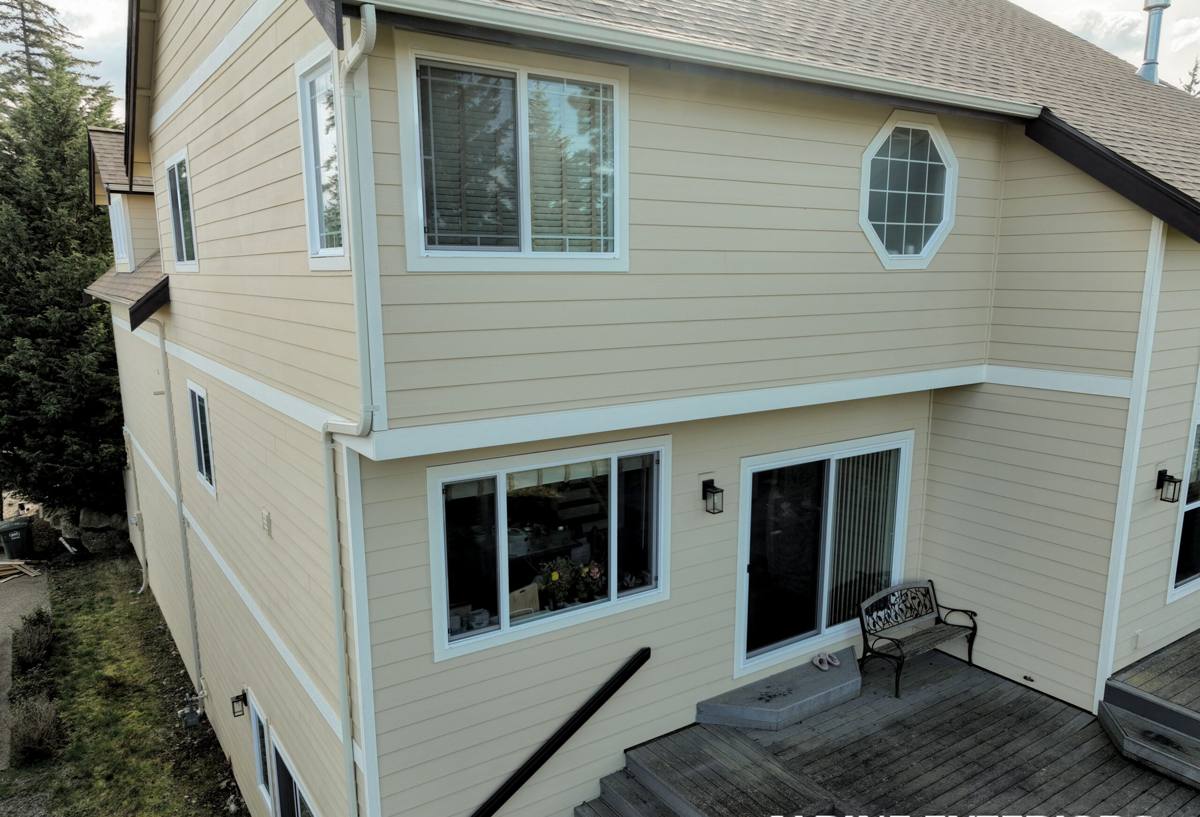
Signs a Blaine Home Needs Siding Replacement Now
Most homeowners call us after noticing one or two of these, not because they've done a full inspection. Any of the following is worth a closer look before another wet season passes:
- Soft or spongy spots when you press on the siding, especially near the bottom courses and around window trim
- Paint that's bubbling, peeling, or needing repainting every few years instead of holding
- Visible cupping, warping, or buckling panels, particularly on north- and west-facing walls that catch the weather off the water
- Persistent moss or dark streaking that comes back within a season of cleaning
- Gaps opening up at seams, corners, or where trim meets siding
- A musty smell or visible staining on interior walls that share an exterior wall with siding problems
None of these mean the whole house is a lost cause. But they do mean water is getting further into the wall assembly than it should, and in this climate that problem compounds fast.
What a Correct Replacement Actually Involves
Siding replacement done right is a wall system project, not a panel swap. The siding itself is the last layer installed and the first thing you see, but the work that matters most for a house exposed to salt air and driving rain happens underneath it.
Tear-Off and Inspection
We remove the old siding and take a real look at the sheathing underneath — this is where rot, corroded fasteners, and hidden water damage from years of moisture intrusion actually show up. Any soft or compromised sheathing gets repaired or replaced before anything new goes back on. Skipping this step is the single most common reason a siding job fails early.
Weather-Resistive Barrier and Flashing
A properly lapped weather-resistive barrier, correctly flashed windows, doors, and penetrations, and attention to how water is meant to drain down and out of the wall — not sideways into it — matter more in a driving-rain climate than almost anywhere else in the state. This is also where a rain screen gap behind the siding earns its keep, giving any moisture that does get past the cladding a way to drain and dry instead of sitting against the substrate.
Installation to Manufacturer Spec
Proper fastener placement, clearances at grade and roof lines, caulking only where it belongs, and correctly primed cut edges all affect how the siding performs over the next few decades, not just how it looks the day it's installed. In a coastal environment, corrosion-resistant fasteners and correct clearances aren't optional details — they're the difference between a wall system that sheds water and one that traps it.
Why We Only Install James Hardie Fiber Cement
We don't install vinyl, LP SmartSide, or wood siding, and Blaine's climate is a big part of why. Vinyl expands and contracts with temperature swings and can crack or warp under sustained wind exposure. Engineered wood products and cedar depend on an intact factory coating or paint film to keep moisture out — once that's compromised, especially under the kind of persistent damp and moss growth common here, the substrate underneath is vulnerable to swelling and rot. Salt air and prolonged moisture exposure are exactly the conditions that expose those weak points fastest.
James Hardie fiber cement is non-combustible, doesn't absorb moisture the way wood-based products do, and holds up to sustained damp without swelling or delaminating when installed correctly. The factory-applied ColorPlus finish is baked on to resist fading and chipping better than field-applied paint, which matters when repainting a coastal-facing wall every few years isn't something most owners want to budget for. Hardie's HZ5 product line is engineered specifically for climates with more moisture exposure, which describes Blaine about as well as any product spec can.
Our Process for Blaine Homes
We're based out of Bellingham and already work jobs up and down Whatcom County, so a Blaine project isn't a special trip for us — it's a normal week. That matters more than it sounds like it should. A crew that already knows what this stretch of coastline does to a wall system shows up already thinking about drainage planes, corrosion-resistant fasteners, and moss-prone north walls, instead of learning it on your house.
A typical project starts with an on-site walkthrough where we look at your current siding, check for the trouble spots listed above, and talk through what's driving the decision to replace — visible failure, an upcoming remodel, or just wanting ahead of the problem. From there we give you a straightforward scope and price, handle tear-off and sheathing repair as needed, install the weather-resistive barrier and flashing correctly, and finish with Hardie siding and trim installed to manufacturer spec. We clean up thoroughly and walk the finished job with you before we call it done.
What Drives the Cost
Every house is different, so we don't quote sight-unseen, but these are the factors that move the price on a typical Blaine siding replacement:
| Factor | Why It Matters |
|---|---|
| Home size and number of stories | More surface area and taller walls mean more material, labor, and equipment |
| Condition of the sheathing underneath | Rot or water damage found during tear-off adds repair work before new siding goes on |
| Trim and architectural detail | Corners, window casings, and multiple roof lines take more time than a simple rectangular wall |
| Siding profile and color | Lap width, board-and-batten, or shingle-style panels vary in material and install time |
| Access and site conditions | Tight lot lines, landscaping, or difficult staging near the water can affect labor time |
We'll walk through all of this during your estimate so you know exactly what you're paying for and why, not just a bottom-line number.
Living With It: Maintenance in This Climate
Correctly installed Hardie siding needs less upkeep than the alternatives, but "less" isn't "none," especially this close to the water. A yearly rinse to knock salt residue and early moss growth off the lower courses and any shaded walls goes a long way. Keep an eye on caulking at trim joints and touch up any chips in the factory finish before they have a chance to expose bare substrate. Trim back vegetation that keeps a wall shaded and damp longer than it needs to be — that's often the difference between a wall that stays clean and one that grows moss every year regardless of what siding is on it.
What to Look for in a Blaine Siding Contractor
Coastal siding work rewards experience with this specific climate, not just siding experience in general. Before you hire, it's worth asking:
- Do they regularly work in Blaine or elsewhere on the Whatcom County coastline, or is this an unfamiliar environment for them?
- Will they inspect and repair sheathing before installing new siding, not just cover over what's there?
- Do they install a proper weather-resistive barrier and correct flashing details, and can they explain why?
- Are they installing to the manufacturer's specifications, including fastener type and placement for a coastal environment?
- Is the warranty clear about what's covered — material, labor, or both — and for how long?
A contractor who can answer these clearly, without hedging, is one who's actually done this work in this climate before.
If you're seeing signs of wear on a Blaine home, or just want a straight answer on whether your siding has a few good years left in it, we're happy to take a look. Reach out for a free, no-pressure estimate using the form below.