 Bellingham
 Roof Repair in York: Built for Whatcom County Weather
Homes in the York area deal with a specific combination of weather stress that a lot of general roofing crews don't plan for correctly. You're close enough to the water that salt-laden air works on metal fasteners and flashing year-round, the fall and winter storms bring driving rain that finds every weak seam, and the shaded, damp stretches of the year turn into a long moss season that can run from October well into spring. None of these problems are dramatic on their own. What they do is compound — a small gap in flashing becomes a slow leak, a patch of moss becomes a lifted shingle, and a lifted shingle becomes water in the attic. Roof repair here isn't about slapping sealant on a stain. It's about understanding why that spot failed in the first place and fixing the actual cause.
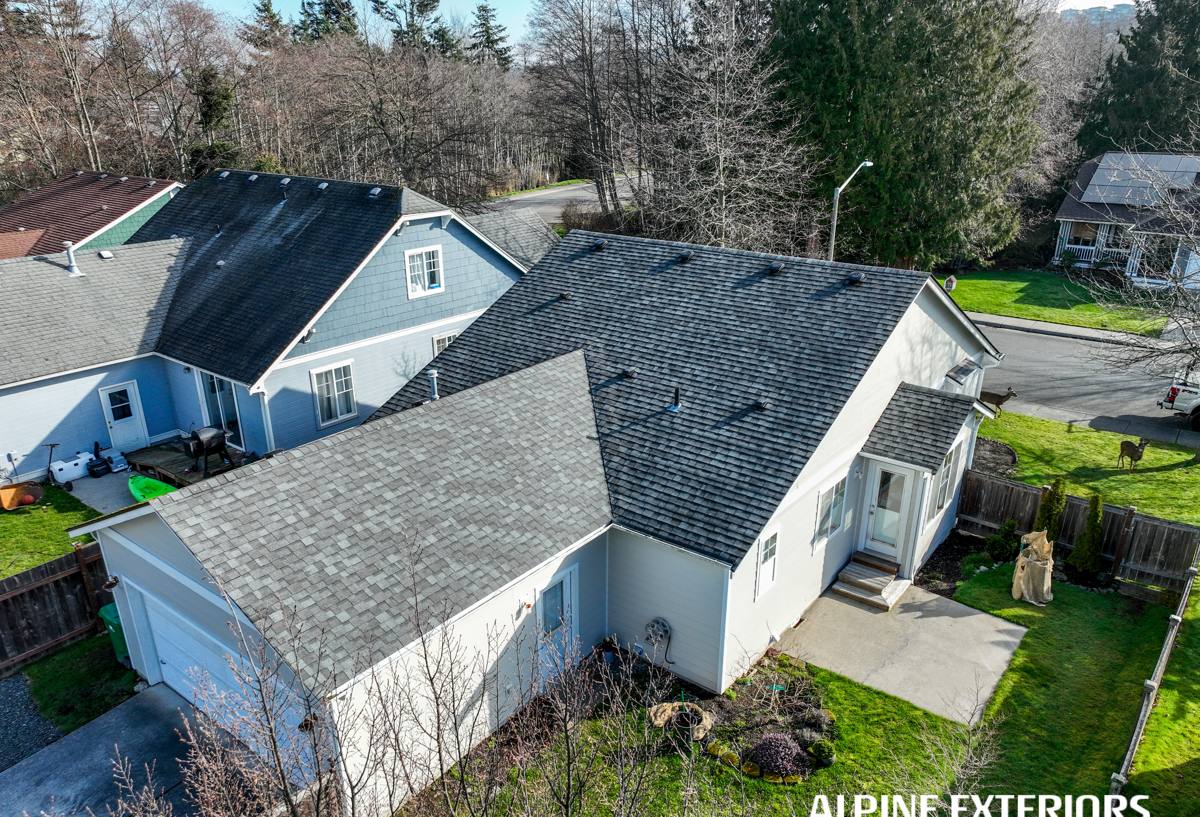
Signs a York Roof Needs Repair, Not Just a Look
Most roof problems in this area show up gradually, and homeowners often notice the symptom long before they see the source. Here's what tends to show up first on homes in and around York:
- Dark streaking or green-black patches on north-facing or shaded slopes — early moss and algae growth
- Granules collecting in gutters or at the base of downspouts, a sign of asphalt shingle wear accelerated by constant moisture cycling
- Soft or discolored ceiling patches, especially near chimneys, skylights, or where two roof planes meet
- Rust streaks or a chalky white residue on metal flashing or fasteners — a sign salt air is breaking down the coating
- Shingles that look "lifted" or curled at the edges after a windy, wet stretch
- Daylight visible through the attic decking at ridge or valley lines
Any one of these on its own might not mean much. Two or three together, especially after a hard rain event, usually means water has already found a path in and the roof needs a real look, not a guess.
Why Moss and Salt Air Cause Different Damage Than Storms
Moss and organic growth
Moss doesn't just look bad — it holds moisture directly against the roofing material, which keeps shingles wet far longer than they'd otherwise be after a rain event. Over a full moss season, that constant dampness softens the asphalt mat, degrades the adhesive strip between shingle courses, and can physically lift shingle edges as moss grows underneath them. On cedar or wood-based roofing it's worse, since moss roots can work into the grain itself. A roof repair that just power-washes the moss off without treating the cause and clearing debris from valleys and gutters is a temporary fix at best.
Salt air and coastal corrosion
Being close to Bellingham Bay means airborne salt settles on every exposed metal surface — flashing, nail heads, gutter hangers, vent caps. Standard galvanized fasteners and untreated flashing corrode faster here than they would inland. That corrosion is often the real reason a "random" leak shows up around a chimney or skylight years before the shingles themselves are worn out. Correct repair work in this area means using fasteners and flashing rated for coastal exposure, not just whatever's on the truck.
Driving rain and wind-driven water
Whatcom County storms often come with real wind behind the rain, which pushes water sideways and uphill under laps and flashing that would stay dry in a straight-down rain. This is why leaks frequently show up at valleys, sidewalls, and low-slope transitions rather than in the middle of an open roof field — those are the spots where wind-driven water tests every seam.
What a Correct Repair Actually Involves
A proper roof repair starts before anyone touches a shingle. Here's the process that actually finds and fixes the problem instead of masking it:
- Interior check first. Attic and ceiling inspection to trace water staining back to its actual entry point, which is often several feet from where the stain appears.
- Full-slope inspection, not spot-checking. Walking the affected slope and adjacent areas, since a leak's cause is frequently uphill or off to the side of where it shows up inside.
- Flashing and penetration review. Chimneys, vents, skylights, and sidewalls are where the majority of real leaks originate — these get checked before assuming the field shingles are at fault.
- Moss and debris clearing. Valleys, gutters, and shaded slopes get cleared so water has a clear path off the roof again.
- Correct material match. Repairs use shingles, flashing, and fasteners that match or exceed what's already on the roof, with corrosion-resistant hardware given the coastal exposure.
- Sealing and re-lapping done to code. Proper shingle lap and flashing integration, not surface caulking, which fails faster than it looks like it should in this climate.
- Documentation of what was found and fixed. So the homeowner knows exactly what the problem was and whether it's isolated or a sign of broader wear.
Repair vs. Replacement: How We Make the Call
Not every roof problem in York needs a full replacement, but pretending a worn-out roof just needs "one more patch" wastes money in the long run. Here's the general framework we use when advising homeowners:
| Situation | Usually Repair | Usually Replacement |
|---|---|---|
| Localized flashing failure (chimney, skylight, vent) | Yes | No |
| Isolated storm or wind damage to a small area | Yes | No |
| Moss damage limited to one shaded slope | Yes | No |
| Granule loss and curling across most of the roof | No | Yes |
| Roof is past 20-25 years and showing multiple failure points | No | Yes |
| Recurring leaks in different spots each season | No | Yes |
| Decking is soft or spongy underfoot | No | Yes |
The honest answer is usually visible once we're actually up there. A roof with one bad flashing detail and otherwise sound shingles is a repair. A roof where the repair would cost a third of a replacement and only buy a couple more years isn't doing the homeowner any favors.
Cost Factors for Roof Repair in This Area
Repair costs vary a lot depending on what's actually wrong, and we won't quote a number without seeing the roof. What we can share is what tends to move the price up or down:
| Factor | Why It Matters |
|---|---|
| Roof pitch and access | Steeper slopes and multi-story sections take longer and need more safety setup |
| Extent of decking damage | Soft or rotted decking under the leak point adds material and labor beyond the surface repair |
| Flashing complexity | Chimneys, skylights, and multiple roof-wall intersections take more time to do correctly than open field repairs |
| Material match | Older or discontinued shingle lines can be harder to match, sometimes requiring a slightly larger repair area for a clean blend |
| Moss and debris load | Heavy moss buildup adds cleanup time before the actual repair work can start |
As a general range, small, isolated repairs (a single flashing detail or a handful of shingles) tend to run a few hundred dollars, while more involved repairs with decking replacement or complex flashing work can run well into four figures. We'll give you a firm number after we've actually inspected the roof, not a guess over the phone.
Why a Crew That Already Works York Matters
There's a real difference between a roofer who works this specific area regularly and one who's driving in from somewhere with a different climate profile entirely. A crew that already services homes in and around York and greater Bellingham knows which roof orientations tend to hold moisture longest, which flashing details fail first under coastal salt exposure, and how the local storm pattern tends to drive water where it shouldn't go. That's the difference between a repair that holds for years and one that needs a follow-up visit after the next big rain.
It also matters for response time. When a leak shows up during an active storm, a crew already working in the area can usually get out faster than one dispatching from further away — and with roofing, the gap between "small leak" and "soaked insulation and drywall damage" is often measured in days, not weeks.
Simple Maintenance That Extends the Life of a Repair
A good repair lasts longer with a little seasonal attention. This isn't a substitute for professional inspection, but it's what homeowners can reasonably do themselves between visits:
- Clear leaves and debris from valleys and gutters at least twice a year, more often under overhanging trees
- Look for moss starting on shaded, north-facing slopes before it spreads across the roof
- Check that downspouts are directing water away from the foundation, not just off the roof edge
- After major windstorms, do a visual check from the ground for obviously lifted or missing shingles
- Keep attic ventilation clear — a poorly ventilated attic traps moisture that works against the roof from underneath
- Don't power-wash the roof surface directly, which can strip granules and shorten shingle life faster than the moss it's removing
Getting an Honest Look at Your Roof
If you're seeing staining, moss buildup, or you're just not sure whether that roof is holding up the way it should against another Whatcom County winter, the smart move is a real inspection rather than guessing. We'll walk the roof, check the flashing and attic, and tell you plainly whether you're looking at a repair, a bigger issue, or nothing to worry about yet. Reach out for a free, no-pressure estimate using the form below.