 Bellingham
 Why Birch Bay Decks Take More Abuse Than Most
Birch Bay sits right on the water, and that location cuts both ways. It's part of what makes the area a great place to have a deck — and it's also exactly why decks out here fail faster than they do a few miles inland. Salt-laden air off the bay accelerates corrosion on fasteners, hardware, and any metal flashing that isn't rated for the exposure. Driving rain off Georgia Strait doesn't just fall on a deck, it gets pushed sideways under railings and against ledger boards where water has no business being. And the long, damp moss season that Whatcom County is known for means any deck surface with texture, shade, or poor airflow underneath will grow moss and algae for a good chunk of the year.
None of that is a reason to avoid a deck at Birch Bay. It's a reason to build one correctly, with materials and details chosen for this specific exposure rather than a generic spec pulled off a shelf.
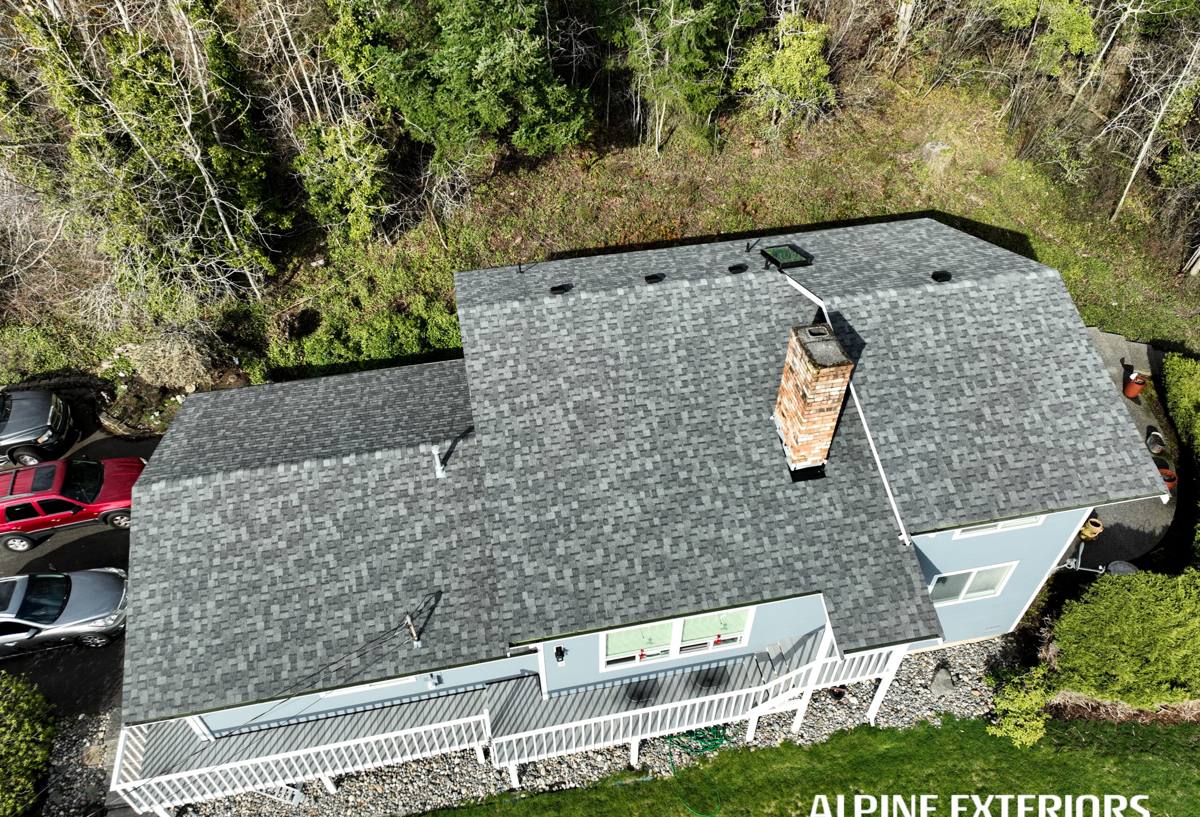
Why Composite Makes Sense Here
Composite decking — boards made from a blend of wood fiber and recycled plastic, usually with a protective cap — was built to handle exactly the conditions Birch Bay throws at it. It doesn't absorb water the way solid wood does, so it isn't prone to the swelling, cupping, and splintering that a lot of wood decks develop after a few wet Whatcom County winters. It doesn't need annual staining or sealing, which matters a lot when the weather window for that kind of maintenance is short and unreliable here. And a quality capped composite board resists the surface staining and mildew growth that salt air and shade encourage.
That said, composite isn't magic and it isn't the right call in every situation. It costs more upfront than pressure-treated wood, it can get hot underfoot in full afternoon sun (less of a concern on most Birch Bay lots with tree cover or bay breeze), and it still depends entirely on the substructure underneath it. A composite deck built on an undersized or poorly flashed frame will have the same rot and structural problems as a wood deck — the boards just won't show it until the damage is further along.
Where Composite Beats Wood, and Where It Doesn't
| Factor | Composite | Pressure-Treated Wood |
|---|---|---|
| Upfront cost | Higher | Lower |
| Annual maintenance | Occasional wash-down | Stain/seal every 1-2 years |
| Moisture resistance | Very good (capped boards) | Depends on maintenance upkeep |
| Moss/algae resistance in shaded, damp spots | Better, still needs cleaning | Prone to buildup without regular treatment |
| Fastener/hardware corrosion risk near salt air | Same risk — depends on hardware, not the decking | Same risk — depends on hardware, not the decking |
| Long-term structural life | Long, if substructure is built right | Long, if substructure is built and maintained right |
What a Correct Composite Install Actually Involves
The decking boards themselves are the part homeowners see, but they're a small piece of what determines whether a deck holds up on a bay-front lot. A correct job pays as much attention to what's underneath as to what's on top.
Substructure and Framing
Joists, beams, and posts need to be sized for the actual span and load, not just "close enough." On exposed sites near the water, we favor treated or composite-rated substructure lumber with fastener spacing tightened up to account for wind loading — Birch Bay gets steady bay winds that put more lateral stress on railings and structure than a sheltered inland yard would see.
Flashing and Ledger Connection
Where a deck attaches to the house, the ledger-to-house connection is the single most common failure point on any deck, anywhere. In a driving-rain environment like this one, proper flashing (installed in the right order, lapped correctly, with the right sealant at penetrations) is what keeps water out of the rim joist and wall assembly behind it. This is also the detail most likely to get shortcut on a budget job, and the one most expensive to fix after the fact.
Ventilation and Drainage Underneath
Composite doesn't rot, but the framing under it can if moisture gets trapped. Decks built low to the ground or over poorly graded soil need real airflow underneath and a way for water to drain away from the house rather than pooling under the deck — a bigger issue during Whatcom County's wet months than most people expect.
Fasteners and Hardware
All the composite resistance in the world doesn't help if the screws, joist hangers, and post bases holding the frame together are rusting out from salt exposure. We use fasteners and structural hardware rated for coastal/corrosive environments, not the cheapest stainless-looking option at the hardware store.
Choosing Boards and Finish Details
Composite decking comes in a range of grades and cap styles. Fully capped boards (protective shell on all four sides) generally hold up best in wet, shaded, salt-air conditions because there's no exposed core to take on moisture at the cut ends or gaps. Grooved-edge boards with hidden fastener systems give a cleaner look with no visible screw heads, though they require slightly more careful installation to keep spacing consistent as boards expand and contract with temperature and moisture.
Color and texture matter more here than in a drier climate — darker boards show water spotting and pollen/organic debris less than very light colors, but they also run warmer in direct sun. Board texture that's aggressive enough to hide moss spores can be harder to keep clean than a smoother, lightly textured surface. We walk homeowners through actual sample boards rather than a catalog photo, because how a board looks and feels in Birch Bay's damp air is not the same as how it photographs.
How We Approach a Birch Bay Deck Project
- Site assessment. We look at sun/shade exposure, prevailing wind direction, proximity to the water, existing drainage, and the condition of anything already in place.
- Structural plan. Framing, footings, and ledger connection are sized and detailed for the actual site conditions, not a generic permit-minimum spec.
- Material selection. We recommend board grade, cap style, and hardware based on the site's real exposure, and explain the trade-offs plainly.
- Flashing and waterproofing first. Before a single deck board goes down, the ledger, house connection, and any structural framing are properly flashed and sealed.
- Installation. Boards, fastening system, railings, and stairs are installed to manufacturer spec, which is also what keeps the product warranty intact.
- Final walkthrough. We go over basic care — what to clean, what to check seasonally — so the deck stays looking and performing the way it should.
Living With a Composite Deck in This Climate
Composite is low-maintenance, not no-maintenance. A few honest, simple habits go a long way toward keeping a Birch Bay deck performing well year after year.
- Rinse or sweep the deck periodically during moss season to keep organic buildup from taking hold in grooves and gaps
- Keep gutters and downspouts near the deck clear so runoff isn't dumping extra water onto or under the deck surface
- Check railing posts and structural hardware for corrosion or looseness once a year, especially anything closest to the water side
- Keep planters and furniture feet from sitting directly on the surface for long periods without occasional moving, to avoid trapped moisture spots
- Clear leaves and debris from between boards and around the perimeter before winter
- Address any soft spots, movement, or drainage issues underneath the deck promptly rather than waiting
What Correct Maintenance Costs to Skip Later
A deck that's flashed and framed correctly, with the right hardware, needs very little from a homeowner beyond the basics above. A deck that had shortcuts taken on the ledger flashing or substructure will eventually show it — usually as soft framing, a loose ledger connection, or water staining on the house siding below the deck attachment — and by the time that's visible, the repair is bigger and more expensive than it would have been to do right the first time.
Why It Matters That We Already Work in Birch Bay
A crew that works Birch Bay regularly already knows which details matter most here: how far the salt air reaches inland on a given lot, how much wind exposure a particular street or bluff sees, and how local soil and grading tend to handle winter rain. That's not something you get from a spec sheet — it's from having built and repaired decks in this specific stretch of Whatcom County and seen firsthand what holds up and what doesn't. We'd rather spend a little extra time on flashing and hardware selection up front than have a homeowner call us in five years about a soft ledger board.
Get a Straight Answer for Your Property
Every lot around Birch Bay has its own mix of sun, wind, and water exposure, and that mix should drive the decking plan — not the other way around. If you're planning a new deck or replacing an aging one, we're happy to take a look, walk the site with you, and give you a clear, no-pressure estimate along with honest recommendations for your specific spot. Use the form below to get started.