 Bellingham
 Birch Bay's Waterfront Climate Puts Real Demands on Siding
Birch Bay sits right on the water in Whatcom County, and that location is a mixed blessing for the homes here. The same shoreline exposure that makes the area desirable also means houses take a harder hit from the weather than homes even a few miles inland. Salt-laden air off the water works into seams, fasteners, and unprotected wood over time. Wind-driven rain doesn't just fall straight down here — it gets pushed sideways into siding laps, trim joints, and corner boards, which is exactly where lesser materials start to fail first. And like most of the Pacific Northwest, Birch Bay gets a long, damp stretch of the year where shaded and north-facing walls stay wet long enough for moss and algae to take hold.
None of this means a home here can't have great-looking siding that lasts. It means the material and the installation both have to be chosen with this specific exposure in mind, not treated the same as a dry-side or inland install.
Why We Only Install James Hardie Fiber Cement
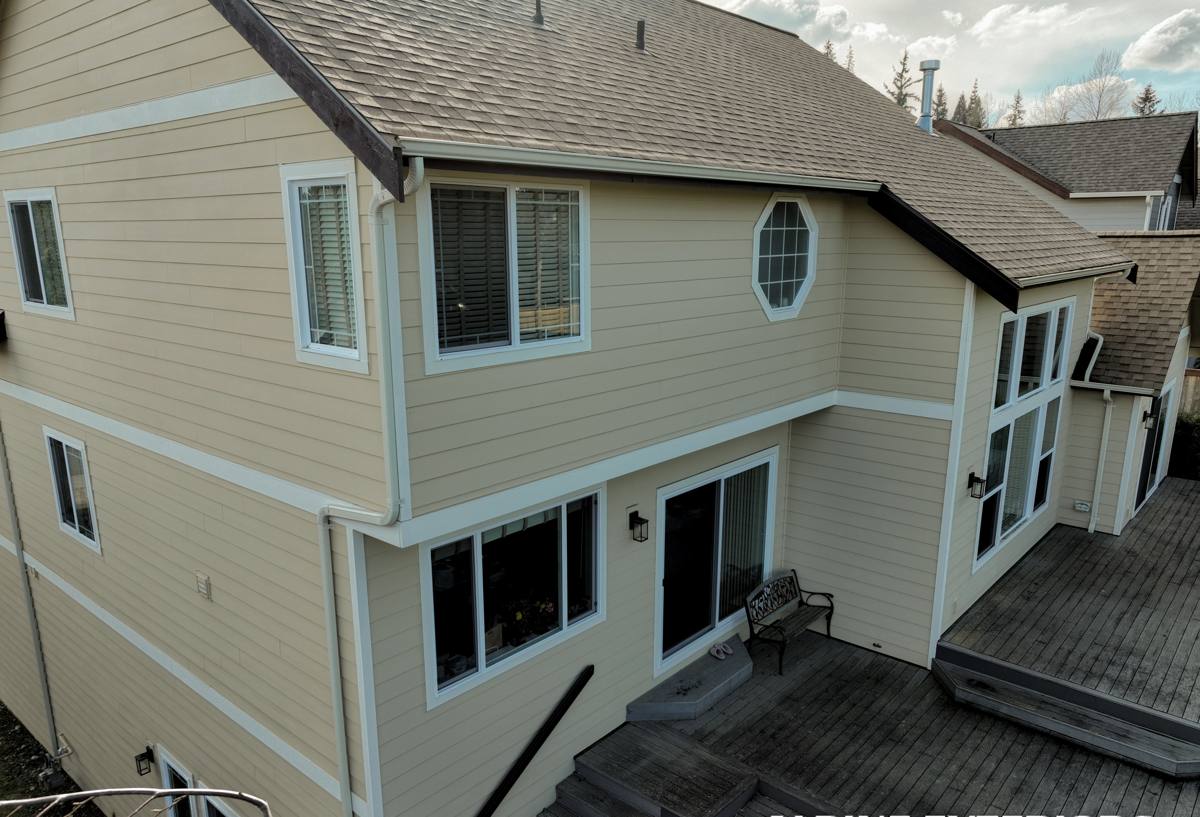
We made a decision a long time ago to install James Hardie fiber cement siding exclusively — not vinyl, not LP SmartSide, not cedar or primed spruce, not other fiber cement brands. That's not a marketing angle; it's a standard we apply to every job, including the ones here in Birch Bay where the coastal exposure makes the choice of material matter even more.
What Salt Air and Moisture Do to the Alternatives
Vinyl siding expands and contracts with temperature swings and can become brittle over time, and wind-driven rain can drive moisture behind loosely fastened panels at a coastal property faster than it would inland. Cedar and primed wood siding look great new, but they require an ongoing paint and caulk maintenance schedule to keep water out — skip a cycle or two in a damp environment like this and rot risk climbs fast. Other fiber cement brands vary in their engineered moisture resistance and factory finish quality, and we've found the consistency isn't there across the board. James Hardie's HZ5 product line is specifically engineered for damp, marine-influenced climates like the Pacific Northwest coast, with moisture and durability performance built in at the manufacturing stage rather than relying entirely on field-applied paint.
Coastal Material Comparison
| Factor | James Hardie HZ5 Fiber Cement | Vinyl | Cedar / Primed Wood |
|---|---|---|---|
| Moisture resistance | Engineered for damp, marine climates | Doesn't absorb water, but seams and fasteners can let it behind the panel | Absorbs moisture; relies on paint/sealant to stay protected |
| Salt air exposure | Non-combustible, dimensionally stable cement composition | Can become brittle with UV and temperature cycling over years | Salt accelerates weathering of finish and grain |
| Ongoing maintenance | Factory ColorPlus finish, periodic wash and caulk check | Low, but repairs after impact or wind damage can be hard to color-match | Repaint/reseal on a recurring cycle |
| Moss/algae resistance | Dense cement composition doesn't feed growth like bare wood | Growth sits on surface, generally washes off | Porous surface can hold moisture and support growth |
What a Correct James Hardie Install Requires Near the Water
The product is only half the equation. A James Hardie install done to spec looks different from a rushed one, and in a wind- and rain-exposed spot like Birch Bay, those differences show up as problems within a few years if they're skipped.
The Details That Actually Matter
- Correct starter strip and clearance at the foundation so the bottom course doesn't wick moisture from grade or hardscape
- Proper flashing and integration at every window, door, and roofline penetration — this is where wind-driven rain finds its way in if it's not done right
- Manufacturer-specified fastener spacing and type, driven flush (not overdriven), so panels can move as designed without cracking
- Correct gapping and sealant at butt joints and trim, sized for the temperature swings and moisture cycling this climate produces
- Back-priming and sealing of any field-cut edges before installation, not after
- House wrap or weather-resistive barrier installed and lapped correctly underneath, since the siding is one layer of a full water-management system, not the whole system
Any one of these done wrong won't necessarily show up on install day. It shows up two or three winters later as a stain, a soft spot, or a section that's holding moisture behind it — usually on the wall that takes the worst of the weather off the water.
Handling Moss and Algae on Shaded, Damp Walls
Birch Bay's tree cover and marine layer mean some walls — especially north- and west-facing ones near mature landscaping — stay damp longer after a storm than others. James Hardie's factory-applied ColorPlus finish is baked on and more resistant to holding surface growth than bare or field-painted wood, and the cement substrate itself doesn't feed organic growth the way wood fiber can. That said, no exterior surface in this climate is maintenance-free. Good installation practice — keeping siding clear of soil and mulch contact, keeping vegetation trimmed back from walls, and making sure gutters aren't overflowing onto siding below — does more to prevent moss buildup long-term than any product choice alone.
Choosing the Right Hardie Line and Color for a Birch Bay Home
Most homes in this area work well with either HardiePlank lap siding for a traditional look or a mix of panel and shingle-style accents for gables and feature walls. The color decision matters more here than in a lot of markets — homes near the water take direct UV reflection off open water and sky for more hours of the day than a shaded inland lot would. ColorPlus finishes are engineered to resist that fading better than field-applied paint, which is one more reason we don't recommend repainting over it unless it's truly needed.
Questions Worth Answering Before You Pick a Product Line
- Is the home directly exposed to open water and wind, or partially shielded by trees or neighboring structures?
- Are there existing moisture or rot issues in the current siding that need to be addressed before new siding goes on?
- Do you want a traditional lap look, or a mix of panel/shingle accents on gables and entries?
- How much direct sun exposure does each elevation get, since that affects color fade over time?
Our Process, Start to Finish
We start with an on-site inspection of the current siding, sheathing, and any trouble spots — not just a measurement for a quote. If there's existing moisture damage behind the old siding, we flag it before work starts rather than covering it up. From there we walk through product line, color, and trim options, provide a written scope and price, and schedule the tear-off and install. During installation we handle flashing, house wrap, and fastening to manufacturer spec, and we walk the finished job with the homeowner before calling it done. We stand behind the installation, and James Hardie's product warranty backs the material itself.
Why a Crew That Already Works Birch Bay Matters
A contractor who works this stretch of coastline regularly already knows which elevations take the worst wind-driven rain, how far back moss and algae typically creep before they become a real problem, and how local wind exposure should change flashing and fastening decisions on a given lot. That's not something you get from a general regional installer doing a one-off job here. It shows up in fewer callbacks and a siding job that's actually built for the site it's on, not a generic install dropped onto a coastal home.
What Affects the Cost of a Birch Bay Siding Project
| Cost Factor | Why It Matters |
|---|---|
| Tear-off vs. new construction | Removing and disposing of old siding, and repairing any sheathing damage found underneath, adds labor and time |
| Home size and number of stories | More square footage and elevation height increase material, staging, and labor needs |
| Product line and profile | Lap siding, panel systems, and shingle-style accents carry different material and labor costs |
| Trim and accessory work | Corner boards, window trim, and fascia detailing add scope beyond the flat wall area |
| Site exposure and access | Waterfront wind exposure and tighter lots can affect staging, scaffolding, and scheduling around weather |
If your Birch Bay home's siding is showing its age, holding moisture, or just due for an honest look, we're happy to come out for a free, no-pressure estimate — no obligation, just a straight assessment of what your home actually needs. The form below will get you started.