 Bellingham
 Metal Roofing in Birch Bay: Built for a Waterfront Climate
Birch Bay sits directly on the water in northern Whatcom County, and that location puts homes here in a tougher environment than most inland Bellingham neighborhoods deal with. Salt-tinged marine air moves in off the bay almost constantly, rain gets driven sideways by wind instead of falling straight down, and a long, damp moss season settles into shaded and north-facing roof slopes and stays there for months. Metal roofing holds up well against most of that, but only when the panel type, coatings, and installation details are chosen with this specific coastline in mind rather than treated like a generic upgrade that would work the same anywhere in the state.
This page covers metal roofing specifically for Birch Bay homes: what the local climate actually does to a roof, what separates a correctly installed metal system from one that causes problems in a few years, and how our process works from first look to final walkthrough.
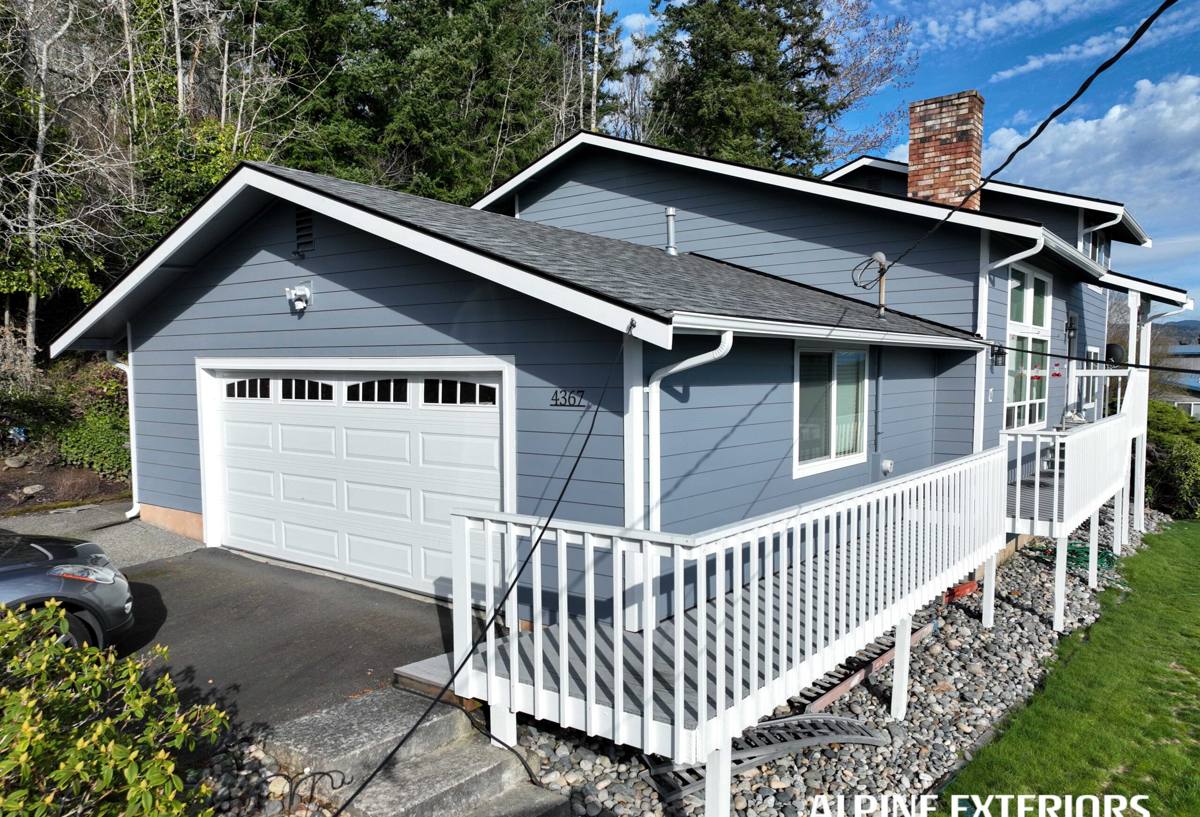
What Birch Bay's Climate Actually Does to a Roof
Salt Air and Corrosion
Being this close to the water means more direct salt exposure than a roof a few miles inland ever sees. Salt accelerates corrosion on unprotected metal, cheap fasteners, and lower-grade flashing, and it works on those materials continuously, not just during storms. Any metal roofing system installed here needs panels, fasteners, and trim rated for a marine environment, not standard-grade hardware that happens to be less expensive.
Wind-Driven Rain
Waterfront exposure also means more sustained wind, and wind-driven rain doesn't behave like rain falling straight down. It gets pushed up under panel edges, into valleys, and around penetrations at angles a sheltered inland roof rarely has to handle. A roof detailed for calm conditions can fail here specifically because water is finding its way in sideways rather than from above.
A Long Moss and Debris Season
Mild temperatures and near-constant moisture add up to a moss and algae season that runs most of the year on shaded surfaces across this part of Whatcom County. Metal roofing itself doesn't give moss much to grow on, but valleys, panel seams, and anywhere debris collects can still hold organic matter and moisture against the roof if they aren't kept clear.
Why Metal Roofing Is a Strong Fit for This Environment
Metal roofing has real advantages for a Birch Bay home when it's specified correctly. It sheds water fast off a smooth, continuous surface rather than giving wind-driven rain a shingle edge to work under. It doesn't absorb moisture the way organic roofing materials can, which removes a lot of the substrate that moss and algae need to establish themselves. Panels are installed in long runs with far fewer exposed seams than a shingle roof, and a quality system carries a wind rating well suited to an exposed waterfront lot. Lifespan is the other draw — a correctly installed metal roof commonly outlasts an asphalt shingle roof by decades, which matters on a coastline where re-roofing isn't a simple weekend project.
None of that is automatic. A metal roof installed with the wrong fastener type, unsuitable underlayment, or a coating that isn't built for salt exposure will develop problems just like any other roofing material installed the wrong way. The material buys you a real head start in this climate — it doesn't remove the need for correct installation.
Choosing the Right Metal System for a Salt-Air Waterfront Home
Not all metal roofing is the same product wearing different profiles. The panel type, the fastening system, and the finish coating all matter more here than they would on a sheltered inland roof.
| System | How It's Fastened | Best Fit for Birch Bay |
|---|---|---|
| Standing Seam | Concealed clips, no exposed fasteners through the panel face | Strong choice for waterfront exposure — fewer penetration points for salt air and wind-driven rain to work on over time |
| Exposed Fastener Panel | Screws driven through the panel face into the deck or purlins | Lower upfront cost, but every exposed fastener is a future maintenance point and a spot for corrosion to start if the wrong hardware is used |
Concealed-fastener standing seam is generally the more forgiving system for a shoreline exposure like this one, precisely because it has far fewer places for salt-laden moisture to reach a fastener over the roof's lifespan. Exposed-fastener panels aren't a poor product, and plenty perform well, but they carry a higher long-term maintenance burden in a marine environment since every screw and its washer stays exposed to weather and will eventually need attention.
Coating Grade Matters as Much as Panel Style
The paint or coating system on a metal panel is what actually faces the salt air day after day, and coating grades vary widely. Higher-grade PVDF-based finishes hold color and chalk resistance far longer under sustained UV and salt exposure than lower-grade polyester coatings. On a Birch Bay roof, we treat coating quality as a real installation decision, not a color choice made last.
Fastener and Flashing Compatibility
Mixing incompatible metals is one of the more avoidable mistakes on a coastal roof. Certain metal combinations create galvanic corrosion when they're in contact and exposed to moisture, which can eat through a fastener or flashing piece years before the panel itself would ever fail. Every fastener, flashing detail, and trim piece needs to be matched to the panel material, not chosen simply because it was on the shelf.
What a Correct Metal Roof Installation Involves
A metal roof is a system, and it only performs the way it's supposed to when every layer is handled correctly, not just the visible panels on top.
Deck Inspection
Any existing roofing comes off down to the deck so hidden moisture damage or soft spots can be found and repaired before new material goes on. Installing over a compromised deck just buries a problem that will eventually surface again, this time under a much longer-lasting roof.
Underlayment
Metal roofing needs a high-temperature synthetic underlayment rated for use directly beneath metal panels, with self-adhered ice-and-water membrane at eaves, valleys, and other vulnerable transitions. This is the layer that protects the deck if wind-driven rain ever does work its way past a seam or fastener.
Panel Layout and Thermal Movement
Metal panels expand and contract with temperature swings more than shingles do, and a correct installation accounts for that with proper clip spacing and fastening that lets panels move without buckling or working fasteners loose over time.
Flashing at Valleys, Walls, and Penetrations
Just as with any roofing material, most leaks start at flashing details rather than in the open field of the roof. Valleys, chimney and vent penetrations, and wall-to-roof transitions all need flashing that's properly integrated with the panel system and underlayment, matched in material to avoid galvanic issues, and sealed with products rated for this climate.
Trim, Closures, and Ventilation
Ridge caps, eave trim, and panel closures need to be sealed against wind-driven rain and pests while still allowing the roof assembly to breathe. Balanced attic ventilation keeps moisture from building up underneath the deck, which protects the wood structure below the metal regardless of how well the panels themselves are holding up.
Cost Factors Worth Understanding
Metal roofing bids can vary significantly between contractors, and the difference usually comes down to real differences in scope and material grade rather than one company simply charging more for the same job.
| Factor | What It Affects |
|---|---|
| Panel gauge and profile | Structural strength, wind performance, and overall lifespan of the roof |
| Fastening system | Concealed-fastener systems cost more upfront but carry less long-term maintenance in salt air |
| Coating grade | How long the finish resists fading, chalking, and salt exposure before it needs attention |
| Underlayment and ice-and-water coverage | Protection against wind-driven rain reaching the deck |
| Flashing and trim scope | How thoroughly valleys, penetrations, and wall transitions are addressed |
| Tear-off vs. installing over existing roofing | Whether hidden deck damage gets found and repaired first |
| Roof pitch and access | Labor time, staging, and safety requirements on the job |
A written estimate that itemizes these components tells you far more than a single lump-sum number. It's worth asking any contractor bidding a Birch Bay metal roof to walk through exactly which panel gauge, fastening system, and coating grade they're pricing before comparing bids side by side.
How Our Process Works
- In-person inspection: We walk the roof and attic in person and document the deck condition, existing flashing, and any signs of wind or moisture damage.
- Written estimate: You get an itemized bid covering panel type, fastening system, underlayment, flashing scope, and cleanup, not a vague single-line price.
- Scheduling around weather: We build reasonable flexibility into the timeline, since wet-season delays are a normal part of working on this stretch of coastline.
- Tear-off and deck repair: Existing roofing comes off completely, and any deck damage found is repaired before anything new goes down.
- Underlayment, flashing, and panel installation: Each layer goes in to manufacturer specification, with extra care at valleys, penetrations, and wall transitions given the wind exposure here.
- Final walkthrough: We review the completed roof with you and do a full site cleanup before calling the job done.
Maintaining a Metal Roof in Birch Bay's Salt Air
A correctly installed metal roof needs far less attention than most roofing materials, but a waterfront setting still calls for some routine upkeep to get the full lifespan out of it.
- Rinse accumulated salt film off the roof periodically, especially on surfaces that don't get regular rain-rinsing from wind direction
- Keep valleys, gutters, and panel-to-wall transitions clear of leaves and debris so moisture and organic matter don't sit against seams
- Have fasteners and sealant at flashing points checked periodically, since these are the components most likely to need attention before the panels themselves ever would
- Watch for scuffed or scratched coating that exposes bare metal, and have it touched up before corrosion has a chance to start
- After major windstorms, have the roof checked for lifted trim, loosened fasteners, or displaced flashing rather than waiting for a leak to show up inside
- Avoid foot traffic on the panels beyond what's necessary for inspection, since repeated walking can scuff coatings or deform panel profiles over time
Why Hiring a Crew That Already Works Birch Bay Matters
A crew that regularly installs roofing on this stretch of coastline has already seen how salt air corrodes underspecified fasteners, how wind-driven rain finds its way through improperly lapped flashing, and which roof orientations hold moisture and debris longest through the wet season. That practical knowledge shows up in the small decisions made throughout a job, decisions a crew unfamiliar with this specific waterfront exposure might not think to make at all.
It also matters after the job is finished. A workmanship warranty is only as good as the company standing behind it, and a contractor with an established, ongoing presence in and around Bellingham and Whatcom County is one you can actually reach years down the road if a question comes up.
A Practical Checklist Before You Choose a Metal Roofing Contractor
- Do they specify panel gauge, coating grade, and fastening system in writing, not just "metal roofing"?
- Is flashing work at valleys, chimneys, and walls explicitly included in the bid?
- Do they explain how fastener and flashing metals are matched to avoid galvanic corrosion?
- Do they carry current WA contractor licensing, liability insurance, and workers' compensation?
- Can they point to recent, real installations in or near Birch Bay or comparable waterfront settings?
- Does the estimate separate manufacturer material warranty from their own workmanship warranty?
If you'd like an honest, no-pressure look at your Birch Bay home's roof and a written estimate to compare against anything else you've received, we're glad to come take a look. Use the form below to request a free estimate.