 Bellingham
 What Bellingham's Climate Actually Does to a Columbia Roof
Columbia sits close enough to Bellingham Bay that roofs here take on a specific combination of stress most inland homes never see. Salt-laden air off the water accelerates corrosion on exposed fasteners, flashing, and metal roofing edges. Whatcom County's long wet season keeps roof surfaces damp for days at a stretch, which is exactly the condition moss, lichen, and algae need to take hold. And driving rain, pushed sideways by wind coming off the water, finds any weak point in flashing or underlayment that a calmer climate would never expose.
None of this means a roof in Columbia has to fail early. It means the materials, the underlayment system, the ventilation, and the flashing details all have to be chosen and installed with this specific climate in mind, not treated as an afterthought. A roof replacement done right here should be built to shed water fast, resist moss regrowth for years rather than months, and hold its fasteners and flashing against salt air for the life of the roofing material.
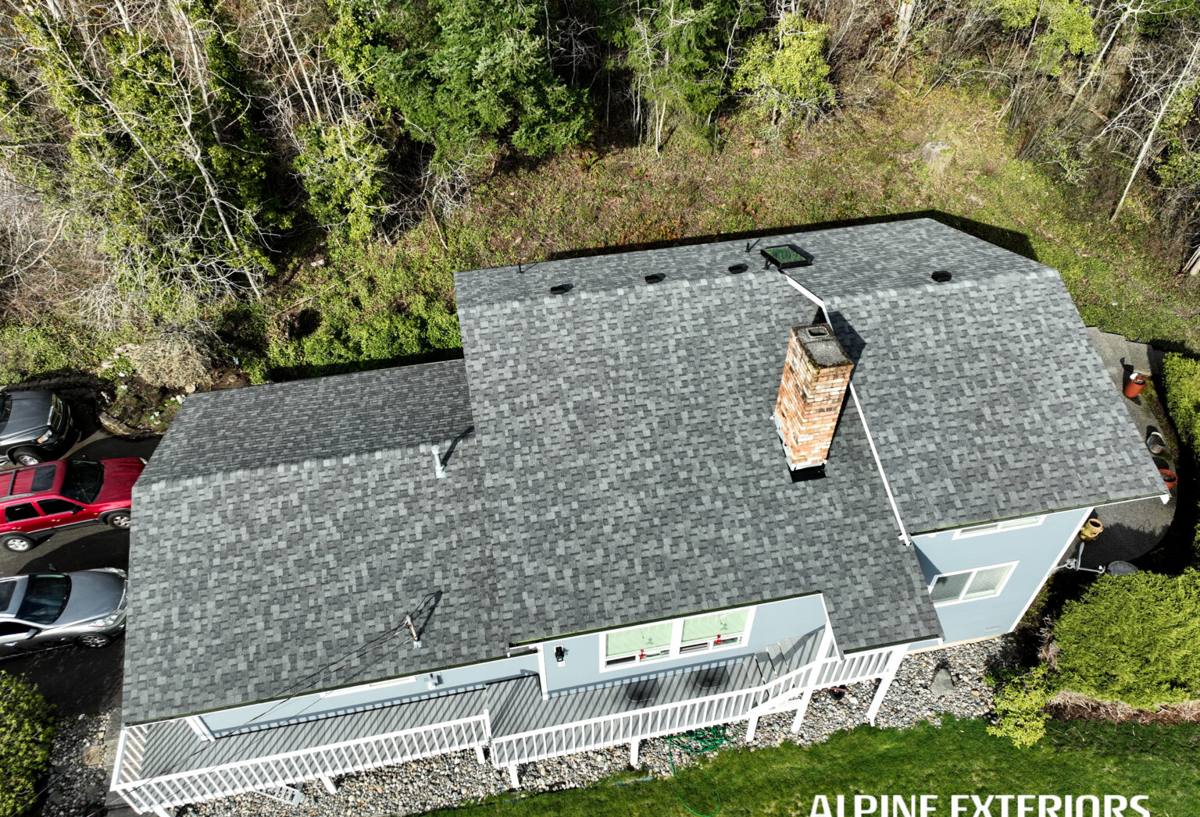
Signs a Columbia Home Needs a Roof Replacement, Not Another Repair
Repairs make sense for isolated damage. A full replacement becomes the right call when the problems are spread across the roof or point to failure in the underlying system rather than one bad spot. Common signs we see on homes in this area include:
- Moss and algae that come back within a season or two of cleaning, especially on north-facing slopes that stay shaded and damp
- Granule loss heavy enough that you can see bare asphalt on shingles, usually worst where roof planes catch the most rain
- Curling, cracking, or lifted shingle edges, particularly on roofs original to the home or older than 20-25 years
- Soft spots in the decking felt underfoot, which usually means water has been getting past the roofing surface for a while
- Rusted or failing flashing around chimneys, skylights, and roof-to-wall transitions — a common weak point in salt air
- Daylight visible through the attic or consistent damp spots on ceilings after heavy rain
- Multiple past repairs that haven't stopped the leaking or moss growth from coming back
If you're seeing two or three of these at once, it's usually cheaper and more honest to plan a full replacement than to keep patching a roof that's telling you it's done.
What a Correct Roof Replacement Involves
A roof replacement is more than swapping old shingles for new ones. In a climate that stays wet as much of the year as Whatcom County's does, the parts you don't see matter as much as the finished surface.
Tear-Off and Deck Inspection
We remove the old roofing down to the deck rather than layering over it. That's the only way to actually see the condition of the plywood or plank decking underneath — soft, delaminated, or water-stained sections get replaced before anything new goes down. Roofing installed over a compromised deck fails early no matter how good the shingles are.
Underlayment and Water Protection
Underlayment is the roof's real waterproofing layer; the shingles or panels on top are largely there to shed bulk water and protect the underlayment from sun and weather. Given how much wind-driven rain this area gets, we pay particular attention to underlayment overlap, and to ice-and-water shield membrane at eaves, valleys, and any roof-to-wall intersection — the places wind-blown rain is most likely to work its way backward under the surface layer.
Ventilation
An underventilated attic traps moisture, which shortens the life of the decking from underneath and can encourage mold and rot that has nothing to do with the roofing surface itself. Balanced intake and exhaust ventilation is part of a correct replacement, not an optional upgrade — it protects the investment you're making in the new roof.
Flashing and Valleys
Flashing failures are one of the most common causes of roof leaks in this region, and salt air makes corrosion-prone flashing fail faster. Chimneys, skylights, valleys, and any wall-to-roof transition get new flashing as part of a replacement, sized and installed to handle the volume of water this climate actually produces rather than a minimum-code approach.
Choosing a Roofing Material for a Columbia Home
There's no single "best" roofing material — the right choice depends on your home's exposure, your budget, and how much long-term maintenance you want to take on. Here's how the common options compare for a home in this specific environment:
| Material | Moss/Algae Resistance | Salt Air Performance | Typical Lifespan |
|---|---|---|---|
| Standard 3-tab asphalt shingle | Lower — needs more frequent cleaning | Good if flashing/fasteners are corrosion-resistant | 15-20 years in this climate |
| Architectural (dimensional) shingle | Better with algae-resistant granules | Good with proper flashing | 25-30 years in this climate |
| Standing-seam metal | Very good — sheds moisture, little for moss to grip | Requires corrosion-resistant fasteners and coatings near the water | 40-50+ years |
| Cedar shake | Poor without diligent maintenance — holds moisture | Moderate; hardware needs to be marine-grade | 20-25 years with upkeep |
For most Columbia homes, we steer clients toward architectural shingles with algae-resistant granules or standing-seam metal, simply because both hold up to sustained dampness with less ongoing maintenance than cedar shake, which needs more attention in a climate this wet to avoid trapping moisture against the deck. That's a maintenance and moisture-behavior tradeoff, not a knock on cedar as a material — it's a good look that just asks more of the homeowner here.
Our Roof Replacement Process
- On-site inspection and estimate. We walk the roof, check the attic for ventilation and moisture signs, and give you a clear, written estimate — no pressure, no inflated scare tactics.
- Material selection. We go over the tradeoffs between shingle, metal, and other options for your specific roof exposure and budget.
- Scheduling around the weather. Whatcom County's wet season means timing matters. We plan installation windows to minimize the days your deck is exposed.
- Tear-off and deck repair. Old roofing comes off, the deck is inspected, and any damaged sections are replaced before anything new is installed.
- Underlayment, flashing, and ventilation installed correctly. This is the layer that determines whether the roof actually performs in this climate.
- Final roofing surface installed to manufacturer specification, not shortcuts.
- Cleanup and walkthrough. We clear debris and nails from the property and walk the finished roof with you.
Moss, Algae, and Salt Air: Care After the New Roof Is On
A correctly installed roof with the right materials will resist moss and algae far longer than an old one, but no roof in this climate is completely maintenance-free. A yearly check — clearing debris from valleys and gutters, trimming back overhanging branches that keep a roof shaded and damp, and a gentle moss treatment if growth starts to appear — goes a long way toward getting the full lifespan out of a new roof. We're happy to walk you through a simple maintenance routine specific to your roof's exposure when the job is done.
Why a Local Crew That Already Works in Columbia Matters
Roofing crews that work primarily on the dry side of the state, or that fly in from out of the area for a single job, don't always account for how differently a roof ages here. A crew based in and around Bellingham sees, season after season, which flashing details actually hold up to Whatcom County's rain patterns, which materials resist moss regrowth in shaded, damp yards, and where salt air does the most damage to fasteners and metal components. That local pattern recognition shows up in the details — the extra care at a valley, the fastener choice near the water, the underlayment overlap at an eave — that separate a roof that performs for decades from one that needs attention again in five years.
A local crew is also easier to reach if a question comes up after the job is done, and understands the realistic scheduling windows this climate allows for tear-off and installation without leaving a deck exposed to the next system rolling in off the water.
What Affects the Cost of a Roof Replacement in Columbia
| Cost Factor | Why It Matters |
|---|---|
| Roof size and pitch | Larger and steeper roofs take more material and labor time |
| Material choice | Architectural shingle, metal, and cedar carry different material and labor costs |
| Deck condition | Rotted or delaminated decking found during tear-off adds repair cost |
| Number of penetrations | Chimneys, skylights, and vents each need individual flashing work |
| Layers to remove | Roofs with multiple old layers take longer to tear off |
| Access and site conditions | Tree cover, tight lot lines, or difficult roof access affect labor time |
Because of these variables, we don't quote roof replacements over the phone. An honest number requires actually walking the roof and the attic first.
Ready for a Straightforward Look at Your Roof
If your roof in Columbia is showing its age, growing moss faster than you can keep up with, or just due for an honest inspection, we're glad to take a look. Use the form below to request a free, no-pressure estimate, and we'll walk the roof, answer your questions, and give you a clear picture of your options.