 Bellingham
 Board & Batten Siding in Blaine: Built for This Coastline
Blaine sits about as close to the water and the border as Whatcom County gets, and that location shapes what a home's exterior has to deal with year-round. Salt-laden air off the Strait of Georgia, wind-driven rain that finds every gap in a wall assembly, and a moss season that can stretch from October through May all put real pressure on siding. Board and batten is one of the most popular looks for homes in this area — the vertical lines read as classic Pacific Northwest, and it pairs well with the mix of farmhouse, craftsman, and modern builds you see around Blaine. But the look only holds up if the material and the installation are matched to the climate it's going into.
This page is specifically about board and batten siding for homes in and around Blaine. We're not going to give you a generic rundown of the siding style — we want to walk through what actually matters when this profile goes on a home this close to the water, what a correct installation looks like, and why it's worth hiring a crew that already knows this stretch of coastline instead of a company driving up from somewhere inland.
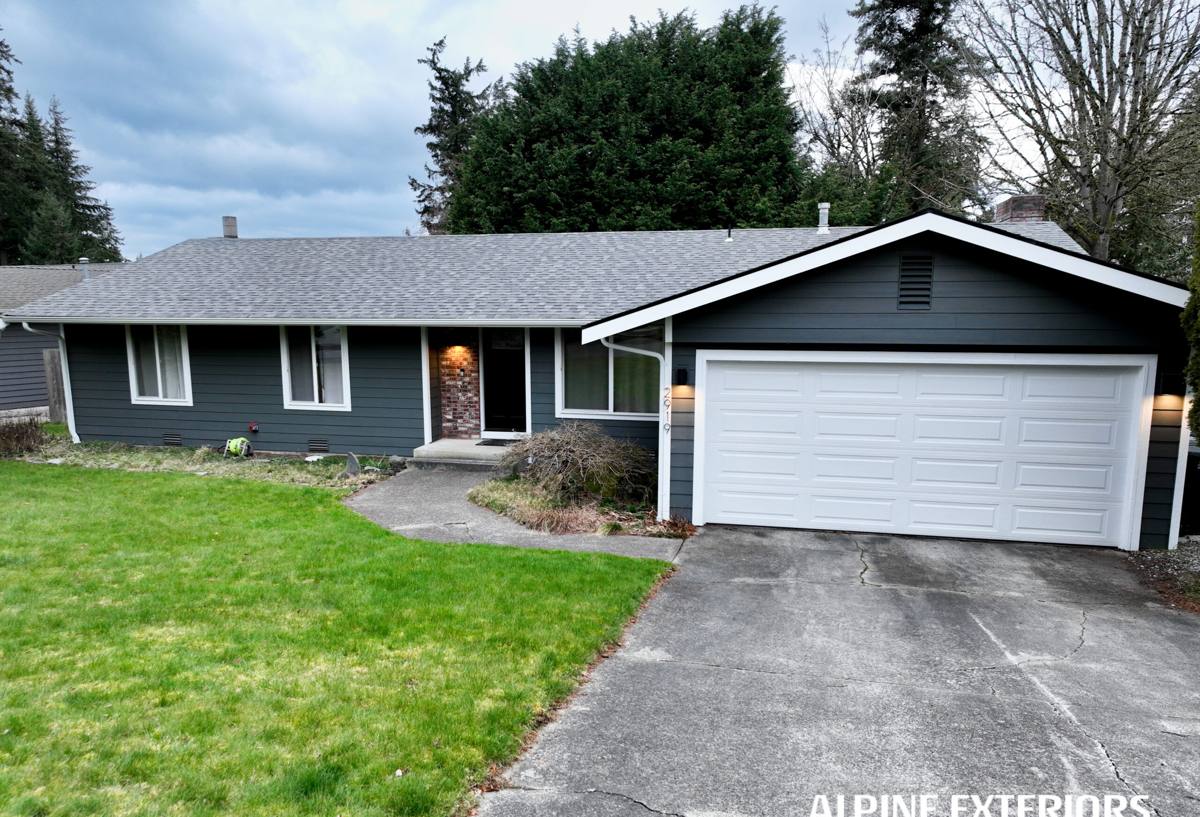
Why Blaine's Climate Is Tougher on Siding Than It Looks
Salt Air
Homes within a few miles of the water take on airborne salt that settles on exterior surfaces and accelerates corrosion of fasteners, flashing, and any metal trim. Over years, that corrosion can compromise the very hardware holding your siding in place, even if the siding face itself looks fine.
Driving Rain
Blaine gets weather systems that come in sideways off the water, not just straight down. Board and batten has more seams and more vertical joints than lap siding, which means more opportunities for wind-driven rain to get pushed up and under a board if the water-resistive barrier, flashing, and gaps aren't detailed correctly. This is a style where installation quality matters more than usual.
Moss and Sustained Moisture
Whatcom County's long wet season keeps north-facing walls and shaded siding damp for extended stretches. Moss and mildew take hold on any material that can't shed water quickly or that has a porous surface for spores to grip. Siding that stays wet longer ages faster, whether that shows up as swelling, staining, or paint failure.
What Correct Board & Batten Installation Requires Here
Board and batten isn't a hard style to recognize, but it's an easy one to get wrong underneath the surface. A correct job in a coastal, high-rainfall area like Blaine involves several things that aren't optional extras — they're what keep the wall assembly dry and the siding stable for decades.
- A continuous water-resistive barrier behind the siding, lapped correctly so water is directed out and down, not trapped behind the boards
- Rainscreen furring strips to create a drainage and drying gap between the siding and the wall — critical in a climate where walls rarely get a long dry stretch
- Corrosion-resistant fasteners rated for coastal exposure, driven at the correct spacing so boards aren't over-fastened or under-fastened
- Properly flashed window and door openings, with head flashing that actually sheds water past the siding plane instead of into it
- Correct board and batten spacing and fastening pattern so the assembly can handle seasonal expansion and contraction without cracking caulk lines or popping fasteners
- Factory-finished material with a real coastal warranty, rather than field-primed or field-painted boards that rely on caulk and paint maintenance to stay sealed
Skip any one of these and the siding can still look right for the first year or two. The problems that show up from a rushed or generic install in this climate — trapped moisture, fastener corrosion, moss buildup on unprotected surfaces — tend to surface three, five, ten years down the road, which is exactly when they're most expensive to fix.
Why We Only Install James Hardie for This Application
We install James Hardie fiber cement siding exclusively — we don't install vinyl, LP SmartSide, primed spruce, cedar, or other fiber cement brands. For a board and batten application in a place like Blaine, that decision comes down to how the material behaves over time in salt air and sustained moisture, not marketing.
Fiber cement doesn't rot, and it isn't a food source for the mold and mildew that thrive in this region's wet months. It's also non-combustible, which matters more each year as wildfire smoke and regional fire risk become a bigger part of Pacific Northwest homeownership conversations. James Hardie's ColorPlus factory finish is baked on and warranted against fading and peeling in a way field-applied paint on wood or engineered wood siding isn't — which matters directly in a coastal climate that's hard on painted surfaces. And Hardie's HZ5 product line is engineered specifically for climates with significant moisture exposure, which describes Whatcom County's coastal edge well.
That's not to say every other siding product is a bad product in every circumstance. It's that we've seen how materials perform on real homes in this specific climate over the years, and we've standardized on the one that holds up here with the least maintenance burden on the homeowner.
Board & Batten vs. Other Siding Profiles for a Blaine Home
| Factor | Board & Batten | Lap Siding |
|---|---|---|
| Visual style | Vertical lines, farmhouse/craftsman/modern look | Traditional horizontal shadow lines |
| Water shedding | Depends heavily on correct flashing and gap details at seams | Naturally sheds water via overlap, generally more forgiving |
| Best suited to | Accent walls, gables, full exteriors on styles that call for vertical lines | Full-exterior coverage on most home styles |
| Installation sensitivity in coastal climates | Higher — more seams and joints to detail correctly | Lower — fewer vertical joints to manage |
| Maintenance in salt air (Hardie) | Low, if installed with rainscreen and correct fastening | Low, standard installation practices apply |
Board and batten isn't wrong for Blaine — it's a great look for a lot of homes here — but it does demand more attention to installation detail than lap siding does, simply because there are more places for water to find its way in. That's the main reason experience with this specific profile, in this specific climate, matters when you're picking a crew.
Our Process for a Blaine Board & Batten Project
1. On-Site Assessment
We look at your home's exposure — how close you are to the water, which walls take the worst of the wind-driven rain, where moss has already established itself, and what condition the existing wall assembly is in behind the current siding.
2. Material and Detail Planning
We spec the Hardie board and batten profile, color, and trim package, and plan out flashing and rainscreen details specific to your home's exposure — this isn't a one-size-fits-all layout.
3. Tear-Off and Substrate Check
Old siding comes off and we check the sheathing and framing underneath for any moisture damage before anything new goes on. Covering up a problem behind new siding just delays and worsens it.
4. Water-Resistive Barrier and Rainscreen Installation
This is the step that determines how your siding performs in year eight, not just year one. We install the barrier and furring correctly the first time.
5. Siding, Flashing, and Trim Installation
Boards and battens go up to Hardie's fastening specifications, with flashing detailed at every window, door, and penetration.
6. Final Walkthrough
We walk the finished exterior with you so you know what was done and what to expect from the material going forward.
Why Hiring a Crew That Already Works Blaine Matters
A siding crew that regularly works this part of Whatcom County already knows which walls on a typical Blaine home take the brunt of the weather, how to detail a rainscreen for a coastal exposure, and what moss growth patterns look like on siding that wasn't given a drainage gap. That's institutional knowledge you don't get from a company that treats Blaine as just another stop on a regional route. It shows up in the small decisions — where extra flashing attention goes, how tight the fastening schedule is on a south-facing wall versus a shaded one — that separate a board and batten job that looks good at handoff from one that still looks good in year fifteen.
Signs Your Current Siding Isn't Handling the Climate
- Moss or dark streaking that returns quickly after cleaning, especially on shaded or north-facing walls
- Soft spots, or a "give" when you press on siding near the bottom of walls or below windows
- Paint or finish that's peeling, chalking, or fading unevenly
- Visible gaps or cracking at seams and board joints
- Rust staining around fasteners or trim
- A musty smell near exterior walls inside the home
None of these are emergencies by themselves, but they're worth having a professional look at before they become structural issues, particularly heading into another wet season.
Get a Straightforward Look at Your Project
If you're weighing board and batten siding for a home in Blaine, we're glad to come take a look, walk your exterior with you, and give you a straight answer on what your home needs — no pressure, no upsell. Use the form below to request a free estimate.