 Bellingham
 Custom Decks in Blaine: Building for a Water-Exposed Border Town
Blaine sits at the northern edge of Whatcom County, right against Semiahmoo Bay and Drayton Harbor, close enough to the Canadian border that Pacific storm systems come ashore here with real force. That combination — open water on one side and exposed weather patterns funneling through — makes Blaine a tougher environment for outdoor structures than most inland Whatcom County towns. A deck built here carries a heavier moisture and salt load than the same deck would a few miles inland, and it needs to be built with that in mind from the footings up, not just finished to look good on day one.
We work siding, roofing, windows, and decks as connected parts of a home's exterior, and Blaine is regular territory for our crew. That matters for decks specifically, because the failure points we see on tear-outs and repair calls in this area are consistent — fastener corrosion, ledger rot, and framing that was never really rated for the moisture load Blaine sees. A deck built to a generic spec sheet, with no adjustment for where it's actually sitting, tends to show its age early here.
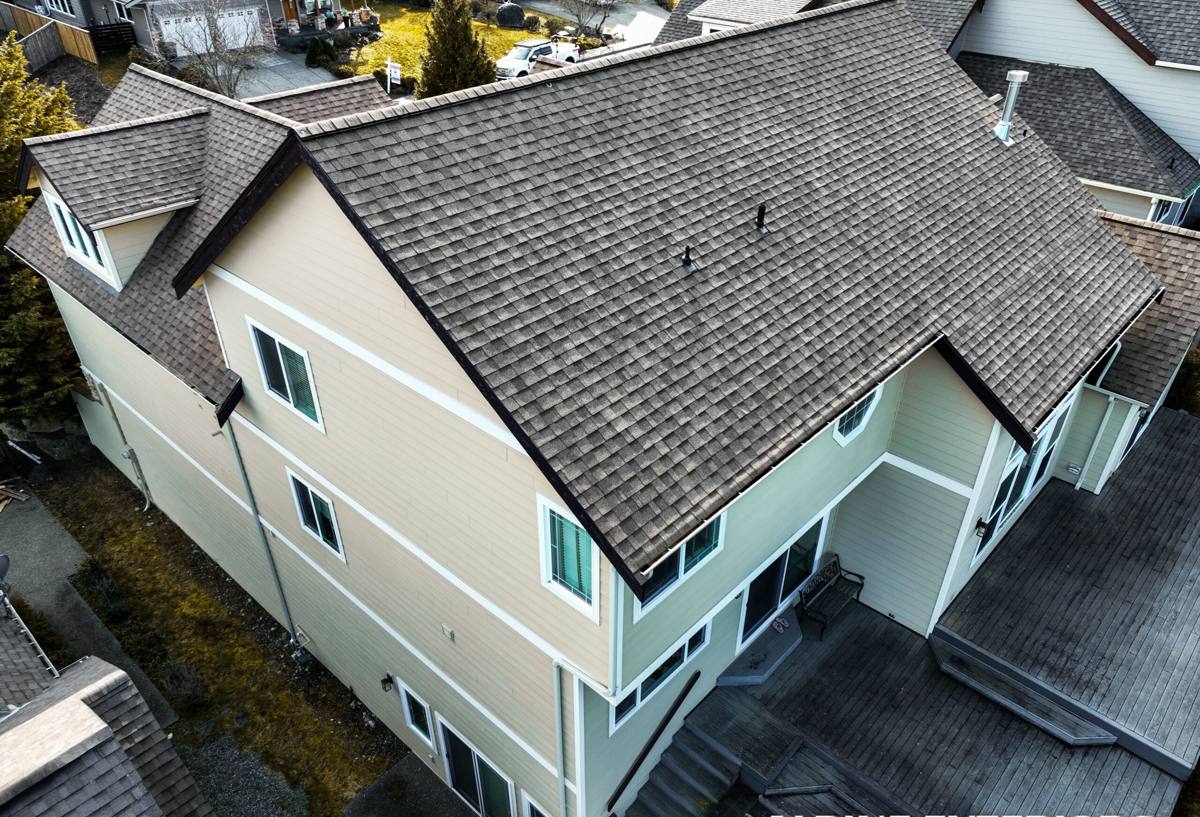
What Blaine's Climate Does to a Deck
Salt Air, Close to the Water
Homes near the bay or harbor in Blaine take a steadier dose of salt-laden air than towns set further inland, and a deck is more exposed to that air than almost any other part of a house — it has no siding or roofing over it, just open structure and surface material taking the weather directly. Salt accelerates corrosion on fasteners, brackets, and any exposed metal hardware, and it breaks down lower-grade finishes and coatings faster than a dry inland climate ever would. On a deck, that shows up first as rust streaking around screw heads and corroding joist hangers years before the boards themselves show real wear.
Driving Rain Off the Water
Storms coming off the water in Blaine don't just fall straight down — wind drives rain sideways and up under railings, into ledger connections, and into any gap between boards or at the house-to-deck attachment point. That sideways-driven moisture is harder on a structure than the same total rainfall would be in a calmer climate, and it finds the weak points in framing and flashing that a less careful build leaves behind. The ledger board — where the deck attaches to the house — is the single most common place we find this kind of water damage on older decks in this area.
A Long Moss Season
Mild temperatures and near-constant moisture add up to a moss and mildew season in Whatcom County that can run most of the year on shaded or north-facing surfaces. A deck is a horizontal surface that holds water and debris more than any vertical wall does, which makes it one of the first things to grow moss and algae, especially under trees or on the shaded side of a house. That surface growth isn't just cosmetic — on wood decking it holds moisture against the board and speeds up rot, and on any decking material it turns a walking surface slick and genuinely dangerous underfoot.
Decking Material Options for Blaine Homes
There's no single right decking material for every homeowner — budget, maintenance tolerance, and how the deck gets used all factor in. What we can do is lay out honestly how each option actually performs in Blaine's specific conditions, rather than just what it costs on day one.
| Material | How It Handles Blaine's Climate | Maintenance |
|---|---|---|
| Composite decking | Resists moisture absorption and salt exposure well; won't rot, splinter, or hold moss the way wood can | Occasional washing; no staining or sealing required |
| Cedar | Naturally rot-resistant compared to other softwoods, but still absorbs moisture and needs a real finish schedule to hold up near the water | Staining/sealing every 1-2 years to keep moisture and moss out |
| Pressure-treated lumber | Chemically resistant to rot at the core, but fasteners and surface finish take the brunt of salt and driving rain | Regular sealing; watch fastener corrosion closely |
Composite decking has become our default recommendation for Blaine specifically, not because it's the only decent option, but because it removes the two maintenance items — moisture absorption and surface moss growth — that cause the most trouble in this particular climate. Cedar and pressure-treated wood both remain legitimate choices for homeowners who want a traditional wood look and are willing to keep up a finish schedule; we'll build either one correctly if that's the direction you want to go. What we won't do is put a wood deck in near the water and tell you it's low-maintenance, because in Blaine's conditions that's simply not an honest answer.
What a Correctly Built Deck Requires Here
The visible decking material is only part of what determines how long a deck lasts in Blaine. Most of the failures we get called out to repair trace back to the structure underneath, not the boards on top.
Footings and Framing
Footings need to be set below frost depth and sized for the actual load of the deck, including railings, stairs, and anything heavy the homeowner plans to put on it — a hot tub changes the math considerably. Framing lumber should be a moisture-rated grade, and every cut end and drilled hole needs to be sealed, because an untreated cut edge is where rot starts on an otherwise treated board.
Ledger Attachment and Flashing
The ledger board connection to the house is the highest-risk point on any deck, and it's where we see the most water damage on older builds in this area. Correct flashing — installed so water sheds outward and down, not back into the wall — is not optional here given how much driving rain off the water this deck attachment point takes over a Whatcom County winter.
Fasteners and Hardware
In a salt air environment, fastener choice is not a place to save money. Stainless steel or high-grade coated fasteners rated for coastal exposure resist corrosion far longer than standard galvanized hardware, and every joist hanger, post base, and structural connector should match that same standard. We've replaced enough rusted-through hardware on decks that were otherwise sound structurally to treat this as a non-negotiable part of the build here, not an upsell.
Railings, Stairs, and Everyday Details
Railings and stairs see constant hand contact and foot traffic, and in Blaine they also take the same salt air and moisture exposure as the deck surface itself. Metal railing components need the same corrosion-resistant hardware standard as the structural fasteners underneath the deck. Stair treads, especially on a shaded or north-facing staircase, are one of the first places moss takes hold, so tread spacing and drainage matter as much as the material choice — a tread that can't shed water and debris will grow moss faster no matter what it's made of.
Our Process, Start to Finish
- On-site assessment: we look at sun exposure, drainage, proximity to the water, and how the deck will attach to the house before recommending materials
- Honest material discussion: we walk through composite, cedar, and pressure-treated options with real maintenance trade-offs, not just upfront cost
- Permitting: we handle the permit process where required for the size and height of the build
- Structural build: footings, framing, ledger flashing, and fastener hardware built to hold up under Blaine's specific moisture and salt conditions
- Decking, railing, and stairs: installed to the spec discussed up front, with attention to drainage and fastener placement
- Final walkthrough: we go over basic maintenance expectations for the material chosen before we consider the job done
Maintaining a Deck Through a Long Moss Season
Whatever material a deck is built from, a little regular upkeep goes a long way in Whatcom County's climate. A few habits make the biggest difference in Blaine's conditions specifically:
- Sweep leaves and debris off the deck surface regularly, especially in fall, since trapped organic matter is what moss and algae feed on
- Rinse salt residue off the surface and railings periodically if the deck is near the water
- Check fastener heads and metal hardware once a year for early rust or corrosion signs
- Re-stain or reseal wood decking on the schedule the material calls for — don't wait until it looks dry or gray
- Keep an eye on the ledger connection area at the house for any staining or soft wood, since that's the highest-risk failure point
Why a Crew That Already Works Blaine Matters
A deck built to a generic regional spec, by a crew that mostly works drier inland areas, tends to under-build for what Blaine's coastal exposure actually demands — lighter-duty fasteners, a flashing detail that would be fine forty miles inland but isn't enough here, a material recommendation that doesn't account for the moss season. We've built and repaired enough decks in this specific stretch of Whatcom County to know which details actually matter near the water versus which ones are just marketing. That local pattern recognition is the real value of hiring a crew that already works this area, rather than one seeing Blaine's conditions for the first time on your project.
If you're planning a new deck or looking at repairing an aging one, we're happy to come take a look and talk through honest options for your property. There's a free, no-pressure estimate request form below — reach out and we'll get back to you.