 Bellingham
 Building Decks for Columbia's Coastal Climate
A deck in the Columbia neighborhood works harder than a deck almost anywhere inland. Bellingham sits right on the water, and homes here take on a steady mix of salt-laden air, sideways rain off Bellingham Bay, and long stretches of gray, damp weather that keep every horizontal surface wet for days at a time. Add in the shade from mature evergreens that so many Whatcom County lots have, and you get a near-perfect environment for moss, algae, and slow wood rot to set in on decks that weren't built with this climate in mind.
None of that means a deck can't last for decades in Columbia. It means the material choices, the framing details, and the fasteners all have to be picked for this specific environment rather than a catalog average. That's the difference between a deck that needs to be re-boarded in eight years and one that's still tight and safe in twenty-five.
What Columbia Homes Actually Need From a Deck
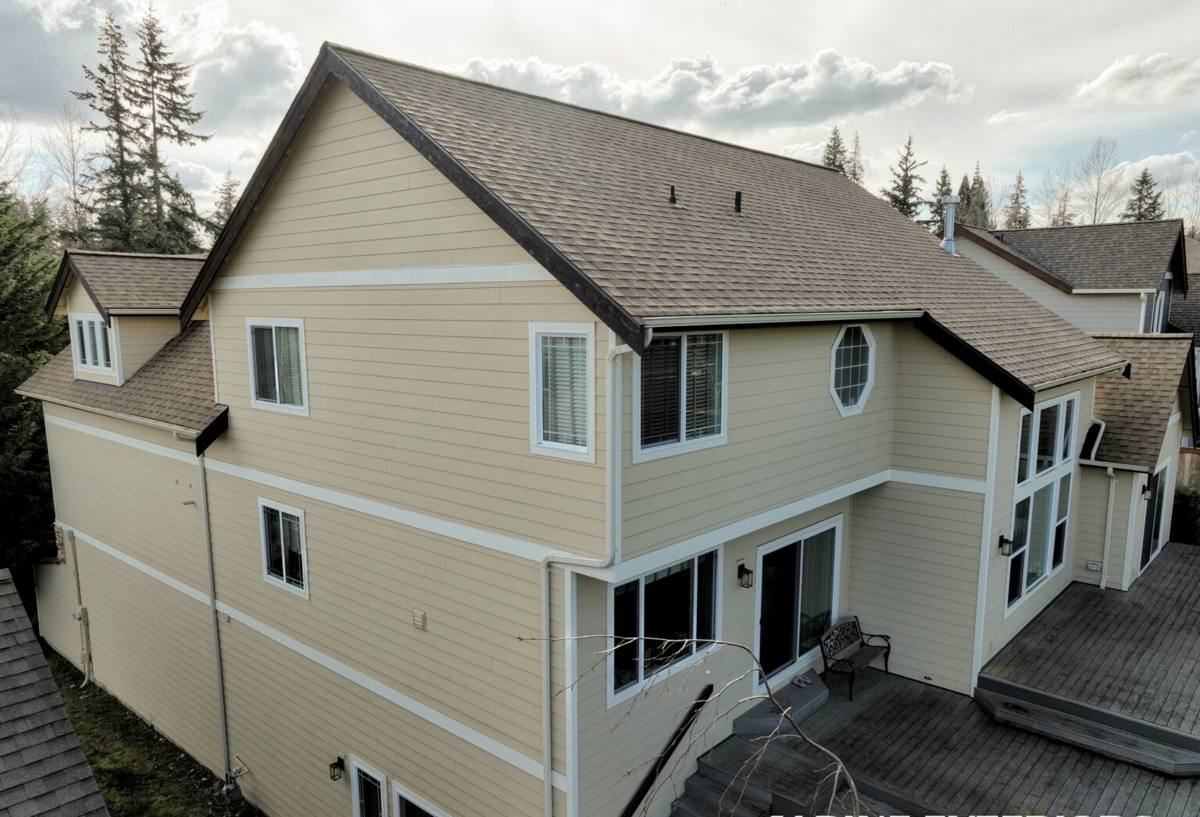
Columbia is a mix of established homes on lots with real tree cover, sloped yards, and older foundations — not the flat, new-construction subdivisions where a deck is a simple bolt-on. That combination changes how a deck should be designed and built:
- Shaded lots hold moisture longer, so decking, ledger boards, and framing need better drainage and airflow underneath, not just above.
- Sloped or uneven yards often mean taller substructures, which means more footings, more bracing, and more attention to how water sheds away from the house.
- Older homes may have rim joists, siding, or foundations that weren't detailed for a modern ledger attachment, so the ledger connection has to be engineered for the house that's actually there.
- Salt-influenced air accelerates corrosion on any hardware that isn't rated for it — this matters more here than it would twenty miles inland.
A deck built for Columbia should be designed around these realities from the first sketch, not treated as an afterthought once the framing is already up.
Sun, Shade, and Layout
Because so many lots have partial or heavy tree cover, we look at where sun actually reaches the deck through the day before finalizing size and orientation. A deck tucked entirely in shade needs more airflow underneath and a decking material that tolerates constant dampness. A deck with some open sky gets more benefit from lighter-colored composite or capped boards that won't hold heat or moisture as long.
Choosing the Right Decking Material for This Climate
There's no single "best" decking material — there's the right material for a given budget, look, and exposure. In a wet, shaded, salt-air environment like Columbia, some materials simply hold up with less maintenance than others.
| Material | How It Handles This Climate | Maintenance | Typical Lifespan |
|---|---|---|---|
| Pressure-treated fir/hem-fir | Affordable, but absorbs moisture readily in shaded, damp spots and needs consistent sealing | Annual cleaning and re-sealing | 10–15 years with upkeep |
| Cedar | Naturally rot-resistant and handsome, but still needs sealing to fight moss and graying in wet shade | Sealing every 1–2 years | 15–20 years with upkeep |
| Capped composite | Shrugs off moisture and salt air far better than wood; resists moss buildup on the surface | Occasional washing | 25–30+ years |
| PVC/cellular decking | Fully synthetic, unaffected by moisture absorption or salt exposure | Occasional washing | 25–30+ years |
We install all of the above — the right answer depends on your budget and how the deck is used. What we won't do is install a natural wood deck in a heavily shaded, low-airflow spot without being upfront that it will need real, ongoing maintenance to avoid rot and moss. That's a maintenance conversation we have honestly, not a sales pitch.
A Note on Composite and PVC Warranties
Manufacturer warranties on composite and PVC decking are usually strong, but they're also conditional — improper fastening, poor ventilation underneath the deck, or skipping manufacturer-specified clip spacing can void coverage. We follow manufacturer installation specs to the letter specifically so those warranties stay intact for you.
Framing and Substructure: Where Most Deck Failures Start
Almost every deck failure we get called out to inspect in this area starts below the boards, not on top of them. The decking is the part everyone sees; the framing is the part that actually determines whether the deck is safe.
Ledger Attachment and Flashing
The ledger board — where the deck attaches to the house — is the single most important structural connection on the whole build. It needs proper flashing that sheds water away from the house framing, correct fastener type and spacing, and, where the house construction calls for it, engineered hardware rather than a simple lag-bolt attachment. A poorly flashed ledger is one of the most common causes of hidden rot behind and underneath a deck.
Footings on Wet, Sloped, or Clay-Heavy Ground
A lot of Whatcom County soil holds water longer than sandy or well-drained ground, and sloped Columbia lots can concentrate runoff around footings. We set footings below frost depth and size them for the actual soil conditions on your lot, not a generic minimum, especially on taller or multi-level decks.
Airflow Underneath
Enclosed or low-clearance deck undersides trap moisture and are where we most often find moss and soft wood on older decks. Wherever the design allows it, we build in enough clearance and, where skirting is wanted, vented skirting rather than a solid enclosure.
Railings, Fasteners, and Hardware That Actually Hold Up
Salt-influenced air is hard on unprotected metal. Standard zinc-coated deck screws and brackets can start showing corrosion within a few years in this environment, long before the wood or composite around them has failed.
- Stainless steel or heavy-duty coated fasteners rated for coastal/ACQ-treated lumber exposure
- Hidden fastener systems on composite and PVC decking, which also reduce the surface fastener points where water and grime collect
- Corrosion-resistant structural hardware (joist hangers, post bases, hurricane ties) matched to the lumber treatment being used
- Railing systems — wood, metal, or composite — installed with hardware rated for the same exposure as the deck itself
Mixing an untreated or mismatched fastener into an otherwise good build is a common shortcut that shows up as rust streaks and loosening boards within just a few seasons. We spec hardware for the environment the deck is actually in.
Our Process, From Estimate to Finished Deck
- On-site visit to look at the actual lot: slope, shade, soil, existing structure, and how the deck will be used.
- Honest walk-through of material options with real trade-offs for your budget and this climate — no upselling toward the most expensive option by default.
- Written estimate with a clear scope: framing, decking, railings, fasteners, and any permit work included.
- Permit submission where required, and scheduling around Whatcom County's wetter months when possible to protect exposed framing.
- Demolition of the old structure (if replacing), with a look at the ledger and any hidden rot before framing begins.
- Framing built to spec with proper flashing, footings, and airflow, then inspected before decking goes down.
- Decking, railings, and finishing details installed to manufacturer spec.
- Final walk-through with you and basic care guidance for your specific material.
Permits and Local Requirements
Most new decks and many deck replacements in and around Bellingham require a building permit, and requirements can vary based on deck height, size, and proximity to property lines. Rather than guessing, we handle the permit conversation as part of the estimate — confirming what's actually required for your specific project with the local jurisdiction before work starts, so you're not left holding an unpermitted structure at resale time.
Maintaining a New Deck Through Whatcom County's Wet Season
Even the right materials benefit from a little seasonal attention, especially heading into the long fall-through-spring wet stretch that defines weather here.
- Clear leaves and debris from between boards and off railings before the fall rains set in — trapped debris is where moss gets its start
- Rinse off surface algae and moss buildup at least once a year; a soft wash is usually enough on composite and PVC
- Check that gutters and downspouts near the deck are directing water away, not onto the deck surface or framing
- On wood decks, re-inspect the sealant film each spring and reapply where water is no longer beading
- Look underneath the deck once a year for any signs of standing water, soft wood, or corrosion on hardware
Why Hire a Crew That Already Works in Columbia
Framing details and material choices that work fine in a dry, sunny climate can fail early here, and a crew that mostly builds elsewhere may not think to adjust for Bellingham's rain, salt air, and shade patterns until problems already show up. We work in this neighborhood and this climate regularly, so the flashing details, fastener choices, and material recommendations above aren't theoretical — they're what we've learned holds up on Columbia lots specifically. That local familiarity also means a more accurate estimate up front, since we're not guessing at how your soil, slope, or shade will behave.
If you're planning a new deck or need to replace one that's showing rot, moss, or loose railings, we're happy to take a look and put together a clear, no-pressure estimate using the form below.