 Bellingham
 Cordata's Climate Is Harder on a Deck Than It Looks
Cordata sits in north Bellingham, and like the rest of Whatcom County, it gets a long, wet stretch from fall through spring where a deck rarely gets a real chance to dry out. Add in the salt-tinged air that drifts in off the bay and the driving rain that comes sideways during winter storms, and you've got conditions that work on wood, fasteners, and finishes year-round, not just during a bad season. Homeowners who move here from drier climates are often surprised by how much faster a deck shows wear in this part of Washington.
Moss is the part people notice first, but it's really a symptom. A deck that grows moss is a deck that's holding moisture longer than it should, whether that's because of shade from mature trees, poor board spacing, or a surface finish that's worn through. Left alone, that trapped moisture works its way into ledger connections, joists, and fastener holes — the parts of the deck you can't see from the yard. By the time a board feels soft underfoot, the damage usually started well below the surface.
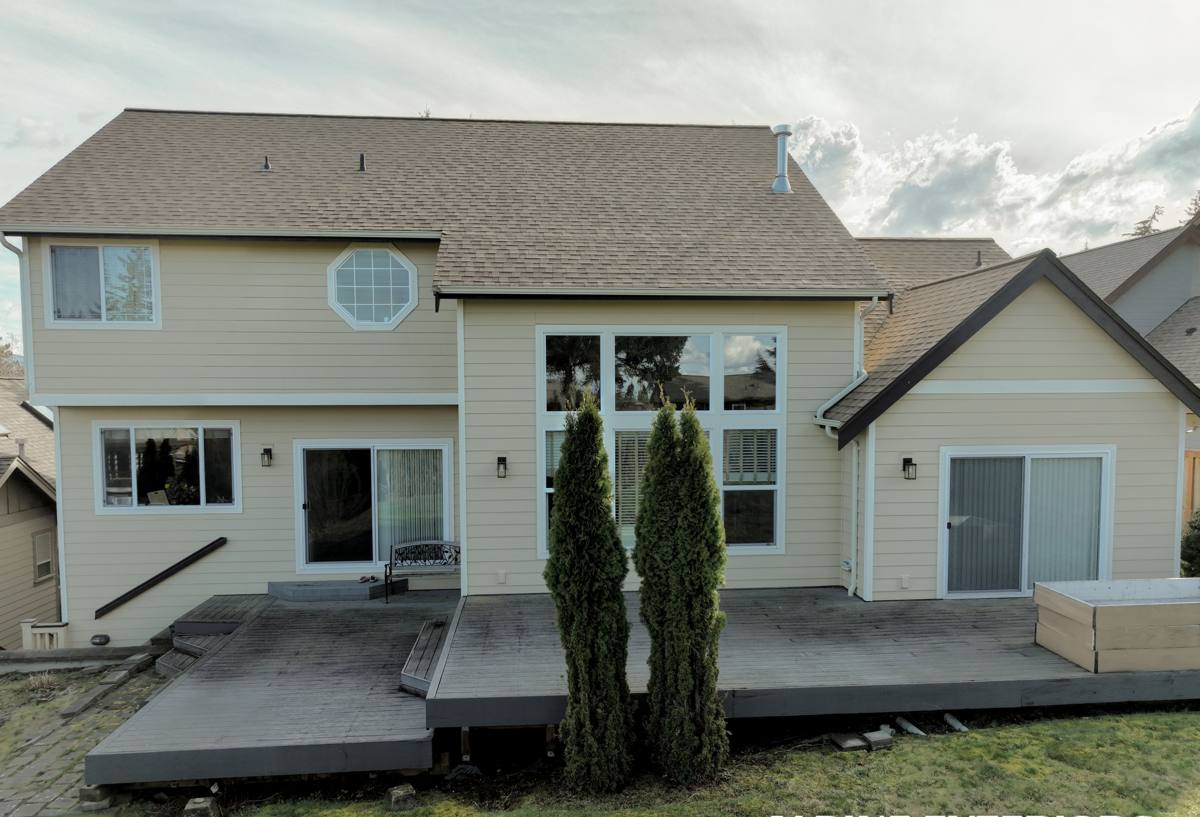
Signs Your Deck Needs Repair, Not Just a Wash
A pressure wash and a coat of sealant handles surface grime, but it won't fix — and can actually hide — problems that need real repair. Here's what we tell Cordata homeowners to check for before they decide a cleaning is enough:
- Boards that feel spongy, springy, or noticeably softer in one spot than the rest of the deck
- Rust streaks running down from screw heads, joist hangers, or post brackets
- A visible gap or dark staining where the deck meets the house (the ledger board connection)
- Railings or stair stringers that wobble, flex, or feel looser than they used to
- Persistent moss or black-green staining that comes back within weeks of cleaning
- Nails backing out, popped fastener heads, or boards that have cupped or crowned
- Any post sitting in a concrete footing that looks cracked, heaved, or separated from the post itself
Any one of these on its own might be minor. Several at once, especially combined with softness near the ledger or a support post, usually means the repair needs to start at the structure, not the surface.
What a Correct Deck Repair Actually Involves
Ledger Board and Flashing
The ledger board — where the deck attaches to the house — is the single most common failure point we find on older decks in this area, and it's also the one most homeowners never look at directly. If flashing was missing, undersized, or installed before current best practices, water has likely been getting behind it every time it rains. A correct repair means pulling back decking near the house, checking the ledger and the rim joist behind it for rot, and rebuilding the flashing so water sheds away from the house instead of behind the board.
Framing, Posts, and Fasteners
Joists, beams, and posts get inspected for soft spots, splitting, and corrosion at every connection point. In this climate, we don't reuse standard zinc-coated fasteners and hangers where they've already shown rust — we replace them with stainless steel or heavy hot-dip galvanized hardware rated for the kind of damp, salt-influenced exposure Cordata gets. It costs a bit more up front, but a repair that reuses corroding hardware is a repair that fails again in a few years.
Decking Surface
Whether the deck is wood or composite, individual boards get replaced rather than the whole deck if the framing underneath is sound. We also look at board spacing and airflow underneath — tight, unventilated decking is a big reason moss and algae take hold faster in shaded yards.
Rails and Stairs
Guardrails and stair railings take a lot of hidden stress from hand contact and weather cycling, and they're also a safety and code item, not just a repair convenience. We check post attachment, baluster spacing, and overall rigidity, and rebuild any section that doesn't meet current guardrail standards, not just the part that's visibly broken.
Repair vs. Replace: How We Decide
Not every deck with problems needs to come down. The decision usually comes down to how much of the structure — versus just the surface — has been compromised.
| Factor | Leans Toward Repair | Leans Toward Replacement |
|---|---|---|
| Ledger board condition | Solid wood, isolated flashing issue | Widespread rot at the house connection |
| Framing (joists/beams) | Localized soft spots, otherwise sound | Rot or damage spread across multiple joists |
| Posts and footings | Footings intact, posts sound | Cracked or heaved footings, rotted post bases |
| Decking boards | Scattered bad boards | Most boards cupped, split, or soft |
| Age and material | Under 15 years, quality lumber or composite | Original construction was undersized or low-grade |
| Code compliance | Meets current guardrail/attachment standards | Built before modern code, needs a full rebuild anyway |
Most of what we're called out for in Cordata falls in the repair column — a deck with a real problem or two, not a deck that's failed across the board. But we'll tell you honestly if what you're describing sounds like it's past the point where repair makes financial sense.
Our Deck Repair Process
- On-site inspection. We walk the whole deck, get underneath it where possible, and check the ledger, framing, posts, and railings — not just the boards you can see from above.
- Written scope and estimate. You get a clear breakdown of what needs repair, what we recommend but isn't urgent, and a price range before any work starts.
- Permit check. If the work involves structural framing, footings, or railings, we handle whatever Whatcom County permitting applies rather than skipping it.
- Repair work. Damaged material comes out, framing and hardware get replaced with corrosion-rated fasteners, and new decking or railing sections get tied in to match the existing deck.
- Final walkthrough. We check the repaired sections are solid, rails meet standard, and go over any maintenance steps that will extend the life of the fix given our weather.
Materials We Use and Why
Wood decking still makes sense for a lot of Cordata homes — it's less expensive to repair in sections and easy to match to an existing deck. The trade-off is that it needs a sealant or stain reapplied on a regular schedule to keep moisture out, especially given how much of the year this area spends wet. Composite decking costs more up front and doesn't need refinishing, but it isn't maintenance-free — it still needs cleaning to keep moss and algae from building up in a shaded yard, and the framing underneath it needs the same corrosion-resistant hardware wood decking does.
For fasteners and structural hardware, we default to stainless steel or heavy hot-dip galvanized products in this climate rather than standard coated fasteners. It's a small cost difference on a repair, and it's the difference between hardware that lasts and hardware that starts staining and weakening again within a few wet seasons.
Permits and Code in Whatcom County
Deck repairs that touch framing, footings, or railings typically require a permit and inspection through the county or city, depending on where in Cordata the property sits. Guardrails have minimum height and spacing standards that older decks often don't meet, and ledger connections have specific fastening and flashing requirements under current code. We treat permitting as part of the job, not an optional add-on — a repair that skips it can create problems at resale or with insurance down the road, even if the work itself was done well.
Why a Local Cordata Crew Matters
Deck repair looks straightforward from a distance, but the details that actually matter — flashing behind the ledger, the right hardware grade for our air and rainfall, how much shade and moss a particular yard deals with — are the kind of thing you learn by working on decks in this specific area, not by following a generic checklist. A crew that already works in Bellingham and greater Whatcom County knows which failure points show up again and again in this climate, has a working relationship with the local permitting office, and isn't guessing at what "built for this weather" actually means. That local familiarity is often the difference between a repair that holds up and one that's back on the schedule in a couple of years.
If your deck in Cordata has soft boards, rusting hardware, a shaky railing, or moss that keeps coming back no matter how often it's cleaned, we're happy to take a look. Reach out for a free, no-pressure estimate — we'll tell you plainly what's going on and what it would take to fix it right, using the form below.