 Bellingham
 Energy-Efficient Windows Built for Cordata's Climate
Cordata sits in north Bellingham, close enough to the water and the county's marine air that homes here take a steady beating from moisture, wind-driven rain, and the gray stretches of low sun that define a Whatcom County winter. Windows are one of the first places that weather shows up in a home's energy bill and in the homeowner's day-to-day comfort. Cold glass near a couch, a draft along a sill, condensation fogging the inside of a pane on a January morning — these are symptoms of windows that were either installed without proper attention to the details, or have simply reached the end of their useful life in a wet marine climate.
An energy-efficient window replacement in Cordata isn't just about swapping old glass for new. It's about choosing the right glazing package, the right frame material, and installing it in a way that actually holds up to the region's driving rain and long moss season, not just on paper but over fifteen or twenty years of real Bellingham weather.
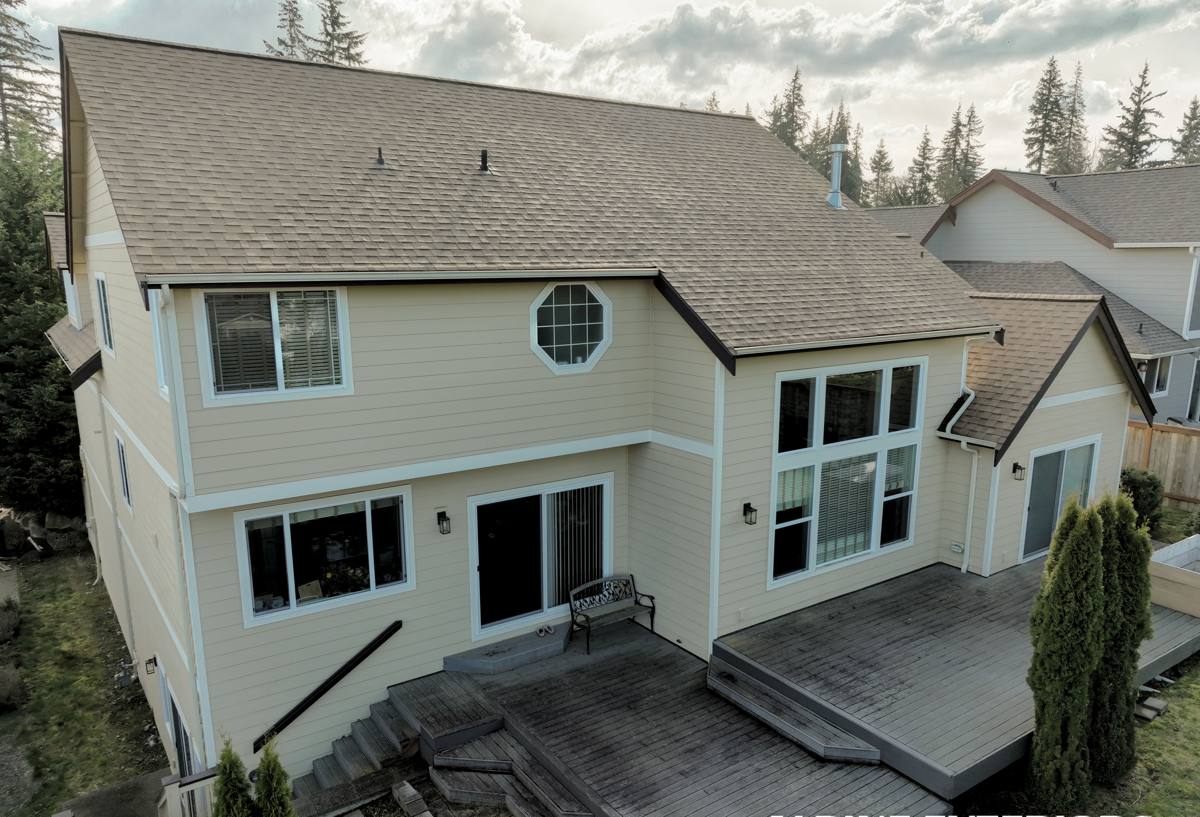
What Bellingham's Climate Does to Windows Over Time
Driving Rain and Wind-Driven Moisture
Storms coming off the Salish Sea don't just fall straight down — they push sideways against the north and west faces of a house. Over years, that wind-driven rain finds any gap in flashing, caulking, or a window's weep system and works its way behind the trim. Once moisture gets behind a window unit, it can rot sheathing and framing long before anyone notices a problem on the interior wall.
Moss, Algae, and Sill Buildup
Whatcom County's long, wet moss season isn't limited to roofs. Moss and algae take hold on window sills, in track channels, and along horizontal trim wherever moisture sits for extended periods without enough sun or airflow to dry it out. That buildup holds water against wood and vinyl surfaces, accelerates rot, and can clog the small weep holes that are supposed to let trapped water drain back outside.
Salt-Tinged Air and Temperature Swings
Proximity to Bellingham Bay means the air here carries more salt and moisture than an inland climate, which is harder on metal hardware, fasteners, and lower-grade finishes. Combine that with the region's daily temperature swings — cool damp mornings giving way to afternoon sun even in shoulder seasons — and window materials are constantly expanding and contracting, stressing seals and glazing over time.
What "Energy-Efficient" Actually Means for This Climate
Energy-efficient windows are rated on a few core numbers, and in a marine climate like Bellingham's, some of those numbers matter more than others.
- U-factor: measures how well a window resists heat loss. Lower is better, and this is the number that matters most here, since heating load — not cooling load — dominates a typical Whatcom County energy bill.
- Solar Heat Gain Coefficient (SHGC): measures how much solar heat passes through the glass. In a region with limited direct winter sun, a moderate SHGC can actually help rather than hurt, unlike in a hot, sunny climate where builders push it as low as possible.
- Air leakage rating: measures how much outside air sneaks through the assembled unit. Lower leakage directly reduces drafts and moisture infiltration, which matters as much for rot prevention as for comfort.
- Condensation resistance: a rating that predicts how well a window resists interior fogging and moisture buildup, which is a real everyday issue in a humid marine climate.
Frame Material Comparison
| Frame Material | Moisture Performance | Maintenance | Typical Lifespan |
|---|---|---|---|
| Vinyl | Good — won't rot, handles wet climates well | Low; occasional cleaning | 20-30 years |
| Fiberglass | Excellent — very stable in temperature swings, minimal expansion/contraction | Low | 30+ years |
| Wood (clad or unclad) | Requires diligent sealing and upkeep to resist rot in driving rain | High — periodic refinishing, sealant checks | Varies widely with upkeep |
| Aluminum | Conducts cold and can promote condensation unless thermally broken | Low-moderate | 20-30 years |
None of these materials is automatically wrong for a Cordata home — the right choice depends on the home's architecture, budget, and how much upkeep the owner wants to take on. What matters more than the brand name on the frame is whether the glazing package and the installation detailing are matched to this specific climate.
Signs Your Cordata Home Needs Window Upgrades
- Visible condensation or fogging between the panes (a sign the seal has failed on a double- or triple-pane unit)
- Moss or dark staining building up on the sill or lower frame
- A noticeable draft near the window even when it's fully latched
- Wood trim that feels soft, spongy, or shows paint bubbling near the frame
- Difficulty opening, closing, or latching a window that used to operate smoothly
- Rooms near large window areas that feel noticeably colder than the rest of the house in winter
- A jump in heating costs without any other explanation
What a Correct Installation Actually Involves
Most window problems we see in this region don't trace back to a bad window — they trace back to a rushed or incomplete installation. In a climate that pushes rain sideways into every gap, the details around the window matter as much as the window itself.
Flashing and Water Management
Proper flashing directs any water that gets past the exterior trim back out and away from the wall assembly, rather than letting it pool behind the siding. This includes sill pan flashing at the base of the opening, head flashing above, and integration with the surrounding weather-resistive barrier so water sheds correctly at every layer.
Sealing Without Trapping Moisture
Sealant belongs on the exterior face to block wind-driven rain, but the interior side needs to manage air leakage without fully sealing off the assembly, so any incidental moisture has a path to dry out rather than getting trapped inside the wall.
Fastening and Shimming
Windows need to be shimmed level and plumb and fastened per the manufacturer's pattern — skipping fastening points or over-tightening can distort the frame just enough to compromise the seal, which shows up as a leak years later, not on install day.
Our Process for Cordata Window Replacements
- On-site assessment: we look at each window's current condition, the surrounding trim and siding, and any signs of past moisture intrusion before recommending anything.
- Product selection: we walk through frame material, glazing package, and U-factor/SHGC tradeoffs based on the home's exposure and the owner's budget — not a one-size-fits-all recommendation.
- Removal and inspection: once the old unit is out, we check the framing and sheathing underneath for hidden rot or moisture damage before anything new goes in.
- Correct flashing and sealing: sill pan, head flashing, and sealant are installed to shed water correctly, matched to this climate rather than a generic install spec.
- Final adjustment and walkthrough: we check operation, latching, and weatherstripping, and walk the homeowner through basic care.
Why Hiring a Crew That Already Works in Cordata Matters
A window that performs well in a dry inland climate can still underperform here if it's installed to a generic spec. Crews who regularly work in Bellingham and greater Whatcom County have already seen how moss buildup clogs weep systems, how driving rain finds the weak point in a flashing detail, and how salt-tinged coastal air shortens the life of lower-grade hardware. That local pattern recognition is what separates a window job that looks fine at handoff from one that's still performing correctly a decade later.
Cost Factors to Expect
| Factor | How It Affects Cost |
|---|---|
| Frame material | Vinyl is typically the most budget-friendly; fiberglass and clad-wood options cost more upfront but often less in long-term upkeep |
| Glazing package | Double-pane vs. triple-pane, and low-E coatings, add cost but improve U-factor and comfort |
| Number of openings | Whole-house replacements typically bring a better per-window rate than one-off replacements |
| Condition behind the old window | Hidden rot or framing damage discovered during removal adds repair scope beyond the window itself |
| Trim and exterior finish work | Matching existing trim profiles or siding cuts around the new unit affects labor time |
We give straightforward ranges during the estimate rather than a number pulled out of thin air over the phone, since the condition behind the existing window is often the biggest variable.
Get a Free, No-Pressure Estimate
If your Cordata home has windows showing any of the wear signs above, or you're simply ready to stop losing heat through old glass every winter, we're happy to take a look. There's no obligation and no pressure — just a straight assessment of what your home actually needs. Use the form below to request a free estimate.