 Bellingham
 Cordata's Climate Is Harder on Siding Than It Looks
Cordata sits far enough inland from Bellingham Bay to feel like it should be sheltered, but it isn't spared much. Marine air moves through Whatcom County year-round, driving rain comes in sideways off the Pacific systems that roll through fall and winter, and the shaded, tree-lined character of many Cordata streets and cul-de-sacs means siding stays damp longer than it would in a drier, sunnier climate. Add a moss season that can run half the year in the shadier lots, and you've got a set of conditions that punishes the wrong siding choice quickly and rewards the right one for decades.
This isn't a generic Pacific Northwest problem — it's specific to how Cordata is built. A lot of the neighborhood is newer construction and infill development, with homes set close together, mature landscaping already in place, and north-facing walls that rarely see direct sun. Those walls are exactly where moisture sits longest and where a poorly installed or poorly chosen siding product shows problems first: staining, soft spots, swelling at the bottom courses, and moss creeping up from grade.
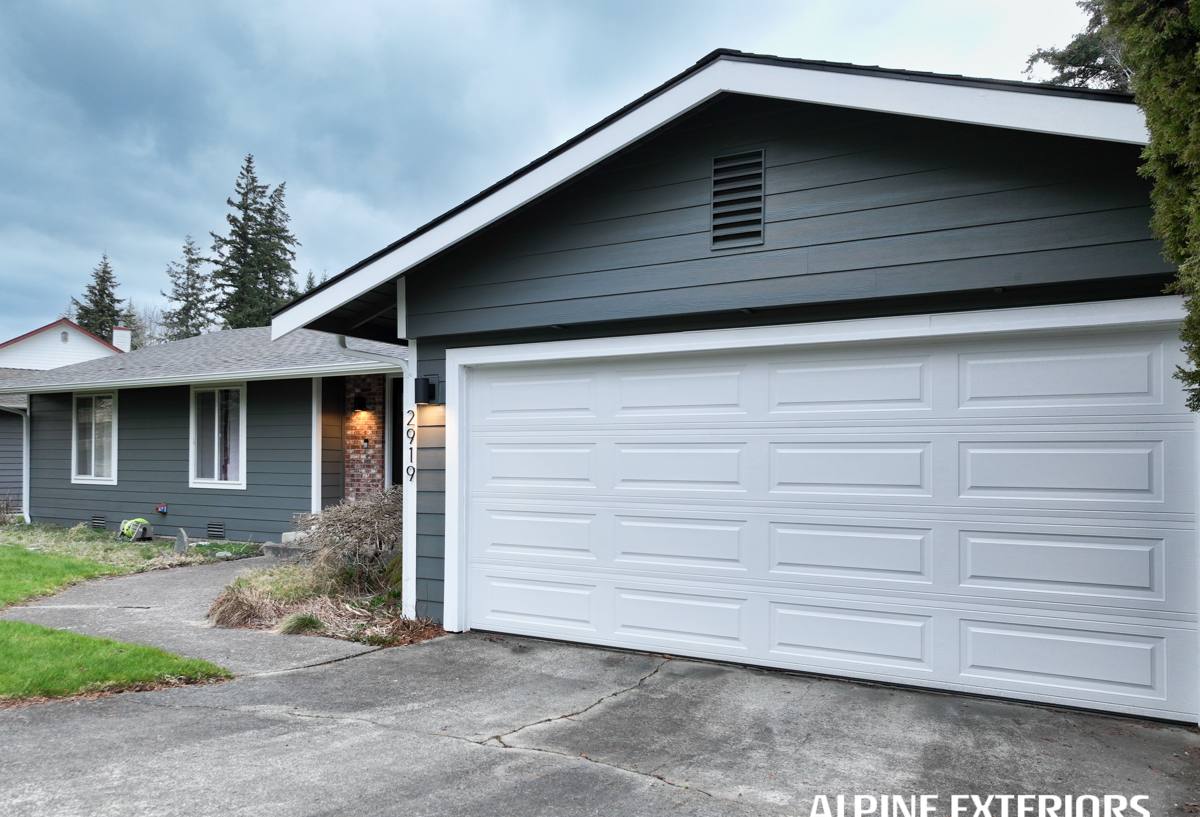
What Correct Siding Installation Actually Involves
Siding installation is not just fastening boards to a wall. In a climate like Cordata's, the difference between siding that lasts and siding that fails early almost always comes down to what's happening behind the visible surface. A correct installation includes:
- A properly lapped and sealed weather-resistive barrier (housewrap) with no gaps, tears, or shortcuts at seams
- Flashing at every window, door, and roof-to-wall intersection, installed so water sheds outward and down — never trapped behind the cladding
- Correct fastener type, length, and placement so panels stay secured through wind-driven rain without splitting or backing out over time
- Proper clearance between the bottom of the siding and grade, decks, patios, and roof lines, so water and moss-friendly moisture don't have constant contact with the material
- Rain screen or drainage gap detailing where the wall assembly calls for it, so any moisture that does get behind the siding has somewhere to go
- Caulking and sealant used only where it belongs — not as a substitute for proper flashing
Skip any one of these and the siding itself almost doesn't matter — even a premium product installed with a shortcut behind the wall will fail early. This is why we treat installation as the majority of the job, not an afterthought to picking a color.
Why We Install James Hardie Fiber Cement — and Nothing Else
We made a decision as a company to install James Hardie fiber cement siding exclusively. We don't install vinyl, LP SmartSide, primed spruce, cedar, or other fiber cement brands like Cemplank or Allura. That's a deliberate standard, not a sales pitch, and it comes down to how these products actually perform in Whatcom County's wet, moss-prone climate over the long run.
James Hardie's fiber cement is non-combustible, dimensionally stable in wet-dry cycling, and factory-finished with ColorPlus technology, which means the color and protective coating are baked on before the siding ever reaches the jobsite — not brushed on in the field where weather and timing can compromise the finish. Hardie also engineers specific product lines (their HZ5 line, for example) for climates like ours, with formulations meant to handle sustained moisture exposure better than a one-size-fits-all product. Combined with a strong transferable warranty, it's the system we're willing to stand behind on Cordata homes for the long haul. Other products aren't necessarily bad — we simply won't put our name on an installation using materials we don't believe hold up as well here.
How We Approach a Cordata Siding Installation
1. On-Site Assessment
We start by walking the property, looking at wall exposures, roof-to-wall details, grade clearances, existing moisture or moss damage, and anything the current siding is already telling us about how water moves around the house.
2. Tear-Off and Sheathing Check
Old siding comes off and we inspect the sheathing underneath. This is often where hidden problems surface — soft sheathing, missing or failed flashing, or a weather barrier that was never installed correctly the first time. We address what we find before anything new goes up.
3. Weather Barrier and Flashing
New housewrap and flashing go in at every penetration and transition, detailed for the way water actually moves on a Cordata lot — including the extra attention north-facing and shaded walls need.
4. Hardie Panel or Lap Siding Installation
Panels or lap siding go up per James Hardie's installation specifications, with correct fastener spacing, proper clearances at grade and roof lines, and factory-finished ColorPlus material handled to avoid chips or exposed edges that could compromise the finish.
5. Final Detailing and Walkthrough
Trim, caulking at the appropriate joints, and a final walkthrough so you understand what was done and why, not just what it looks like from the curb.
What Drives the Cost of a Cordata Siding Installation
| Factor | Why It Matters in Cordata |
|---|---|
| Tear-off condition | Older siding often hides sheathing or flashing damage from years of moisture exposure — repairs add time and material |
| Wall exposure and shading | North-facing or heavily treed walls need more careful drainage detailing, which affects labor |
| Home size and complexity | Multiple gables, dormers, and wall-to-roof transitions mean more flashing and cut work |
| Siding profile (lap vs. panel) | Different profiles have different install labor and trim requirements |
| Site access | Tighter Cordata lots with close neighboring homes or mature landscaping can slow staging and material handling |
| Grade and drainage conditions | Lots with poor drainage near the foundation may need clearance or grading adjustments before siding goes up |
We walk every property before quoting so you get a number based on your home's actual conditions, not a generic per-square-foot estimate.
Why Hiring a Crew That Already Works Cordata Matters
A lot of siding problems in this climate aren't caused by bad material — they're caused by installers applying techniques that work fine in drier regions but don't account for how much moisture Whatcom County walls actually see. A crew that regularly works in and around Bellingham understands things a traveling or out-of-area contractor might not think twice about: how much clearance shaded walls really need, how long moss-prone north sides stay damp after a storm system passes through, and which detailing choices hold up through a full Pacific Northwest wet season rather than just looking good on installation day.
Local experience also means familiarity with the permitting and inspection process for the area, realistic scheduling around our wet months, and a track record you can actually check with neighbors rather than take on faith.
What to Ask Before You Hire
- Are you licensed and insured to work in Whatcom County?
- Who manufactures the fastener and flashing materials you use, and are they rated for the exposure conditions on my specific walls?
- Will you inspect and repair sheathing issues if you find them during tear-off, and how is that priced?
- What's your process for grade clearance and drainage detailing on shaded or damp-prone walls?
- Can you walk me through the manufacturer's installation spec you're following, rather than just your own general practice?
- What does the warranty actually cover — material, labor, or both — and who backs it?
A contractor who answers these clearly and specifically, without hedging, is a good sign. Vague answers about "the way we've always done it" are a reason to keep asking questions.
Living With Hardie Siding in Cordata
Once it's installed correctly, James Hardie fiber cement is low-maintenance by Northwest standards, but "low-maintenance" doesn't mean "no maintenance" in a climate that grows moss on nearly everything left damp long enough. A rinse-down once or twice a year, particularly on shaded north walls, keeps moss and organic buildup from taking hold. Keeping gutters clear and grade clearance intact protects the bottom courses, which are the first place any siding shows wear. Beyond that, ColorPlus finishes are engineered to resist fading and hold up without repainting for many years, which matters in a region where repainting siding every few years is a real and recurring cost with other materials.
Get a Straight Answer for Your Home
Every Cordata property is a little different — sun exposure, tree cover, grade, and the condition of what's already on the walls all factor into what your siding installation actually needs. If you'd like an honest look at your home and a clear, no-pressure estimate, the form below is the easiest way to get started.