 Bellingham
 Fairhaven's Marine Climate Is Hard on Decks
Fairhaven sits close enough to Bellingham Bay that salt-laden air is a daily fact of life, not an occasional coastal breeze. That air accelerates corrosion in fasteners, hardware, and metal connectors long before the wood around them shows obvious damage. Add in Bellingham's driving rain, which comes in sideways often enough to soak areas a typical roof overhang would otherwise protect, and you get moisture finding its way into joints, end grain, and ledger connections that were never meant to stay wet.
Then there's the moss. Whatcom County's mild, damp stretch from fall through spring gives moss and algae months to establish themselves on any deck surface that doesn't get regular sun or airflow. Moss holds moisture against the wood surface, which is a slower but just as real threat as standing water. Decks here don't fail because the wood was bad — they fail because the combination of salt air, rain, and moss wears down protective finishes and hardware faster than most homeowners expect.
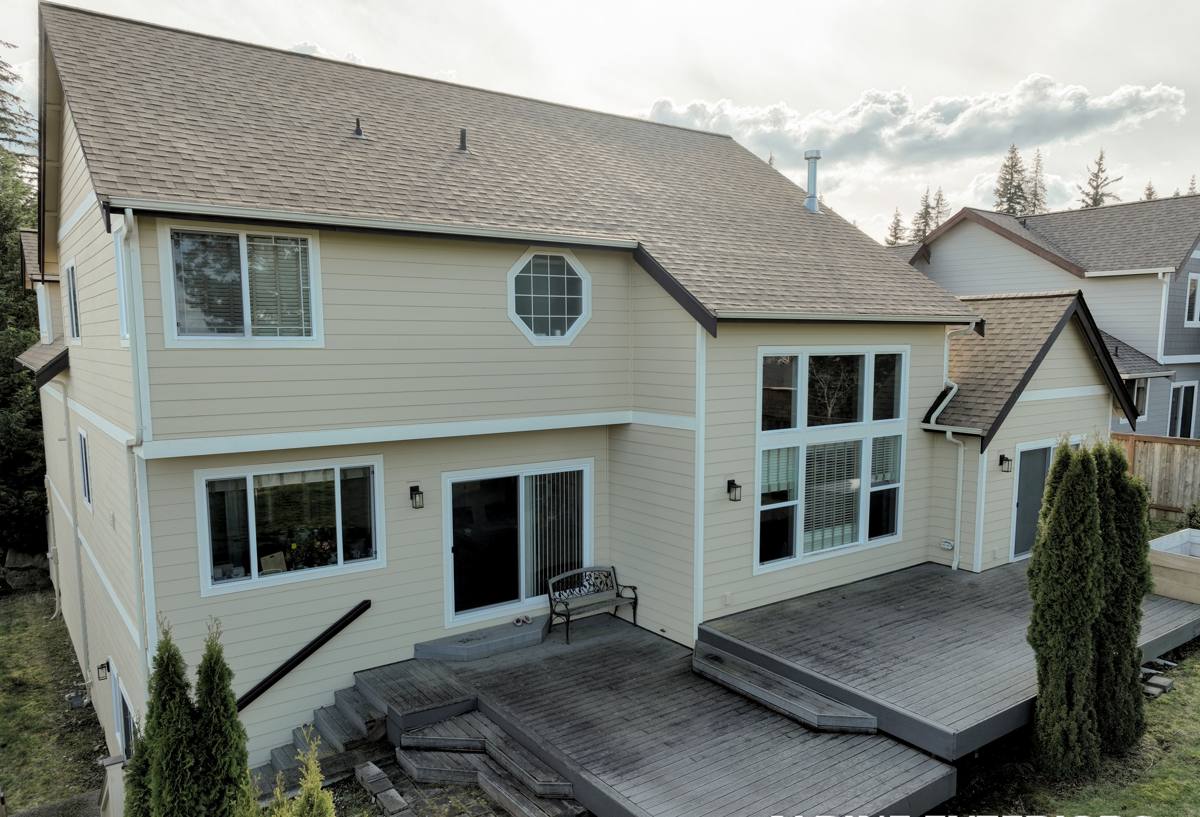
How to Tell If Your Deck Needs Repair
Structural Warning Signs
These are the ones that matter most, because they affect safety, not just appearance:
- Springiness or noticeable give when you walk across certain boards or near the deck's edge
- A ledger board (where the deck attaches to the house) that looks separated, stained dark, or has visible gaps at the flashing
- Wobble or movement in the railing when you lean on it
- Posts that feel loose at the base or show soft, spongy wood when pressed with a screwdriver
- Fasteners that are rusted, backed out, or missing entirely
Signs That Are Cosmetic, Not Urgent
Graying wood, faded stain, surface mildew, and light moss on shaded boards are normal wear in this climate and don't mean the structure is compromised. They're worth addressing so they don't turn into something worse, but they're not a sign you need emergency repair.
The Deck Problems We See Most Often in Fairhaven
Ledger Board and Rim Joist Rot
The ledger board is the single most important structural connection on most decks, and it's also the one most exposed to water that runs off the house siding during heavy rain. When flashing behind the ledger was installed poorly, or has failed over time, water tracks straight into the framing. This is usually hidden until the wood is already soft.
Post Bases and Footings
Posts that sit directly on concrete without a proper standoff base tend to wick moisture up from below, especially in low or shaded corners of a yard that stay damp longer after rain. Rot at the base of a post is a structural issue, not cosmetic, and it's one of the more common repairs we're called out for.
Fastener and Hardware Corrosion
Salt air speeds up corrosion in screws, joist hangers, and structural bolts, even galvanized ones, faster than inland areas typically see. Corroded hardware loses holding strength well before it looks obviously bad, which is why a hands-on inspection matters more than a visual walk-around.
Moss and Algae on Deck Boards
Beyond the slip hazard, moss traps moisture against the board surface and blocks it from drying out between rains. Left long enough, it degrades the wood fibers underneath and breaks down any stain or sealer that was protecting the board.
What a Correct Deck Repair Actually Involves
A repair that only replaces what's visibly broken often misses the cause. Our approach starts with the structure and works outward:
- Framing first. Ledger, joists, beams, and posts get checked and repaired before anything cosmetic happens. There's no point in replacing deck boards over a joist that's still rotting underneath.
- Flashing and water management. If the ledger connection is part of the problem, we correct the flashing so water sheds away from the house rather than into the framing again.
- Hardware upgrades. Corroded fasteners and connectors get replaced with hardware rated for the exposure this location actually sees, not just whatever matches the original build.
- Matching materials. Replacement boards and posts are matched to the existing deck in species and dimension wherever possible, so the repair doesn't look patched-on.
- Finish and protection. New and existing wood gets sealed or finished as a system, not in isolated patches that weather differently over time.
Skipping any of these steps is how a "repair" ends up needing to be redone in a few years.
Repair or Rebuild? Cost Factors to Weigh
Not every deck problem calls for a full rebuild, and not every repair is worth doing instead of starting over. The honest answer usually comes down to how much of the structure is still sound.
| Factor | Leans Toward Repair | Leans Toward Rebuild |
|---|---|---|
| Framing condition | Solid, with isolated soft spots | Widespread rot in joists or beams |
| Ledger connection | Sound, flashing intact or fixable | Failed flashing with ongoing water intrusion |
| Age of the deck | Under 15-20 years, built to a reasonable standard | Older, undersized framing by current standards |
| Extent of damage | Concentrated in one area (a post, a section of boards) | Spread across multiple structural components |
| Long-term goal | Extend the life of a deck you're otherwise happy with | Change the layout, size, or footprint |
We'll always tell you honestly when a repair is the smarter choice, and just as honestly when it isn't — patching a deck whose framing is fundamentally undersized or badly rotted just delays a bigger expense.
Matching Materials: Repairing With Cedar, Treated Lumber, or Composite
Cedar
Cedar has natural resistance to rot and insects and is a common choice for decks built in this region because it weathers reasonably well and blends with the existing look of an older deck. It still needs regular finish maintenance in a climate this wet, and it's a material choice we're comfortable repairing to match rather than replacing wholesale.
Pressure-Treated Lumber
Treated lumber is the standard for structural framing — posts, beams, and joists — because it's rated for ground and moisture contact. We don't recommend it for visible surface boards on a repair where the rest of the deck is cedar or composite, since it weathers differently and the mismatch shows.
Composite Decking
Composite boards resist moss growth and moisture damage better than wood surfaces, which matters in a climate where moss is a near year-round concern. The trade-off is upfront cost and the fact that composite can't be sanded or refinished the way wood can — once a board is damaged, it's replaced, not repaired. For homeowners tired of repeat moss and finish maintenance, it's worth discussing as part of a repair plan, even just for the surface boards.
Our Process, Start to Finish
Inspection and Estimate
We start by physically checking framing, posts, and the ledger connection — not just looking at the surface. You get a straightforward explanation of what's actually wrong, what it will take to fix it, and a written estimate before any work begins.
The Repair Work
We handle structural repairs first, then move to boards, railings, and finish work. If we find something during the work that wasn't visible during the inspection — which happens with hidden rot — we stop and talk to you before proceeding, not after.
Cleanup and Walkthrough
When the work is done, we walk the deck with you, point out what was repaired, and go over what maintenance will keep it in good shape going forward.
After the Repair: Keeping Moss and Rot From Coming Back
A good repair buys you years, but this climate doesn't let any deck coast on a one-time fix. A little regular attention goes a long way:
- Sweep off leaves, needles, and debris regularly, especially in shaded corners where moisture lingers
- Rinse or gently brush off moss as soon as it appears rather than letting it establish
- Reseal or restain on the schedule appropriate to the finish used — don't wait until it's visibly failing
- Check fasteners and hardware once a year for early rust or loosening
- Keep nearby vegetation trimmed back so air can move across the deck surface
- Confirm gutters and downspouts near the deck are directing water away, not onto it
Why a Fairhaven-Familiar Crew Makes a Difference
A contractor who regularly works decks in this part of Bellingham already knows where rot tends to hide, which hardware actually holds up against salt air, and how long a given finish realistically lasts before it needs attention again. That's the difference between a repair that's cosmetic and one that actually addresses why the deck failed in the first place. We're not guessing at what Whatcom County's climate does to a deck over time — we see it repair after repair.
If you're noticing soft spots, rust streaks, persistent moss, or just a deck that doesn't feel as solid as it used to, we're happy to take a look and give you a straight answer about what it needs. Reach out for a free, no-pressure estimate using the form below.