 Bellingham
 Edgemoor's Exposure Is Different From the Rest of Bellingham
Edgemoor sits up on the wooded bluffs above the bay, and that position cuts both ways. The tree canopy and elevation give homes here some of the best views in Whatcom County, but they also create a specific set of conditions that wear siding down faster than a typical inland Bellingham lot. Homes facing the water take direct salt-laden air and wind-driven rain off the bay. Homes tucked under mature trees get the opposite problem: deep shade, slow-drying wood surfaces, and a moss and algae season that can run most of the year in our marine climate.
Both situations point to the same conclusion — siding on an Edgemoor home needs to shed water fast, resist organic growth, and hold up to airborne salt without the paint film failing early. A lot of siding that performs fine in a dry inland subdivision struggles here. This page is specifically about siding installation for Edgemoor, not a generic overview — what the climate demands, what a correct install actually involves, and why we've standardized on one product system rather than offering a menu of options.
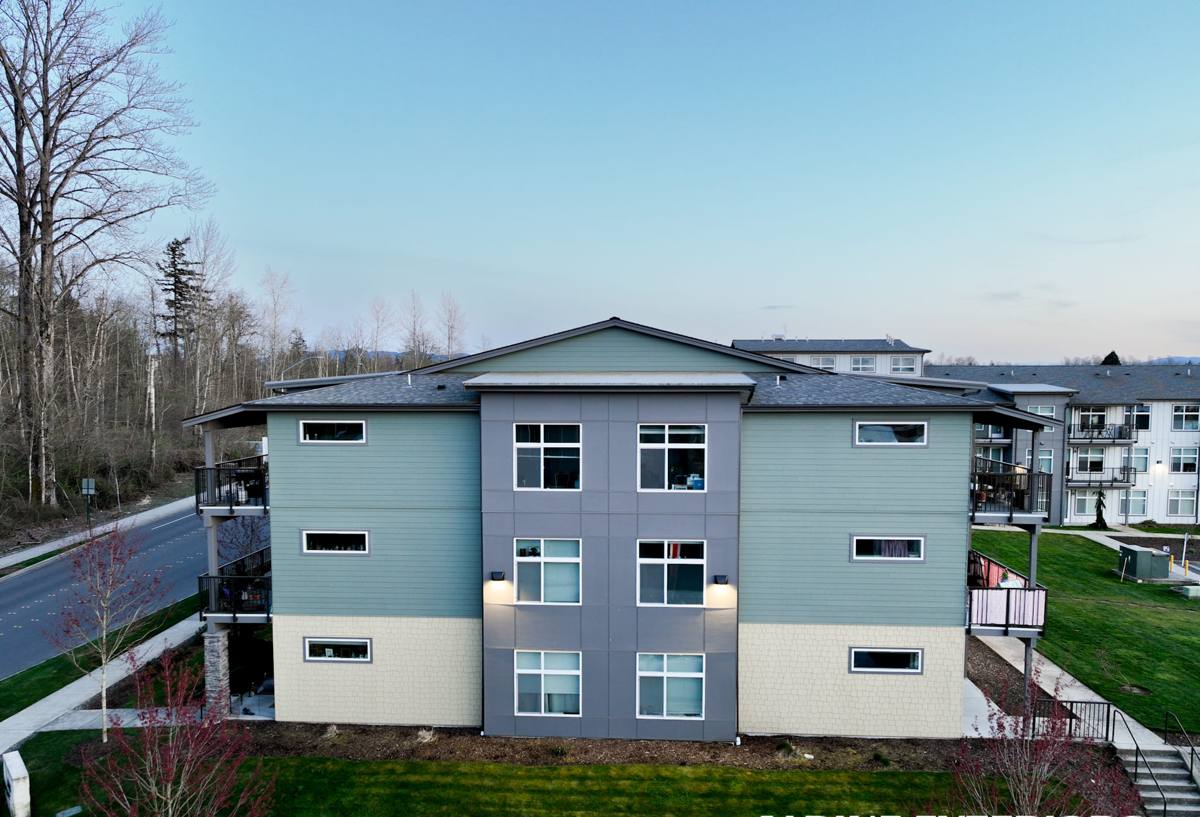
What Bellingham's Marine Climate Does to Siding Over Time
Whatcom County gets a long wet season, and Edgemoor's bluff-and-bay setting adds salt exposure on top of that. Over years, this combination shows up as:
- Moss and algae staining on north-facing and shaded walls, especially under tree cover
- Paint and caulk failure at seams and butt joints where water sits longest
- Swelling, delamination, or soft spots in wood-based products that stay damp too long
- Corrosion around fasteners and trim on homes closer to the water
- Faster fading on the sun-exposed side of the house compared to the shaded side
None of this means siding is doomed on an Edgemoor lot — it means the product and the installation details matter more here than they would somewhere drier. That's the whole basis of how we approach this work.
Why We Install Only James Hardie Fiber Cement
We don't install vinyl siding, LP SmartSide, Cemplank, Allura, primed spruce, or cedar. That's not a marketing line — it's a decision we made about what we're willing to put our name behind on homes in this climate, and it's worth explaining honestly rather than just asserting it.
Vinyl is inexpensive and low-maintenance, but it's a petroleum-based product that can warp under heat and gets brittle in freeze cycles; it also can't be painted to match a home's trim without limitations, and seams are more visible over time. Wood-based composite products like LP SmartSide use engineered wood strand technology that performs well when detailing and maintenance are perfect, but any wood-based product is more sensitive to sustained moisture exposure than fiber cement — a real consideration on a shaded, moss-prone bluff lot. Other fiber cement brands (Cemplank, Allura) are legitimate manufacturers, but we've standardized on one supply chain, one warranty structure, and one factory finish system so every crew member installs to the same spec every time, and every homeowner gets the same product knowledge and after-install support.
James Hardie fiber cement is non-combustible, dimensionally stable in wet-dry cycling, and comes with a factory-applied ColorPlus finish that's baked on rather than field-sprayed — which matters directly for moss and mildew resistance, since a consistent factory finish resists the biological growth that dulls field-painted surfaces faster. Hardie's HZ5 product line is engineered for wet, moderate climates like ours, and the company backs it with a long, transferable material warranty. For a home absorbing salt air and near-constant moisture, that combination is why we build every siding job around it instead of offering a lineup of alternatives.
Where Hardie Fits Against the Alternatives
| Factor | Vinyl | Wood / Engineered Wood | James Hardie Fiber Cement |
|---|---|---|---|
| Moisture tolerance | Doesn't absorb, but seams can trap water behind it | Absorbs moisture if finish fails; prone to swelling | Dimensionally stable; engineered for wet climates (HZ5) |
| Moss/algae resistance | Growth sits on surface, hard to fully remove | Growth can take hold in the finish and grain | Factory ColorPlus finish resists staining and growth |
| Salt air exposure | Can become brittle over time near water | Fasteners and finish more vulnerable to corrosion/wear | Non-combustible, stable material; corrosion-resistant fastening details |
| Fire resistance | Can melt/deform under heat | Combustible | Non-combustible |
| Repaint interval | N/A (color molded in, fades over time) | Every 5-8 years typically | Factory finish rated for many years before repaint is needed |
What a Correct Siding Installation Actually Involves
Siding installation is a water-management system, not just an exterior finish. On an Edgemoor home, the details that get skipped on a rushed job are exactly the details that fail first once salt air and shade moss get to work. A correct installation includes:
- Full tear-off and substrate inspection — checking sheathing for hidden rot or moisture damage before anything new goes up, especially common on shaded walls where old siding has trapped water for years
- Weather-resistive barrier — a continuous, properly lapped house wrap installed to shed water downward and outward, not just stapled up as an afterthought
- Rainscreen or drainage gap — furring strips or a drainage mat that let any moisture that gets behind the siding actually drain and the wall assembly dry out, which matters more here than in a dry climate
- Correct flashing at every penetration — windows, doors, hose bibs, light fixtures, and roof-to-wall intersections, since a missed flashing detail is where 90% of siding failures start
- Manufacturer-spec fastening — correct nail type, spacing, and depth per Hardie's installation guide, since improper fastening voids warranty coverage and causes visible issues down the line
- Proper joint and butt seam treatment — sealed or flashed per spec, not just caulked and hoped for
- Factory-finish touch-up only where required — minimizing field paint, which is the weak point in any siding job's long-term moss and fade resistance
Skip any one of these steps and the siding may look fine for a season or two, but the wall assembly behind it is what actually determines whether the job lasts fifteen years or fifty.
Our Process for an Edgemoor Siding Project
1. On-Site Assessment
We walk the exterior, check current siding and trim condition, look at shade patterns and water exposure on each elevation, and identify any moisture or rot concerns before quoting anything.
2. Scope and Product Plan
We spec the right Hardie profile and HZ line for the home, plan flashing and drainage details around the specific exposures we found, and put together a clear, itemized scope — no vague allowances.
3. Tear-Off and Substrate Repair
Old siding comes off, sheathing gets inspected, and any rot or damage is repaired before a single new panel goes up. This is the step that gets shortcut on cheap bids and it's the one that matters most.
4. Water Management Installation
House wrap, drainage gap, and flashing go in first — this is the layer nobody sees once the job is done, and it's the layer doing most of the actual work.
5. Hardie Installation to Spec
Panels, lap siding, or trim go up per manufacturer fastening and clearance requirements, with attention to butt joints, corners, and every penetration.
6. Final Walkthrough
We walk the finished job with the homeowner, review warranty documentation, and go over any care notes specific to the home's exposure.
Signs an Edgemoor Home May Need Siding Replacement Soon
- Persistent moss or dark streaking that returns shortly after cleaning
- Soft or spongy spots when you press on siding near the bottom courses or around windows
- Visible gaps, warping, or buckling panels, especially on shaded or bay-facing walls
- Paint that's peeling or bubbling rather than just fading evenly
- Rising energy bills that suggest the wall assembly isn't sealing the way it should
- Visible rust streaking from fasteners on older installations
Any one of these on its own might just need a repair. Several together usually mean the siding system as a whole is past the point where patching makes sense.
What Drives Cost on a Job Like This
| Factor | Why It Matters in Edgemoor |
|---|---|
| Substrate condition | Shaded, moisture-prone walls more often need sheathing repair before new siding goes on |
| Access and lot grade | Sloped, wooded bluff lots can add setup and material-handling time |
| Siding profile chosen | Lap siding, panel systems, and shingle-style Hardie products vary in material and labor cost |
| Trim and detail work | Homes with more window/door penetrations and architectural trim need more flashing and finish work |
| Removal and disposal | Tear-off volume and disposal of old siding material factors into the bid |
We give a firm, itemized quote after the on-site assessment — not a rough number based on square footage alone, since the details above swing cost more than raw size does.
Why Hiring a Crew That Already Works Edgemoor Matters
Edgemoor's bluff lots, tree cover, and bay exposure aren't universal Bellingham conditions — they're a specific combination that shows up on this side of town more than most. A crew that's worked here before already knows to check shaded north walls more carefully, to plan drainage details around homes tucked under heavy tree canopy, and to expect a different moisture profile than a job three miles inland. That's not a substitute for doing the fundamentals right on every job, but it does mean fewer surprises and a scope that's realistic from the first estimate rather than revised mid-project.
Caring for Hardie Siding on an Edgemoor Home
Maintenance is genuinely lighter than wood or aging vinyl, but it's not zero. A rinse-down once or twice a year — more often on shaded, moss-prone walls — keeps the factory finish looking like new and prevents organic growth from getting a foothold. Keep gutters clear and vegetation trimmed back from the siding so walls can dry between rain events, which matters more here given how long our wet season runs. Beyond that, an occasional visual check of caulking at trim and penetrations is enough to catch anything early, long before it becomes a bigger repair.
If your Edgemoor home is showing any of the wear signs above, or you're planning ahead for a replacement, we're happy to walk the exterior with you and give a straightforward, no-pressure estimate. Use the form below to get started.