 Bellingham
 Ferndale's Roofs Work Harder Than Most People Realize
Ferndale sits close enough to the water and the open flats of Whatcom County that its roofs take a different kind of beating than roofs twenty miles inland. Salt-laden air moving off the Strait and the bay corrodes exposed metal fasteners and flashing faster than manufacturers' warranties usually account for. Driving rain, often pushed sideways by wind off the water, finds every weak seam, undersized flashing detail, and worn-out pipe boot. And the long, wet, mild winters that define this part of the Pacific Northwest give moss and algae months on end to establish themselves on anything north-facing or shaded by trees.
None of that is exotic information to anyone who's lived here a while, but it matters a lot when you're deciding what goes on top of your house. A roof spec'd for a dry inland climate — or installed by a crew unfamiliar with coastal Whatcom County conditions — tends to show its age early: streaking, soft spots at the eaves, corroded fasteners, and moss working its way under shingle tabs. A roof installed correctly for this specific environment holds up the way it's supposed to.
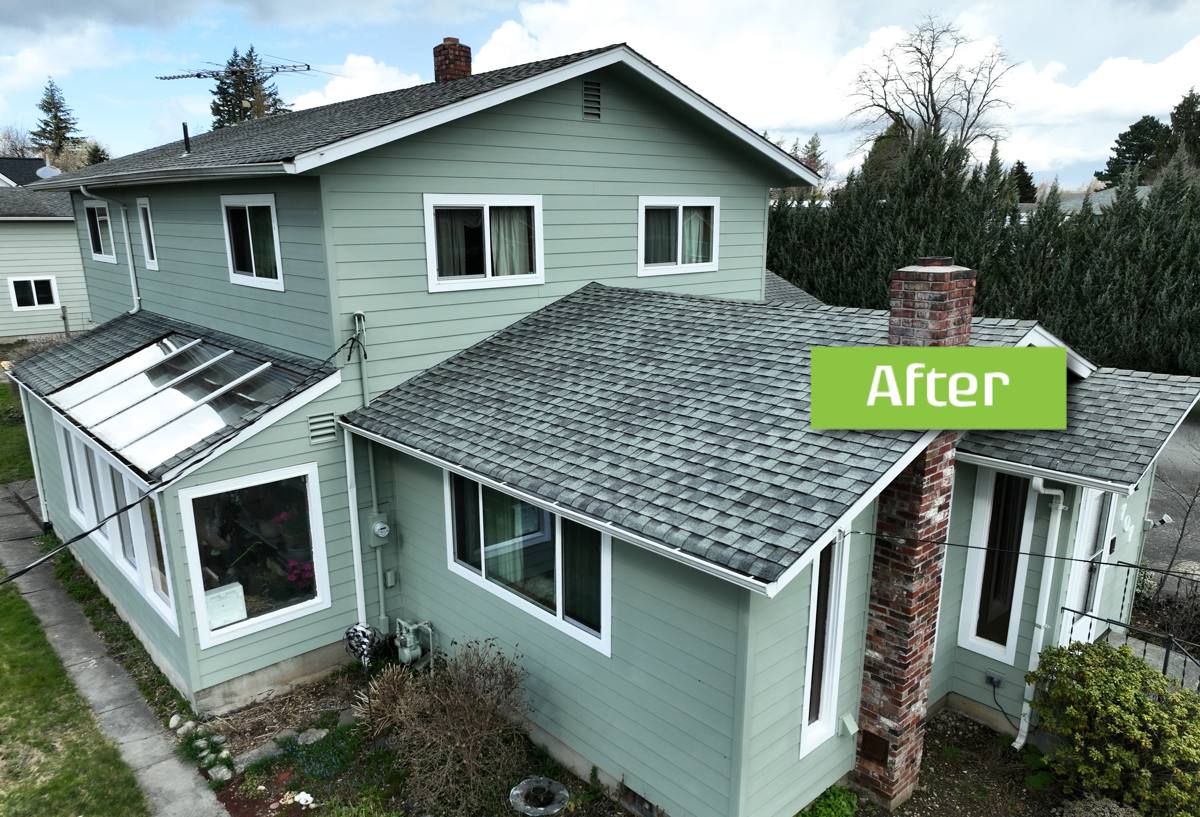
Signs a Ferndale Home Needs a New Roof, Not Another Patch
Roof repair has its place, but there's a point where patching stops making financial sense and a full replacement becomes the honest recommendation. Some of the clearest signs:
- Shingles that are cupping, cracking, or losing granules in large patches rather than one isolated spot
- Moss growth thick enough that it's lifting shingle edges, not just staining the surface
- Soft or spongy decking felt underfoot in the attic or through the roof surface itself
- Daylight or water staining visible from inside the attic around chimneys, vents, or valleys
- A roof that's already had two or more previous repairs in the same general area
- Roof age nearing or past the manufacturer's rated lifespan, especially with the original underlayment still in place
If your roof is showing one or two of these signs in isolation, a repair may still make sense. If it's showing several at once, or the roof is past 20-25 years old, a new installation is usually the more cost-effective path — repeated patch jobs on an aging roof rarely add up to less than one correct replacement.
What a Correct New Roof Installation Actually Involves
Tear-Off and Deck Inspection
A proper job starts with full tear-off down to the deck, not a layover on top of existing material. That's the only way to actually see the condition of the sheathing underneath. In this climate, it's common to find soft or delaminated plywood around old flashing points, valleys, and eaves where moisture has been working its way in slowly for years. Any compromised decking gets replaced before anything new goes down — installing new roofing over a weak deck just hides the problem instead of fixing it.
Underlayment and Water-Entry Protection
Given how much driving rain this area sees, underlayment choice matters more here than it would in a drier climate. Self-adhered ice-and-water membrane at eaves, valleys, and around penetrations gives a second line of defense in the spots most likely to see wind-driven rain forced backward under the shingle line. Synthetic underlayment across the rest of the field holds up better than old-style felt when it gets wet during installation, which — being realistic about local weather — it sometimes will.
Flashing Done Right
Flashing failures are the single most common cause of roof leaks, and they're almost always an installation issue rather than a material one. Step flashing at walls, proper counter-flashing at chimneys, and correctly lapped valley metal all need to be done in the right sequence with the right materials — not caulked over as a shortcut. In a salt-air environment, we pay attention to flashing metal compatibility too, since mixing incompatible metals can accelerate corrosion at the joint.
Ventilation That Matches the Climate
Balanced intake and exhaust ventilation keeps the attic temperature and moisture level in check, which directly affects how long shingles last and how much condensation builds up during our wetter months. A roof that looks great on day one but was installed without adequate ventilation will often show premature aging, curling, or interior moisture problems within a few years.
Roofing Materials That Actually Hold Up Here
There's no single "best" roofing material for every home — it depends on the roof's exposure, the home's style, and the owner's maintenance expectations. Here's how the common options compare for a coastal Whatcom County property like those in and around Ferndale:
| Material | Typical Lifespan | Performance in Salt Air / Moss | Maintenance Needs |
|---|---|---|---|
| Architectural asphalt shingle | 25-30 years | Good with algae-resistant granules; moss still needs periodic removal | Low to moderate |
| Standing seam metal | 40-50+ years | Very good moss resistance; needs corrosion-rated fasteners and coating near salt exposure | Low |
| Cedar shake | 20-30 years with upkeep | Attractive but moisture-sensitive; moss and rot risk are highest of the three without regular treatment | High |
| Synthetic composite shingle | 30-50 years | Good moss and moisture resistance; doesn't corrode | Low |
For most Ferndale homes, a quality architectural asphalt shingle with algae-resistant granules remains the most practical balance of cost, appearance, and durability. Metal and synthetic composite are worth serious consideration for homes with heavy tree cover, north-facing slopes that stay damp longer, or owners who want to minimize maintenance over the life of the roof.
Moss, Algae, and Salt Air: What Long-Term Care Looks Like
No roofing material is entirely maintenance-free in this climate, but installation choices make a big difference in how much upkeep is needed later. Proper attic ventilation, algae-resistant shingle granules, and keeping overhanging branches trimmed back all reduce how aggressively moss establishes itself. Zinc or copper strips at the ridge can help suppress moss growth on shaded slopes over time, and they're worth discussing during installation if your property has significant tree cover.
Near the water, we also pay attention to fastener and flashing metal grade. Standard galvanized fasteners can start showing corrosion years before they should in a salt-air environment; stainless or coated alternatives cost a little more up front but avoid a slow, hidden failure point.
How Our Roof Replacement Process Works
Inspection and Honest Assessment
We start with a full roof and attic inspection, not a five-minute look from the ground. We'll tell you plainly whether you need a repair or a replacement — and if it's a repair, we'll say so.
Clear, Written Estimate
You get a detailed written scope covering materials, tear-off, decking allowances, flashing work, and ventilation — no vague line items and no pressure to sign on the spot.
Scheduling Around Whatcom County Weather
Roofing in a rain-prone climate means watching the forecast closely and staging materials so exposed decking isn't left open to weather overnight.
Tear-Off, Deck Repair, and Installation
Full tear-off, deck inspection and repair as needed, correct underlayment and flashing, then the roofing material itself — installed to manufacturer spec so your warranty is actually valid.
Final Walkthrough and Cleanup
We walk the finished roof and the property with you, including a magnetic sweep for stray nails, before we consider the job done.
What Drives Cost on a New Roof in Ferndale
Every roof is different, but the same handful of factors drive most of the price variation we see locally:
| Cost Factor | Why It Matters |
|---|---|
| Roof size and pitch | Steeper, larger roofs take more labor, safety equipment, and material |
| Number of layers to remove | Multiple old layers add tear-off time and disposal cost |
| Decking condition | Rot or soft sheathing found during tear-off requires replacement before roofing can proceed |
| Material selection | Asphalt, metal, and composite options span a wide price range |
| Roof complexity | Valleys, dormers, chimneys, and skylights all add flashing labor |
| Ventilation upgrades | Adding or correcting intake/exhaust venting affects both cost and long-term performance |
We won't quote a number without seeing the roof, but we're happy to walk through these factors with you during an estimate so there are no surprises later.
Why Hiring a Crew That Already Works in Ferndale Matters
A roofing crew that regularly works this part of Whatcom County already knows which details matter here: where salt air tends to hit hardest, which older homes commonly have undersized ventilation, and how the local wind and rain patterns stress a roof over time. That local familiarity shows up in the small decisions — fastener choice, flashing metal, underlayment placement — that separate a roof that lasts from one that needs attention again in five years.
If your roof in Ferndale is showing its age, or you just want an honest read on where it stands, we're glad to take a look. Reach out for a free, no-pressure estimate using the form below.