 Bellingham
 Composite Decking Built for Fairhaven's Weather, Not Against It
Fairhaven sits close enough to Bellingham Bay that salt air is a daily fact of life, not an occasional nuisance. Add in the driving rain that rolls off the water through fall and winter, plus the long stretch of gray, damp months that let moss and algae take hold on anything that stays wet too long, and you've got a climate that is genuinely hard on outdoor decking. A deck built for a drier inland town does not automatically hold up the same way a few miles from the shoreline. Composite decking, installed correctly for these conditions, is one of the more sensible answers we install across Bellingham and Whatcom County.
This page is specifically about composite decking for homes in and around Fairhaven. We're not covering every decking material or every neighborhood in Bellingham here — just what actually matters for a deck in this particular setting, where salt, moisture, and shade combine to shorten the life of the wrong build.
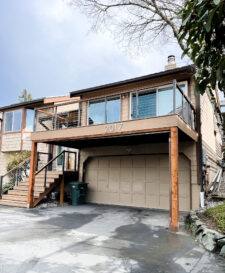
What Fairhaven's Climate Actually Does to a Deck
Before getting into materials and installation, it helps to understand what a deck in this part of Bellingham is up against year-round.
Salt Air and Corrosion
Proximity to the bay means airborne salt settles on exposed surfaces, including fasteners, ledger boards, and any exposed metal hardware. Over years, ordinary fasteners can corrode faster than they would further inland, which is why fastener and hardware selection matters as much as the decking boards themselves.
Driving Rain and Wind-Driven Moisture
Rain in this area doesn't always fall straight down. Wind off the water can drive moisture sideways, into gaps, behind fascia, and under boards that aren't properly spaced or flashed. A deck that only accounts for water falling from above will eventually show problems where water is pushed sideways instead.
Extended Moss and Algae Season
Shaded areas of a deck, north-facing sections, and anywhere airflow is restricted underneath can stay damp for weeks at a stretch during the wetter months. That's exactly the environment moss and algae need to establish. On wood decking, this often means a slick, degrading surface. On lower-quality composite, it can mean surface staining that's hard to fully remove.
Why Composite Makes Sense for This Environment
Composite decking combines wood fiber and recycled plastics, which gives it a meaningfully different relationship with moisture, salt, and organic growth compared to solid wood. It doesn't need annual sealing or staining, it doesn't splinter, and modern capped composite boards resist moisture absorption at the core — which matters when the board is exposed to rain and humidity most of the year, not just a few wet months.
That said, composite is not maintenance-free, and it's not automatically the right call for every situation. It's a strong fit when:
- You want to reduce or eliminate annual staining, sealing, and sanding
- The deck gets regular rain exposure and limited direct sun to dry it out
- You're replacing an aging wood deck that's already showing rot, cupping, or moss buildup
- You want consistent color and surface texture without the upkeep wood requires
- Long-term cost predictability matters more than the lowest possible upfront price
Composite vs. Pressure-Treated Wood: The Honest Trade-Offs
Homeowners in Fairhaven often ask us to compare composite directly against pressure-treated wood, since that's still the most common decking material in the area. Here's how they actually compare given local conditions, not marketing claims.
| Factor | Composite Decking | Pressure-Treated Wood |
|---|---|---|
| Moisture resistance | High — capped boards resist water absorption at the surface and core | Moderate — treated for rot resistance but still absorbs moisture over time |
| Moss and algae resistance | Better on capped/textured boards, though not immune in deep shade | Lower — porous surface holds moisture longer, especially in shaded areas |
| Maintenance | Occasional washing; no staining or sealing required | Annual or biennial sealing/staining to maintain protection |
| Upfront cost | Higher material cost | Lower material cost |
| Long-term cost | Lower over 15-20 years due to reduced upkeep | Higher over time once labor and materials for maintenance are counted |
| Fastener/hardware sensitivity near salt air | Still requires corrosion-resistant fasteners | Still requires corrosion-resistant fasteners |
| Appearance consistency | Uniform color and grain, doesn't gray or splinter | Natural wood look, but changes appearance as it weathers |
Neither material is objectively "better" in every scenario — it depends on how much upkeep you want to take on and how the deck is situated relative to sun, shade, and wind. We'll walk through your specific site during an estimate rather than giving a blanket recommendation.
What a Correctly Installed Composite Deck Requires Here
Composite decking's reputation depends heavily on installation quality. A poorly installed composite deck in a wet, salt-exposed environment can still develop moisture problems, hardware corrosion, or substructure rot underneath a perfectly good-looking surface. Here's what we treat as non-negotiable on Fairhaven installs.
Substructure and Framing
The joists, beams, and posts underneath the decking take the brunt of long-term moisture exposure, even when the surface material itself is composite. We use appropriately rated framing lumber, proper joist spacing for the specific composite board being installed (this varies by manufacturer and board profile), and joist tape or flashing to protect end grain and top surfaces from standing water.
Fasteners and Hardware
Given the salt air off the bay, we spec corrosion-resistant, coated fasteners and hardware rated for coastal or high-moisture exposure — not standard interior-grade hardware. This is one of the areas where cutting corners doesn't show up as a problem for a year or two, but shows up eventually as rust staining, weakened connections, or hardware failure.
Airflow Underneath the Deck
Proper clearance and ventilation under the deck structure helps the substructure dry out between rain events instead of staying damp for extended stretches. This is especially important on lower decks or decks built close to grade, which are common on sloped Fairhaven lots.
Board Spacing and Drainage
Gapping between boards needs to account for composite's expansion and contraction with temperature and moisture, while still shedding water efficiently off the surface and away from the structure below.
Ledger Attachment and Flashing
Where the deck attaches to the house, correct flashing keeps wind-driven rain from working its way behind the ledger board and into the home's structure — one of the most common sources of hidden water damage on any deck, composite or wood.
Choosing Composite Boards for This Climate
Not all composite decking is built the same, and the differences matter more in a wet, salty, shaded climate than they would somewhere drier.
- Capped vs. uncapped composite: Fully capped boards (a protective polymer shell around the wood-plastic core) resist moisture absorption and staining significantly better than uncapped boards, which is worth the difference in this environment.
- Surface texture: A textured, slip-resistant surface matters more here given how often the deck surface will be wet from rain, dew, or morning fog off the bay.
- Color selection: Darker boards absorb more heat and can dry faster after rain in sunnier spots, while lighter boards show less thermal expansion movement — worth weighing based on your deck's sun exposure.
- Manufacturer warranty terms: Warranty coverage for staining, fade, and moisture-related defects varies by manufacturer — we review these with you so there are no surprises about what is and isn't covered.
Our Process for Fairhaven Composite Deck Projects
- On-site assessment: We look at sun exposure, shade patterns, drainage, existing structure condition, and how close the deck sits to the house and grade.
- Material and layout recommendation: Based on that assessment, we recommend board type, fastening system, and substructure approach suited to the specific site — not a one-size-fits-all package.
- Substructure build or repair: If we're replacing an existing wood deck, we evaluate the framing underneath rather than simply building over compromised structure.
- Installation: Framing, flashing, fastening, and board installation following manufacturer specifications for spacing and support, adjusted for our regional moisture conditions.
- Final walkthrough: We go over care basics — cleaning frequency, what to expect from the boards seasonally, and warranty documentation — before we consider the job done.
Maintaining a Composite Deck in a Marine Climate
Composite decking cuts down maintenance dramatically compared to wood, but "low-maintenance" isn't "no-maintenance," especially this close to the water.
- Rinse or sweep debris off the surface periodically, especially in fall when leaves and organic matter can trap moisture against the boards
- Wash the deck surface a couple of times a year with a mild soap and soft-bristle brush to prevent surface film from salt air and organic buildup
- Check and clear any debris from under-deck ventilation gaps or drainage points seasonally
- Inspect fastener heads and any exposed hardware periodically for early signs of corrosion
- Avoid pressure-washing at close range or high pressure, which can damage the board's protective cap over time
Why It Matters to Hire a Crew That Already Works in Fairhaven
Composite decking installation looks similar on paper regardless of location, but the details that actually determine how long a deck holds up — fastener selection, flashing details, framing choices, ventilation — are shaped by the specific conditions of the site. A crew that regularly works in Fairhaven and the surrounding Bellingham area already accounts for the salt exposure, rain patterns, and moss-prone shade this part of Whatcom County deals with every year. That's less guesswork and fewer callbacks down the road, because the build accounts for these conditions from the start rather than treating them as an afterthought.
If you're considering a composite deck for your Fairhaven property, we're happy to take a look at your space, talk through material options honestly, and put together a free, no-pressure estimate. There's no obligation — just a straightforward conversation about what your deck actually needs.