 Bellingham
 Fairhaven's Roofs Work Harder Than Most
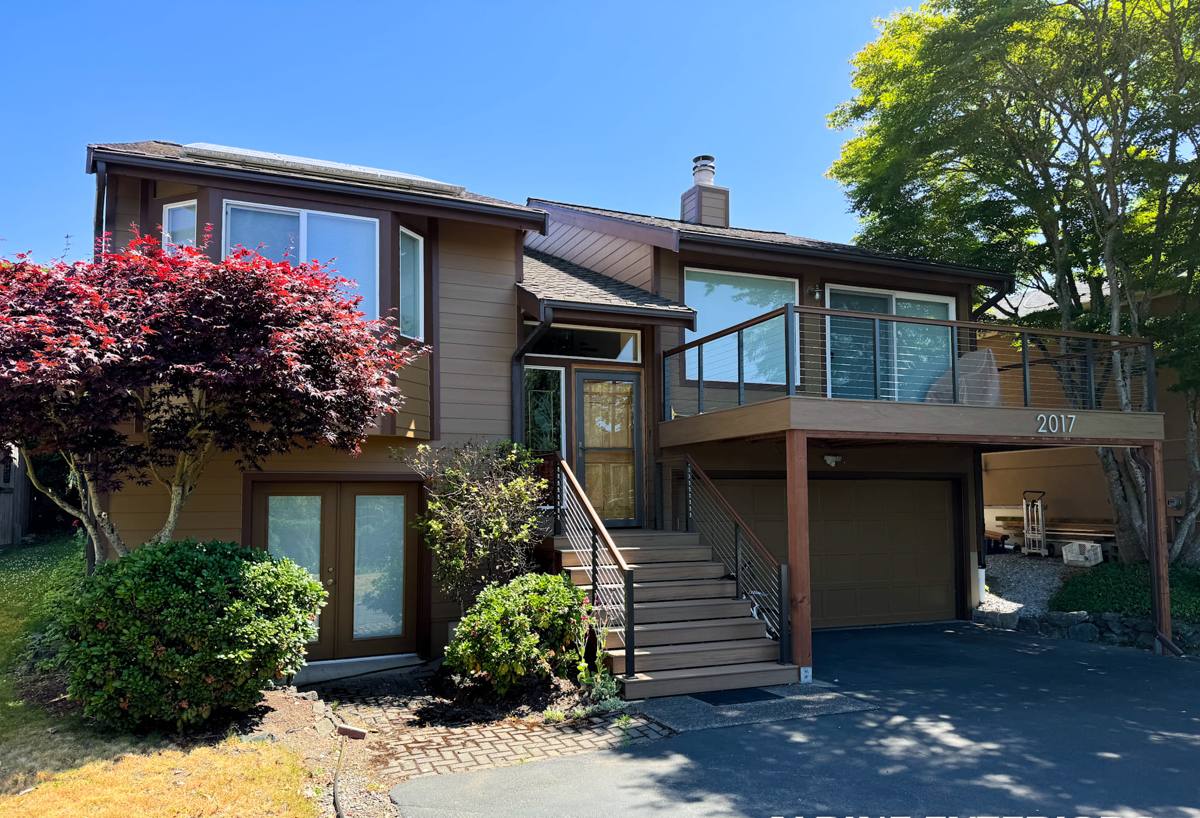
Fairhaven sits close to Bellingham Bay, which means roofs here deal with a combination most inland neighborhoods don't: salt-laden marine air, wind-driven rain coming off the water, and heavy tree cover that keeps north-facing slopes shaded and damp for months at a time. Any one of those on its own is manageable. Together, over a few Whatcom County winters, they wear down flashing, degrade fasteners, and feed the kind of moss growth that quietly lifts shingles and opens the door to leaks. A roof repair in Fairhaven isn't the same job as a roof repair on the drier east side of Bellingham — the failure points are different, and the fix needs to account for that.
Why Salt Air, Rain, and Moss Are a Tough Combination
Salt Air and Metal Components
Homes near the water are exposed to airborne salt that settles on roofing metal — flashing, vent caps, fasteners, gutter hardware — and speeds up corrosion compared to homes further inland. Standard galvanized fasteners can start showing rust streaks years before they would on a home a few miles east. Once a fastener corrodes, it loses its grip and its seal, and that's a direct path to a leak at the exact spots where roofs are already most vulnerable: valleys, chimneys, and any place two roof planes meet.
Driving Rain
Bellingham gets a lot of rain, but the rain that causes damage isn't usually the steady, straight-down kind — it's the sideways, wind-driven rain that comes with a storm blowing in off the water. That kind of rain finds its way under shingles, around poorly lapped flashing, and through nail holes that a calm-weather rain would never reach. A repair that only addresses what's visible from the ground can miss the wind-driven entry point entirely.
Moss and Organic Growth
Shade from mature trees, combined with the region's damp, mild winters, gives moss a long growing season on roofs that don't get much direct sun. Moss holds moisture against the roofing material far longer than open air would, and as it spreads it can physically lift shingle edges, creating a gap for water to work its way underneath. Left alone through a few wet seasons, moss goes from a cosmetic issue to a structural one.
Common Repair Issues We See on Fairhaven Roofs
| Issue | Typical Cause | Why It Matters |
|---|---|---|
| Leaks at chimney or wall flashing | Corroded or improperly lapped flashing metal | Water tracks along framing before it shows up as a ceiling stain, so damage is often worse than it looks |
| Lifted or missing shingles near valleys | Wind-driven rain plus age-related fastener failure | Valleys carry the most water volume on the roof — a small gap here fails fast |
| Moss colonies on shaded slopes | Tree cover, limited sun exposure, damp winters | Moss lifts shingle edges and traps moisture against the roof deck |
| Rusted fasteners and vent flashing | Salt air exposure near the bay | Corroded fasteners lose their seal well before the shingles around them wear out |
| Soft or spongy roof deck sections | Long-term, undetected moisture intrusion | Usually means the leak has been active longer than the homeowner realized |
What a Proper Roof Repair Actually Involves
A roof repair that lasts starts with figuring out the actual source of a problem, not just patching where water is showing up. Water travels — it can enter at a flashing seam and track several feet along the roof deck or rafters before it drips into a room. Chasing the drip instead of the entry point is the single most common reason repairs fail to hold.
Diagnosis Before Repair
We look at the whole roof plane around the problem area, not just the spot where the stain or drip appeared. That means checking flashing laps, fastener condition, underlayment where it's exposed, and whether moss or debris nearby is holding moisture against the deck. In a lot of Fairhaven repairs, the real cause turns out to be a few feet from where the interior damage shows up.
Matching Materials Correctly
Repairs need to tie into the existing roof correctly — matching shingle profile and exposure, using flashing metal that won't corrode faster than the surrounding material, and re-securing with fasteners rated for the exposure the home actually sees. A repair that looks fine on day one but uses mismatched materials tends to fail again within a season or two, often at the seam between old and new work.
Sealing the Right Way
Sealant has a place in roofing, but it's not a substitute for correct flashing and proper shingle lap. We use it to finish a detail correctly, not to cover for a shortcut. A repair held together mostly by sealant is a repair that's going to need another repair.
Our Fairhaven Roof Repair Process
- Inspection. We get on the roof (or use a ladder and close visual inspection where access is limited) and check the affected area plus the surrounding roof plane — flashing, fasteners, shingle condition, and signs of moisture at the deck.
- Honest assessment. We tell you what's actually wrong, what caused it, and whether a targeted repair makes sense or whether the damage points to a bigger issue. If it's a straightforward repair, we say so.
- Written estimate. You get a clear scope of work and price before anything starts — no surprise add-ons once the crew is on the roof.
- The repair itself. Damaged materials come out, the deck underneath gets checked and dried out or replaced if needed, and new materials go in correctly lapped and fastened for this climate.
- Cleanup and walk-through. Debris and old materials are hauled off, and we walk you through what was done and what to watch for going forward.
Repair vs. Replacement: How We Help You Decide
Not every roof problem in Fairhaven needs a full replacement, and not every leak can be permanently fixed with a patch. The right call depends on the roof's age, how widespread the damage is, and how many times it's already been repaired.
| Factor | Leans Toward Repair | Leans Toward Replacement |
|---|---|---|
| Roof age | Well within expected service life | At or past the typical lifespan for the material |
| Damage extent | Localized — one flashing detail, one section | Spread across multiple slopes or recurring in different spots |
| Repair history | First or second repair in this area | Same spot has been patched multiple times already |
| Deck condition | Solid, dry decking under the damaged area | Soft or delaminated decking found during inspection |
| Moss/organic buildup | Limited, treatable, roof otherwise sound | Heavy, long-term growth with visible material breakdown underneath |
We'll always tell you honestly which side of that table your roof falls on. A repair that's really just delaying an inevitable replacement isn't a good use of your money, and we won't sell it to you as a long-term fix.
Materials We Use for This Climate
Given the salt air and moisture Fairhaven roofs deal with, our standard is to use corrosion-resistant fasteners and flashing metal appropriate for coastal-adjacent exposure, rather than the minimum-spec hardware that's fine for drier inland areas. This isn't a knock on any particular product — it's a maintenance and longevity call. Hardware that corrodes faster means callbacks and repeat leaks sooner, and that costs a homeowner more over time than the modest difference in material cost up front. We also pay attention to underlayment quality in areas prone to wind-driven rain, since that's the roof's backup line of defense if water gets past the surface layer.
Keeping Moss From Coming Back
A repair is only part of the picture if moss was a contributing factor. After the repair, a few habits make a real difference in how long it holds up:
- Keep gutters and valleys clear of needles and leaf debris, which hold moisture and give moss a foothold
- Trim back overhanging branches where practical to let more light and airflow reach shaded slopes
- Have moss growth removed carefully — scraping or pressure-washing can do more damage to shingles than the moss itself
- Consider zinc or copper strips near the ridge on moss-prone slopes, which allow rainwater to carry trace metals downslope that discourage regrowth
- Schedule a periodic roof check rather than waiting for a leak to show up inside the house
Why a Crew That Already Works Fairhaven Matters
Fairhaven has a mix of older homes and newer construction, and the older roofs in particular often have details — flashing configurations, roof pitches, and repair histories — that benefit from a crew that has seen similar homes nearby. Knowing how this specific stretch of Bellingham's coastline behaves, from moss patterns on shaded lots to how wind-driven rain hits homes closer to the water, means less time spent guessing and more time spent fixing the actual problem. A local crew is also easier to have back out for a follow-up check or a related question, without the delay of scheduling someone traveling in from farther away.
Signs It's Time to Call for a Roof Repair
- Water stains on ceilings or upper walls, especially after a windy storm
- Visible moss patches on shaded roof slopes
- Shingles that look lifted, curled, or out of alignment in valleys or near flashing
- Rust streaks running down from vent pipes, flashing, or metal roof components
- Granules collecting in gutters or at downspout outlets
- A musty smell in the attic or upper floor that wasn't there before
Whatcom County's wet season makes small roof problems get worse fast, and salt air near the bay doesn't slow down for anyone. If you're seeing any of the signs above, or just want an honest look at a roof that's been bothering you, we're happy to come take a look. The estimate is free, there's no pressure to commit to anything, and you'll walk away knowing exactly what your roof needs.