 Bellingham
 Why Ferndale's Exterior Walls Work Harder Than Most
Ferndale sits close enough to Bellingham Bay and the Strait of Georgia that salt-laden air is a daily fact of life for anything mounted to the outside of a house. Add Whatcom County's long wet season, wind-driven rain off the water, and the shade from mature evergreens that keeps north-facing walls damp for weeks at a stretch, and you get a climate that is unusually hard on siding. It isn't dramatic weather — no hailstorms, no extreme heat — but it is relentless, and relentless is what actually wears siding out.
Moss is the clearest sign of that. Give a wall enough shade, moisture, and organic debris and moss will find it, especially on siding that traps water at the joints or behind a coat of exterior paint. Once moss gets a foothold, it holds moisture against the substrate around the clock, which is exactly the condition that causes rot, paint failure, and swelling in siding materials that weren't built for it.
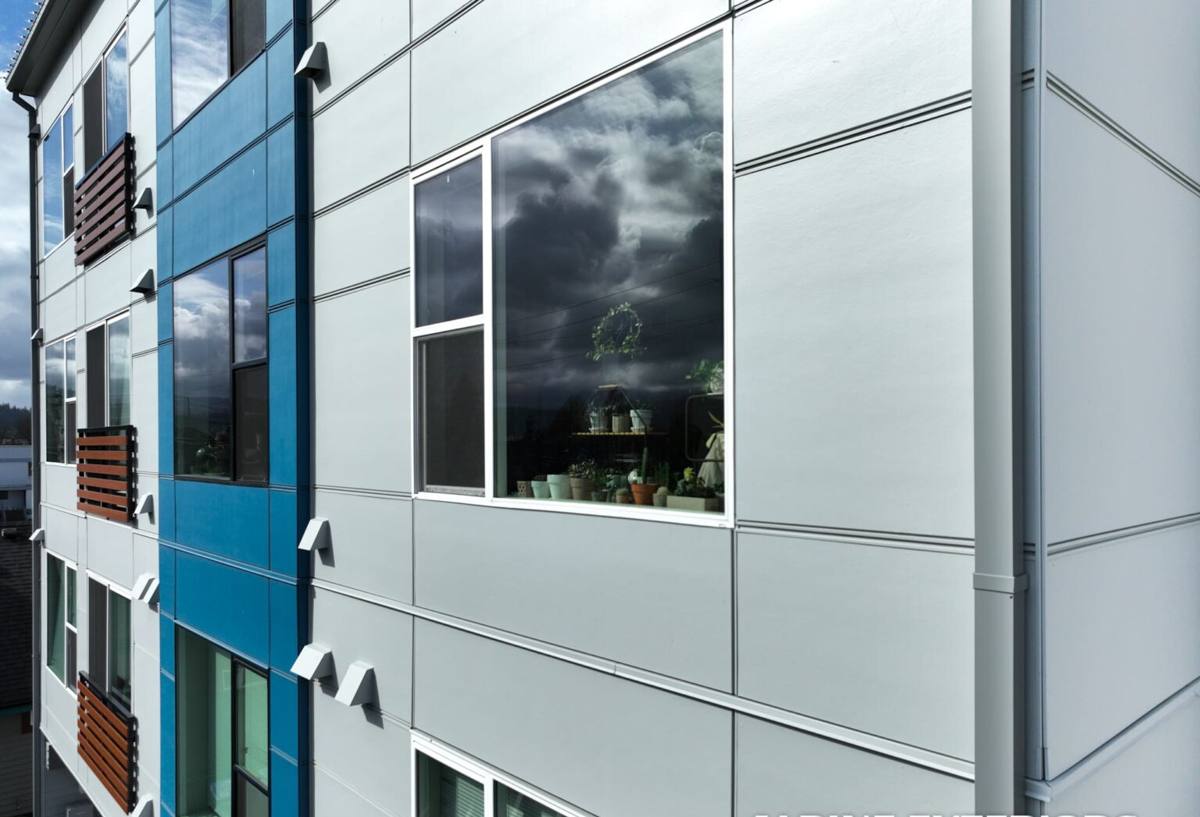
What James Hardie Fiber Cement Does Differently
James Hardie siding is fiber cement — a mix of sand, cement, and cellulose fibers that is cured into planks and panels. It does not have the wood content that gives moss and mildew something to feed on, and it does not swell, delaminate, or rot the way wood-based and wood-composite sidings can when they stay wet. That matters directly in a place like Ferndale, where a wall can stay damp for days after a storm rolls through.
We install James Hardie exclusively. We do not install LP SmartSide, vinyl, Cemplank, Allura, primed spruce, or cedar, and we're upfront about why: those products all ask a homeowner to accept some combination of higher maintenance, more moisture sensitivity, or a shorter realistic service life in a marine climate. Hardie's fiber cement formulation, factory-applied finish, and engineering for specific climate zones solve for the exact problems Ferndale's weather creates. That's a professional standard we hold to on every job, not a sales pitch.
Non-Combustible by Composition
Fiber cement doesn't burn, which matters less for storm exposure and more for peace of mind and, in some cases, insurance considerations. It's a quiet advantage that has nothing to do with rain or salt air but is worth knowing about.
Engineered for the Pacific Northwest
James Hardie makes region-specific HZ product lines. The HZ5 formulation is engineered for climates with significant moisture exposure — freeze-thaw cycling, sustained damp weather, and coastal humidity. Whatcom County, sitting where it does, is exactly the kind of climate that product line was designed around.
ColorPlus Finish: Why Factory-Applied Color Holds Up Better Here
One of the most practical advantages of James Hardie siding is the ColorPlus finish option — color baked onto the plank in a factory setting under controlled conditions, rather than brushed or sprayed on site after installation. In a climate where job-site paint has to cure through drizzle, fog, and temperature swings, that difference shows up years later as the coating ages.
| Finish Type | How It's Applied | Typical Performance in Ferndale's Climate |
|---|---|---|
| ColorPlus (factory-applied) | Baked-on multi-coat finish applied under controlled conditions before installation | Resists fading and moisture intrusion at the surface; touch-up product is formulated to match |
| Job-site painted fiber cement | Primed at the factory, top-coated on site after install | Cure quality depends on weather at time of painting; more prone to early wear in a wet climate |
| Painted wood or wood-composite siding | Field-applied paint over a moisture-sensitive substrate | Repaint cycles are shorter; trapped moisture under paint can cause substrate damage |
We don't treat the finish as an afterthought. On most Ferndale jobs, ColorPlus is the right call specifically because it removes the job-site cure-time variable from the equation.
What a Correct Installation Actually Involves
Fiber cement siding is only as good as the assembly behind it. Hardie's own installation instructions are specific for a reason — get the water management wrong underneath the siding and no amount of good material on the surface will save the wall. On a Ferndale home, we treat the following as non-negotiable:
- A drainable weather-resistive barrier installed correctly over the sheathing, with proper overlaps and no penetrations left unsealed
- Correct flashing at every window, door, and roof-to-wall transition — this is where most siding failures we're called to inspect actually originate
- Manufacturer-specified fastener type, spacing, and placement, not a generic nailing pattern
- Proper clearance between the bottom of the siding and grade, decks, and roof lines so water has somewhere to go
- Correctly caulked and back-primed cut ends where the factory finish has been exposed by trimming
- Ventilation behind the cladding so moisture that does get in has a path to dry out
Skipping any one of these doesn't show up on day one. It shows up two or three winters later as staining, soft spots, or moss taking hold at a joint that should have been sealed.
Why This Matters More in Ferndale Specifically
Homes closer to the water and under tree cover deal with more sustained moisture exposure than homes further inland or in full sun. That means flashing details and drainage gaps that might be forgiving elsewhere are not forgiving here. A wall that stays wet for an extra two or three days after every storm is a wall where a small installation shortcut turns into a real problem faster.
What We See on Older Siding Near Ferndale
When we're called out to look at failing siding in this area, the pattern is usually the same regardless of the original material: moisture got behind the cladding at a joint, a fastener location, or a flashing detail, and it had nowhere to go. On wood and wood-composite products, that shows up as soft, swollen, or delaminating boards. On any siding with field-applied caulk joints, it shows up as cracked, shrunk caulk letting water track behind the wall.
Moss compounds this. Once it establishes on a shaded or north-facing wall, it holds standing moisture against the surface far longer than open air would, which accelerates whatever the underlying moisture problem already was. Fiber cement doesn't stop moss from landing on a wall, but it removes the organic substrate that moss and mildew actually feed on, and it doesn't swell or rot if a section stays damp while it's being cleaned.
Our Process on a Ferndale Job
1. Assessment and Estimate
We walk the exterior, note existing moisture damage, flashing conditions, and any areas with heavy shade or standing-water history, and put together a written estimate. This is where we flag anything unusual about the specific site — proximity to mature trees, drainage patterns, prior water intrusion — before any work starts.
2. Tear-Off and Substrate Check
Old siding comes off and we inspect the sheathing and framing underneath. Any rot or water damage found at this stage gets addressed before new siding goes on — covering up a wet wall with new material just delays the same problem.
3. Weather Barrier and Flashing
This is the step that determines how the wall performs for the next several decades. We install the water-resistive barrier and all flashing to manufacturer spec, paying particular attention to window and door openings and roof intersections.
4. Hardie Installation
Panels or planks go on per James Hardie's fastening and clearance specifications, with cut ends sealed and back-primed as required to maintain the product warranty.
5. Final Walkthrough
We go over the finished job with the homeowner, confirm caulking and trim details, and make sure everything matches what was quoted.
What Drives Cost on a Job Like This
| Factor | Why It Matters |
|---|---|
| Extent of substrate repair needed | Rot or water damage found during tear-off has to be fixed before new siding goes on |
| Home size and wall complexity | More corners, gables, and trim details mean more labor and material cuts |
| Product line (HZ5 vs. standard) and profile | Lap, shingle, and panel profiles have different material and labor costs |
| ColorPlus vs. field-painted finish | Factory finish adds cost up front but reduces repaint cycles over the life of the siding |
| Access and site conditions | Tree cover, tight lot lines, and multi-story walls affect staging and time on site |
We give homeowners a real number after seeing the house, not a rough guess over the phone — too much of the final cost depends on what's actually happening behind the existing siding.
A Practical Maintenance Checklist for Salt-Air, Moss-Prone Areas
- Rinse siding annually, especially on shaded or north-facing walls, to keep moss and mildew from establishing
- Keep gutters clear so overflow doesn't run down the face of the siding
- Trim back vegetation that keeps a wall shaded and damp longer than necessary
- Inspect caulk joints around windows and trim yearly and have any cracked sections resealed
- Watch for staining at seams or fastener locations, which usually signals a flashing or sealant issue worth checking early
Why Hiring a Crew That Already Works This Area Matters
A contractor who works Whatcom County regularly already knows which details of a Hardie installation deserve extra attention here — where shade and drainage patterns tend to create trouble spots, what the moss and moisture pattern looks like on a wall that's been under-flashed, and how the marine air affects fastener and finish choices over time. That's not something you get from a general installation manual; it comes from seeing the same climate do the same things to houses in the same area, year after year.
It also means faster, more accurate estimates. We're not guessing at how Bellingham-area weather behaves — we're accounting for it in the plan from day one.
If you're weighing siding options for a home in Ferndale or elsewhere in the Bellingham area, we're happy to take a look and put together a straightforward, no-pressure estimate — just fill out the form below.