 Bellingham
 Roof Repair Built for Ferndale's Weather
Ferndale sits close enough to the water and open farmland that its roofs take a different kind of beating than roofs twenty miles inland. Homes here deal with salt-laden air moving in off Bellingham Bay, driving rain that comes in sideways during winter storms, and a moss season that can stretch from October through May in a wet year. A roof repair that doesn't account for all three of those factors tends to fail again within a year or two, which is why we treat every Ferndale repair as a Whatcom County climate problem first and a shingle problem second.
This page covers what roof repair actually means for homes in and around Ferndale, what a correct repair looks like, how our process works from first call to final walk-through, and why it matters to hire a crew that already works this specific area rather than one dispatched from out of town for a single job.
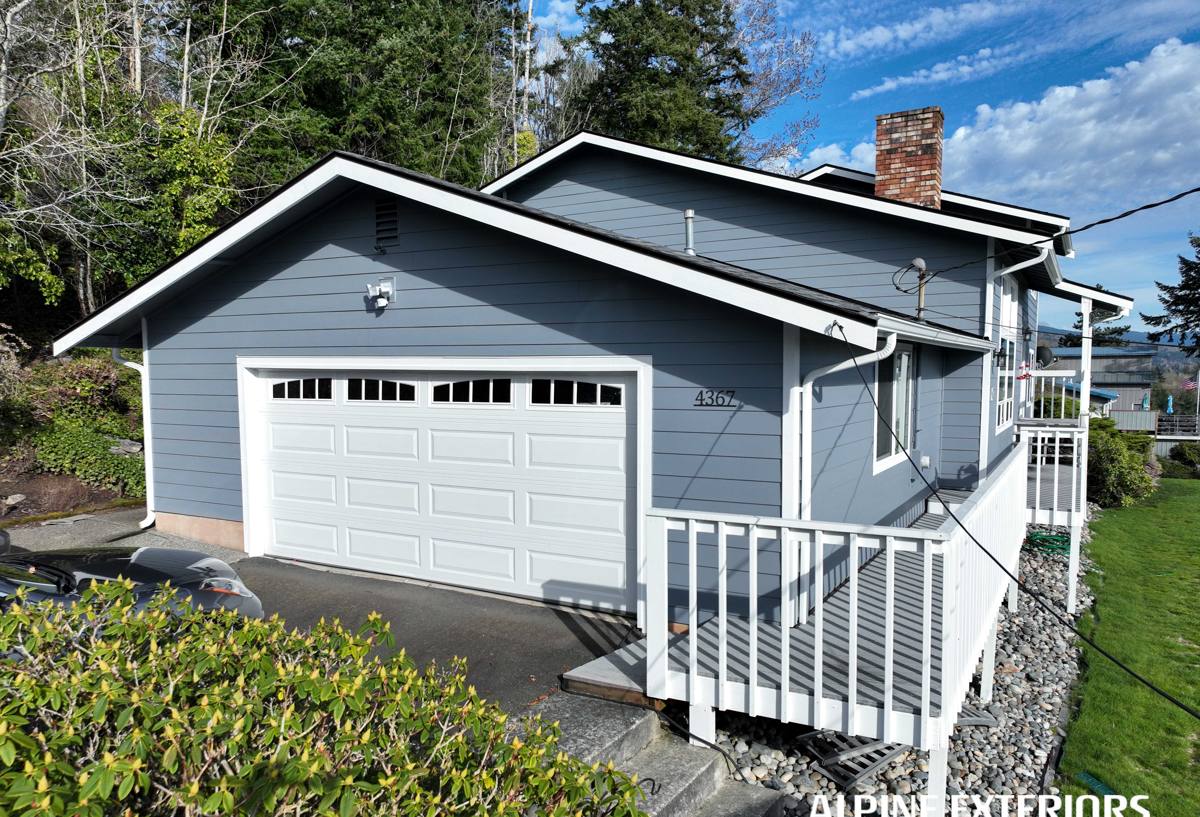
What Ferndale's Climate Actually Does to a Roof
Moss and Organic Growth
Whatcom County's long damp stretches give moss and algae a real head start, especially on north-facing slopes and roof sections shaded by mature trees, which are common on Ferndale lots. Moss doesn't just look bad — it holds moisture directly against the shingle surface, and over time it lifts shingle edges and works its way under tabs and around fasteners. A repair that patches the visible damage but leaves moss colonies in place nearby is a repair that will need to be redone.
Driving Rain and Wind-Driven Water
Storms coming off the water often bring rain in at an angle rather than straight down. That matters because standard shingle overlap is designed to shed water moving downhill, not water being pushed sideways or upward under a shingle edge by wind pressure. Roofs in exposed or elevated parts of Ferndale see this kind of wind-driven intrusion more than roofs tucked into denser, tree-sheltered neighborhoods.
Salt Air and Metal Fatigue
Proximity to the bay means airborne salt settles on exposed metal — flashing, fasteners, gutter hangers, and vent caps. Over years, that accelerates corrosion in lower-grade metals faster than you'd see in a comparable roof further inland. A repair that reuses corroded flashing because "it's not leaking yet" is deferring a failure, not preventing one.
Signs a Ferndale Roof Needs Repair, Not Just a Watch-and-Wait
- Dark streaking or thick moss mats on north-facing or shaded slopes
- Granules collecting in gutters or at downspout outlets after storms
- Soft or discolored ceiling patches after a wind-driven rain event, even if they dry out
- Lifted, curling, or missing shingle tabs, especially along ridge lines and roof edges
- Rusted or visibly pitted flashing around chimneys, skylights, and vent pipes
- Daylight visible through the attic deck at any seam or penetration
- Gutters pulling away from the fascia or sagging under moss and debris weight
What a Correct Roof Repair Actually Involves
Diagnosis Before Anything Gets Touched
The single most common mistake in roof repair isn't bad workmanship — it's fixing the spot where water showed up inside instead of the spot where it actually entered the roof. Water travels along rafters and sheathing before it drips, so a leak visible in a hallway ceiling might originate several feet away, often at a flashing detail or a valley. We trace the path from the interior stain back to the actual entry point before any material comes off the roof.
Matching Materials, Not Just Colors
A patch that's structurally sound but uses a mismatched shingle profile or a different underlayment weight creates a weak seam at the boundary. We match not just shingle color and style but the underlying layers — underlayment type, nail pattern, and flashing gauge — so the repaired section performs the same as the surrounding roof, not just looks similar from the ground.
Flashing and Ventilation Get Checked Every Time
Because salt air and driving rain both concentrate stress at flashing points, we inspect and, where needed, replace flashing around every penetration in the repair area — chimneys, pipe boots, skylights, and valleys — even if the original complaint was about shingles further away. We also check attic ventilation while we're up there, since poor airflow traps moisture that accelerates moss growth and sheathing rot from underneath.
Moss and Debris Removal Done Without Damage
Moss removal has to be done carefully — aggressive scraping or pressure washing can strip granules and shorten the life of otherwise sound shingles. We remove growth by hand where it's established, treat the area to slow regrowth, and clear debris from valleys and gutters so water has a clear path off the roof instead of pooling against a moss dam.
Repair vs. Replacement: How We Help You Decide
Not every roof issue needs a full replacement, but not every roof issue should be patched either. The table below outlines the factors we weigh honestly with every Ferndale homeowner.
| Factor | Leans Toward Repair | Leans Toward Replacement |
|---|---|---|
| Roof age | Under roughly 12-15 years | Approaching or past manufacturer's expected lifespan |
| Extent of damage | Isolated to one slope or penetration | Widespread across multiple slopes |
| Decking condition | Sheathing is solid, dry to the touch | Soft, delaminating, or water-stained decking |
| Moss/algae history | First occurrence, caught early | Repeated growth despite prior treatment |
| Flashing condition | Localized corrosion, easily replaced | Widespread pitting from long-term salt exposure |
| Underlying warranty | Manufacturer warranty still active and repairable | Warranty voided or expired |
We'll walk you through where your roof falls on each of these before recommending anything, and we're upfront when a repair is the honest answer even if a replacement would be a bigger job for us.
Our Process, Start to Finish
1. Initial Inspection
We walk the roof and the attic, not just one or the other. Interior inspection tells us where water is showing up; roof-level inspection tells us where it's getting in. We also check gutters, fascia, and soffit venting, since problems there often masquerade as roofing issues.
2. Written Scope and Straight Answer on Cost
You get a clear explanation of what's damaged, what caused it, and what the repair involves — in plain language, not a vague line item. If the fix is simple, we say so. If it's more involved than it looked from the ground, we explain why before any work starts.
3. The Repair Itself
We work the damaged area back to sound material — pulling shingles, checking sheathing, replacing flashing as needed — then rebuild forward using matched materials and correct nailing and overlap for our region's wind and rain exposure.
4. Cleanup and Debris Check
Nails, old shingle material, and moss debris get cleared from the roof, gutters, and ground. We check that gutters and downspouts are running clear before we consider the job finished.
5. Final Walk-Through
We show you what was done and why, point out anything worth monitoring, and give honest guidance on maintenance timing — including when moss treatment or gutter cleaning should happen again given your specific lot and tree cover.
Why a Local Ferndale Crew Matters
Roof repair timing in Whatcom County is weather-dependent in a way that's easy to underestimate. A crew that already works Ferndale and greater Bellingham on a regular basis knows the rain patterns well enough to schedule repairs in realistic weather windows, rather than promising a date that a storm system blows through and delays. Local presence also means faster response when a leak shows up mid-storm — you're not waiting for a crew to drive in from out of the area while water is actively getting into your attic.
Local knowledge extends to permitting and code as well. Whatcom County and local jurisdictions have specific requirements around reroofing and structural repairs, and a crew that pulls permits here regularly knows the process rather than learning it on your project.
Maintenance Between Repairs
A repair extends the life of your roof, but a few habits extend it further, especially given how much moss and moisture pressure Whatcom County roofs face:
- Clear gutters and valleys of debris at least twice a year, more often under heavy tree cover
- Trim back branches that shade roof sections and keep them damp longer than the rest of the roof
- Have moss growth treated early rather than waiting for it to spread across a full slope
- Check attic ventilation isn't blocked by insulation or debris, since trapped moisture accelerates every problem above
- After any major windstorm, do a visual check from the ground for lifted or missing shingles
Get an Honest Look at Your Roof
If you're seeing moss buildup, a ceiling stain after the last storm, or flashing that looks worse than it did a year ago, it's worth getting a straight answer before the next round of Whatcom County rain moves through. We offer free, no-pressure estimates for Ferndale homeowners — use the form below to get a time on the calendar.