 Bellingham
 Why Ferndale Homes Wear Out Siding Faster Than the Brochure Says
Ferndale sits close enough to the water and open farmland that homes here take a different kind of beating than siding was designed for on paper. Salt-laden air drifting in off the Strait and Bellingham Bay works into seams and fastener heads over years, driving rain comes in sideways during fall and winter storms instead of falling straight down, and a long, damp moss season keeps north-facing walls and anything under tree cover wet for weeks at a stretch. None of this is dramatic on its own. It's cumulative — siding that would last three decades in a drier climate starts showing real problems in Whatcom County a lot sooner if it wasn't installed with this exposure in mind.
That's the lens we bring to every Ferndale siding replacement: not "what does this product do in ideal conditions," but "what does it do after fifteen years of Pacific Northwest weather."
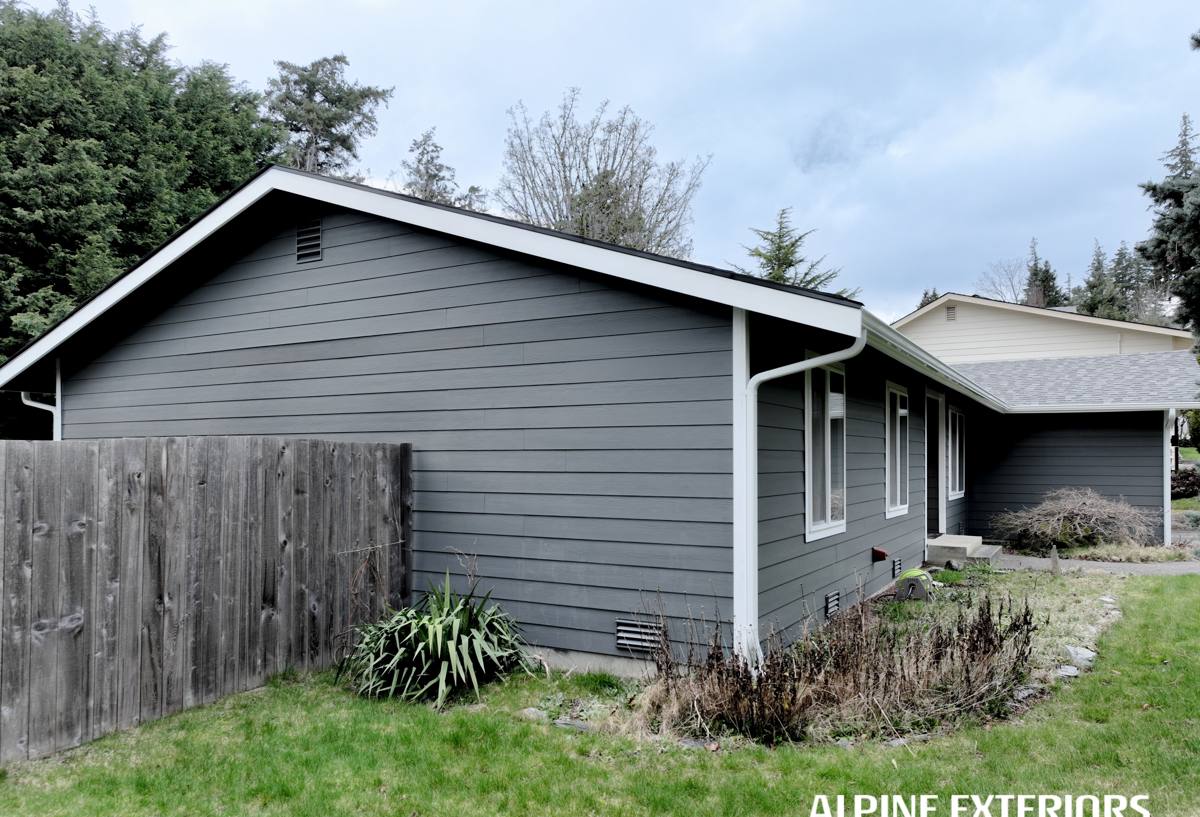
Signs a Ferndale Home Needs Siding Replaced, Not Patched
Homeowners often call us about a "small area" of damage and find out the underlying problem is wider once we get behind the surface. Here's what tends to signal a full replacement is the smarter call rather than a spot repair:
- Soft or spongy spots when you press on siding near the bottom courses, corners, or under windows
- Persistent green or black staining that comes back within a season of cleaning, especially on shaded or north-facing walls
- Paint that's peeling or bubbling rather than just fading — often a sign moisture is trapped behind the material
- Visible warping, cupping, or gaps opening up between boards or panels
- Rot or discoloration around window and door trim that traces back to the siding, not just the trim itself
- Siding that's original to a home built more than 20-25 years ago, particularly older wood or early composite products
Any one of these on its own might be repairable. Several together, or damage that shows up in multiple spots around the house, usually means the water management behind the siding has been failing for a while.
What a Correct Siding Replacement Actually Involves
Replacing siding is not a cosmetic swap. Done right, it's a full reset of how the wall manages water, and that matters more here than in drier regions. A proper job includes:
- Complete removal of old siding and inspection of the sheathing underneath for rot, soft spots, or prior water damage that needs repair before anything new goes up
- A new weather-resistive barrier installed correctly — lapped and taped so water sheds down and out, not into the wall cavity
- Proper flashing at every window, door, and penetration, since driving rain finds the gaps a straight-down rain never would
- Correct fastening and clearances per the manufacturer's install manual, not just "close enough" — gaps at butt joints, proper nail placement, and ground clearance all affect how the wall dries out
- Factory-finished material where possible, so the color coat isn't relying on a field-applied paint job to hold up against salt air and UV
Skipping any one of these steps is usually invisible on install day and expensive five or ten years later, once trapped moisture has done its work.
Why We Only Install James Hardie Fiber Cement
We get asked regularly why we don't offer vinyl, LP SmartSide, cedar, or primed spruce as options. It's not that these products are junk — each has a place. It's that after years of doing exterior work in this specific climate, we standardized on one product system we trust to perform here without surprises, and we'd rather be straightforward about that than sell a homeowner something we have reservations about.
| Material | Common trade-off in this climate | Why it factors into our decision |
|---|---|---|
| Vinyl siding | Expands/contracts with temperature swings; can warp or crack in impact; seams are a moisture entry point | Less forgiving of the freeze-thaw and wind-driven rain cycles common here |
| LP SmartSide / engineered wood | Wood-based core is more sensitive to sustained moisture exposure at cut edges and joints | Requires very precise sealing and maintenance to avoid swelling over time |
| Cedar / primed spruce | Natural wood movement, repainting cycles, and susceptibility to moss and rot in shaded, damp areas | High ongoing maintenance burden in a long wet season |
| James Hardie fiber cement | Heavier material, requires correct fastening and cutting technique | Non-combustible, dimensionally stable, factory-finished color holds up to salt air and UV |
James Hardie's fiber cement is engineered specifically for regional climate profiles — the HZ5 product line is formulated for climates like ours, with freeze-thaw cycling and sustained moisture in mind. It doesn't absorb water the way wood-based products can, it won't warp or crack from temperature swings the way vinyl can, and it's non-combustible. The ColorPlus factory finish means the color and protective topcoat are baked on under controlled conditions rather than applied on-site, which matters a lot when the material is going to spend years facing salt air and driving rain.
We back that up with Hardie's transferable warranty, which gives homeowners real coverage rather than a marketing line — useful whether you're staying in the home long-term or planning to sell.
What This Means for a Ferndale Job Specifically
On homes closer to the water or with more open exposure to wind, we pay extra attention to fastener spacing, caulking at joints, and flashing details — the same product installed loosely versus installed to spec can have a very different lifespan once salt air and driving rain are part of the equation year after year.
Our Process for a Ferndale Siding Replacement
- On-site assessment — we look at the existing siding, sheathing condition, and any problem areas (shaded walls, low clearance spots, water-prone corners) before quoting anything
- Scope and product selection — we walk through the Hardie lineup and colors that fit the home and neighborhood, and explain what's included in the install
- Tear-off and sheathing repair — old material comes off, and any rot or damage found underneath gets addressed before new material goes up, not after
- Weather barrier and flashing installation — this is the step that determines how the wall performs for the next 20-30 years, and we don't rush it
- Hardie installation — cut, fastened, and jointed to manufacturer spec, with attention to the details that matter most in a wet, salt-exposed climate
- Final walkthrough — we go over the finished work with the homeowner and cover basic care
What Drives Cost on a Ferndale Siding Job
| Factor | Why it matters |
|---|---|
| Home size and wall complexity | More corners, dormers, and trim details mean more cutting and labor time |
| Condition of existing sheathing | Rot repair found during tear-off adds cost but prevents replacing siding over a bad substrate |
| Siding profile and Hardie product line | Lap siding, shingle-style panels, and specialty trim vary in material cost |
| Access and site conditions | Tree cover, tight lot lines, or multi-story sections affect staging and labor |
| Color and finish selection | Factory ColorPlus finishes vary slightly by line but generally reduce long-term repainting cost versus field-painted materials |
We give straightforward, itemized estimates rather than a single round number — homeowners deserve to know what they're paying for and why.
Why Hiring a Crew That Already Works in Ferndale Matters
Siding installation quality depends heavily on details that generic, out-of-town crews often get wrong: how much clearance to leave at the foundation given local drainage patterns, how aggressively to flash a wall that faces prevailing storm winds, and which parts of a home tend to hold moss and moisture longest through a Whatcom County winter. A crew that already does this work in Ferndale and the greater Bellingham area has already seen how these homes age and adjusts the install accordingly, rather than following a generic manual and hoping it holds up.
Caring for Hardie Siding After Installation
One advantage of switching to fiber cement is how little upkeep it needs compared to wood or repainted composite siding. Realistic maintenance is light:
- Rinse siding periodically to keep salt residue and organic buildup from accumulating, especially on shaded or north-facing walls
- Keep gutters clear so runoff isn't sheeting down the siding face during heavy rain
- Trim back vegetation and tree cover that keeps a wall section damp and shaded longer than the rest of the house
- Check caulking at trim and penetrations every few years and touch up as needed
That's meaningfully less than what wood or vinyl typically demand over the same period, which is part of why we consider it the right long-term investment for this climate.
If your Ferndale home is showing signs of siding trouble, or you're just planning ahead, we're happy to take a look and give you a straightforward, no-pressure estimate — use the form below to get started.