 Bellingham
 Fiber Cement Siding in Happy Valley: A Neighborhood With Its Own Climate Demands
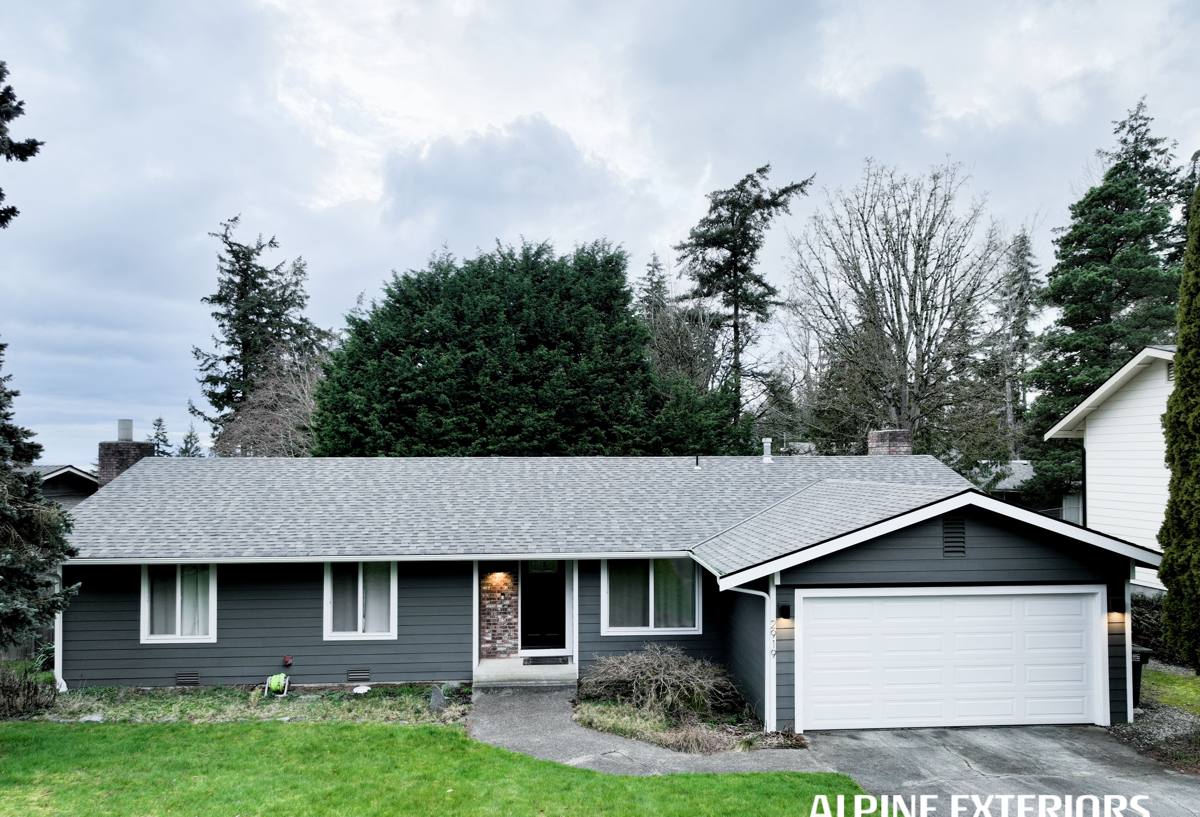
Happy Valley is one of Bellingham's older, tree-shaded residential neighborhoods, with a mix of home ages and a good number of lots on sloped ground with mature landscaping. That combination, hillside grading, tall conifers and deciduous trees, and homes built across several different decades, creates a specific set of exterior conditions that don't always match what a generic siding spec sheet assumes. We install fiber cement siding throughout Whatcom County, and Happy Valley is one of the areas where we consistently see how much local terrain and tree cover affect how a wall assembly ages, independent of the home's age or style.
This page focuses on one service for one neighborhood: what fiber cement siding needs to do for a Happy Valley home, what a correct installation actually involves, and why a crew that already works this part of Bellingham gets better long-term results than one pricing the job off square footage alone.
What Bellingham's Climate Does to Siding Here
Salt Air and Marine Moisture
Like the rest of Bellingham, Happy Valley sits inside a marine climate zone, with moisture-laden air moving through the area most of the year, not just during storms. That kind of sustained dampness works slowly on fasteners, caulking, and lower-grade finishes. It rarely shows up as a dramatic failure; it shows up years later as rust bleed at nail heads, chalking paint, or trim that's degraded well ahead of schedule.
Driving Rain
Wind-driven rain doesn't fall straight down here, it gets pushed sideways into lap joints, trim seams, and anywhere a wall is penetrated. Siding systems designed for calmer, drier regions are rarely tested against that kind of lateral water intrusion, and it's a major reason generic installation details that work fine elsewhere don't hold up as well in Whatcom County.
A Long Moss and Mildew Season
Happy Valley's mature tree canopy and hillside lots mean a lot of shaded wall area that stays damp longer between rain events. Moss and mildew growth tend to start in exactly those spots: north-facing walls, areas behind mature shrubs, and sections under deep eaves where sun never really reaches. Porous or moisture-retentive siding materials become a growth surface over time in these conditions, while a dense, properly sealed material sheds that moisture instead of holding it.
Sloped Lots and Drainage
A fair share of Happy Valley's housing sits on grade that slopes toward or away from the street, which changes how water moves around the foundation and up the base of the wall during heavy rain. On these lots, correct flashing and clearance at the bottom of the siding matters just as much as the siding material itself.
Why Fiber Cement Is the Right Material for This Neighborhood
Fiber cement is a mix of cement, sand, and cellulose fiber, engineered to be dense, dimensionally stable, and resistant to the kind of sustained moisture exposure Happy Valley sees most of the year. It doesn't swell, cup, or warp the way engineered wood products can after repeated wet-season cycles, and it doesn't rely on a homeowner keeping up with painting or sealing to stay watertight the way cedar or primed wood does. For a neighborhood with this much tree cover and shaded, slow-drying wall area, that's a meaningful practical advantage, not a marketing point.
Fiber cement is also non-combustible, which matters for basic household safety and can matter for insurance considerations depending on your policy and location.
Why We Only Install James Hardie
We don't stock a lineup of siding brands and let price decide the job. We install James Hardie fiber cement siding, and only James Hardie, based on what we've consistently seen on tear-offs and repair calls across this climate.
- Factory-applied ColorPlus finish: the color coat cures under controlled factory conditions rather than being brushed on at the job site, which gives it far more resistance to fading, chalking, and moisture intrusion over the life of the siding.
- HZ5 climate engineering: Hardie's HZ5 formulation is built specifically for regions with heavy, sustained moisture and freeze-thaw cycling, which fits Whatcom County's climate more closely than a generic national spec.
- Dimensional stability: the material holds its shape and seal through repeated wet-dry cycles instead of gradually working joints and fasteners loose.
- A strong transferable warranty: Hardie backs its products with one of the more substantial warranty structures in the industry, provided the installation follows spec.
We don't install LP SmartSide, vinyl, Cemplank, Allura, primed spruce, or cedar. Those are legitimate products, and other contractors install them competently. Our call was a professional one: in a climate this consistently damp and shaded, standing behind one system we understand completely serves homeowners better than offering a cheaper option whose maintenance burden quietly lands on them a few years down the road.
Product Lines Available
| Hardie Product | Typical Use | Why It Suits Happy Valley |
|---|---|---|
| HardiePlank lap siding | Primary wall cladding on most home styles | Traditional lap profile sheds wind-driven rain well when lapped and fastened to spec |
| HardiePanel vertical siding | Board-and-batten and modern facades | Clean vertical lines that drain quickly on steep or shaded roof-to-wall transitions |
| HardieShingle siding | Accent gables, dormers, older-style homes | Matches the shingle look common on older Bellingham housing stock without the upkeep of real wood shingle |
| HardieTrim boards | Corners, window and door surrounds, fascia | Factory-finished trim resists the moss and mildew staining that collects on painted wood trim under tree cover |
What a Correct Fiber Cement Installation Involves
Choosing the right material is only half the job. Fiber cement siding performs the way it's engineered to only when it's installed to spec, and that's where a lot of otherwise good siding jobs fall short. A correct installation treats house wrap, flashing, and the siding itself as one connected water-management system rather than a series of separate steps.
- Correct fastener type, spacing, and penetration depth, matched to the substrate
- Proper clearance between the bottom of the siding and grade, decking, or roofing to prevent wicking
- Lapped and sealed joints at every horizontal and vertical seam
- House wrap and flashing integrated with window and door openings before siding goes on, not patched around afterward
- Factory-cut edges sealed where field cuts expose the raw material
- Caulking used only where Hardie's installation instructions call for it, not as a substitute for correct flashing
A rushed or corner-cut installation is one of the most common reasons a good product ends up performing poorly, and it's why we treat installation detail with the same seriousness as the material choice itself.
Our Process for a Happy Valley Fiber Cement Project
- On-site assessment: we walk the property, check the existing siding and substrate, and look specifically at shaded sides, grade slope, and drainage patterns that are common on Happy Valley's hillside lots.
- Tear-off vs. overlay decision: we'll tell you honestly whether your existing siding can be removed cleanly or whether hidden moisture damage is likely, based on age, material, and what we find during the walk-through.
- Substrate repair: any rot, soft sheathing, or existing moisture damage gets addressed before new siding goes on, not covered over.
- House wrap, flashing, and siding installation: installed as one integrated system, following Hardie's fastening and clearance specifications for our climate zone.
- Final walkthrough: we check seams, trim, and flashing details with you before calling the job complete.
Repair, Overlay, or Full Replacement
| Factor | What It Affects | Why It Matters in Happy Valley |
|---|---|---|
| Age and condition of existing siding | Whether repair is realistic or replacement makes more sense | Older housing stock in the neighborhood often has original siding well past its practical service life |
| Substrate condition under the siding | Repair costs discovered mid-project | Shaded, slow-drying walls common here can hide moisture damage longer before it's visible |
| Lot slope and access | Staging, scaffolding, and labor time | Sloped lots common in Happy Valley can add setup time compared to flat, open sites |
| Tree cover and shading | Long-term moss and mildew exposure | Heavier tree cover means more attention to drainage and material choice on affected walls |
| Trim and color selection | Material cost and finish longevity | ColorPlus factory finishes hold up against moss staining and UV far longer than field-applied paint |
Real numbers depend on the specific house and what we find once we're on site, which is why we walk the property before quoting instead of pricing off square footage alone.
Signs a Happy Valley Home May Need New Siding
- Moss or dark staining that returns quickly after cleaning, especially on shaded or north-facing walls
- Soft or spongy siding near the base of the wall or around window and door trim
- Peeling, bubbling, or chalking paint on siding boards or trim
- Visible gaps at seams, corners, or trim joints
- Rust staining around fasteners or flashing
- Cracked or missing siding sections after a windstorm
- A noticeable rise in heating costs that may point to a wall assembly that's no longer sealing properly
Why a Local Crew Matters More Than It Sounds
A crew that already works Happy Valley regularly has seen how tree cover, hillside drainage, and sustained marine moisture actually play out on real houses over a full year, not just on a spec sheet. That translates into practical decisions on install day: which walls need extra flashing attention, which sections stay damp longest after a storm, and which details are worth the extra time so you're not dealing with a callback in a couple of winters. A neighborhood this shaded and this varied in home age doesn't respond well to a one-size-fits-all approach, and experience here is worth asking about directly when you're vetting a contractor.
If your Happy Valley home needs new fiber cement siding, a repair, or just a straight answer about what's going on behind aging siding, we're glad to take a look. Reach out using the form below to schedule a free, no-pressure estimate.