 Bellingham
 Siding That Has to Work in Whatcom County, Not Just Look Good on Day One
Lynden sits inland from Bellingham Bay in the farmland stretch of Whatcom County, but "inland" doesn't mean dry. Homes here still sit inside the same wet Pacific Northwest weather pattern that soaks the whole county for much of the year — long stretches of steady rain, heavy humidity off the surrounding fields and river bottomland, and short, gray winter days that don't give wet siding much chance to dry out between storms. Add in the driving rain that comes with fall and winter wind events, salt-laden air that drifts inland off the Puget Sound region on stronger weather systems, and a moss season that can run from October well into spring, and you have an exterior envelope that's under near-constant moisture pressure for six-plus months a year.
Wood-based and vinyl siding products don't handle that combination well over the long haul. Wood absorbs moisture and needs repainting and caulk maintenance on a tight cycle to keep water out. Vinyl expands and contracts with our temperature swings, can warp under direct afternoon sun on south- and west-facing walls, and does nothing to stop moss and algae from taking hold in shaded, damp corners — which describes a lot of exterior wall space on tree-lined Lynden lots. James Hardie fiber cement siding is engineered specifically for this kind of climate, which is exactly why we've standardized on it and don't install anything else.
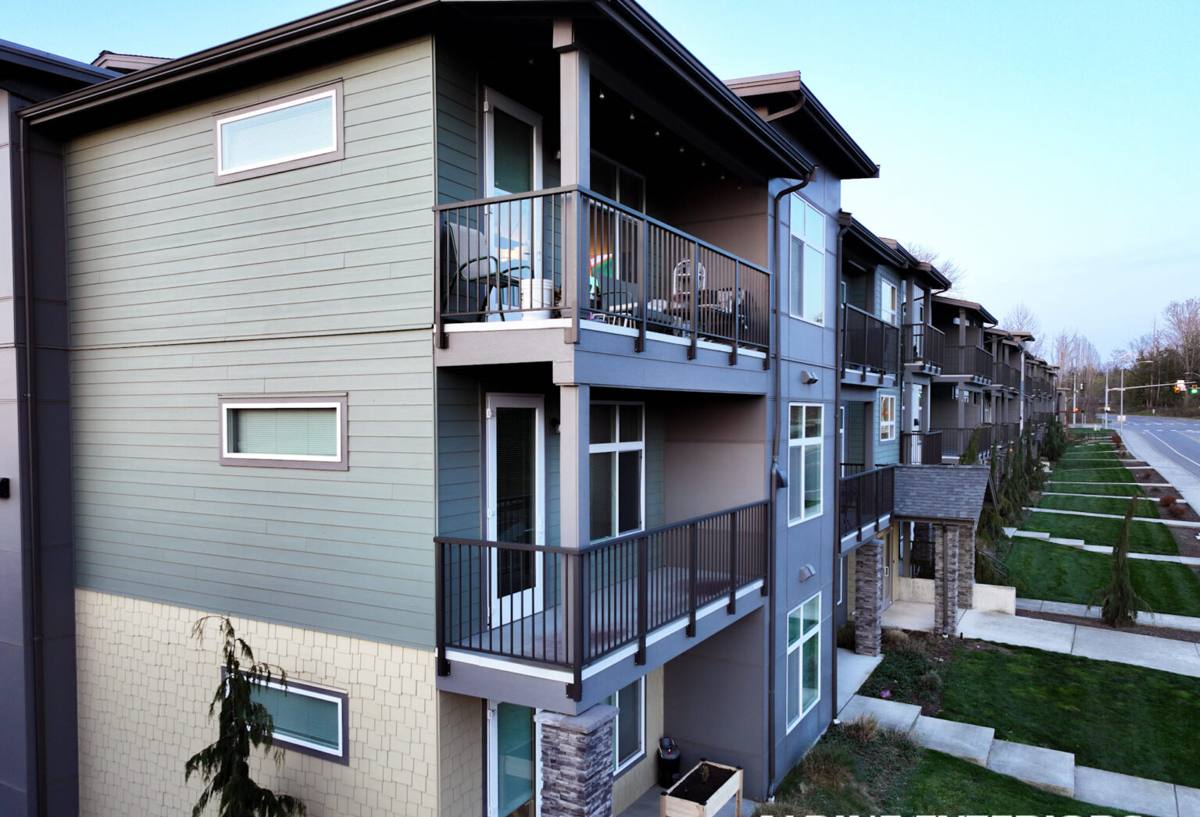
What a Correct James Hardie Installation Actually Involves
James Hardie siding performs the way it's supposed to only when it's installed correctly — the product itself doesn't do the work alone. A correct install on a Lynden home includes:
- A water-resistive barrier installed and lapped correctly behind the siding, with all penetrations (pipes, vents, hose bibs, electrical) properly flashed and sealed before a single board goes up
- Proper clearance between the bottom edge of the siding and the ground, roofline, decks, and patios — Hardie specifies minimum gaps for a reason, and closing them off traps moisture against the board
- Correct fastener type, spacing, and placement per Hardie's published installation specs, not generic siding nailing patterns
- Butt joints and seams properly sealed or flashed rather than just caulked and hoped for
- Factory-primed cut edges re-sealed with Hardie-approved product any time a board is field-cut
- Ventilation behind the siding maintained so the wall assembly can dry if moisture ever does get in
Skip any one of these steps and you can end up with a home that has "Hardie siding" on it but doesn't get Hardie performance — moisture wicking at the bottom edge, staining at seams, or premature paint failure at cut ends. We see this on re-siding jobs where a previous installer treated Hardie like any other lap siding instead of following the manufacturer's actual specifications.
Choosing the Right Hardie Product Line for This Climate
James Hardie makes climate-specific product lines, and picking the right one matters more in a wet, moss-prone region than in a dry one. For Whatcom County homes, including Lynden, we generally work with Hardie's HZ5 line, engineered for the wetter, more humid climate zones of the Pacific Northwest.
| Consideration | HZ5 (wet/humid climate) | HZ10 (freeze/dry climate) |
|---|---|---|
| Engineered for | High humidity, heavy rain, moisture exposure | Extreme cold and freeze-thaw dry climates |
| Typical fit | Western Washington, coastal and near-coastal counties | Interior mountain/high desert regions |
| Where it matters most | Moisture management, resistance to swelling/rot at edges | Resistance to cracking from hard freeze cycles |
| Our recommendation for Lynden | Standard choice for this climate zone | Not typically needed here |
Beyond climate zone, homeowners also choose between plank profiles (traditional lap siding, in various reveal widths), vertical panel siding (common on shop-style or modern builds), and shingle-style siding for accent areas. We'll walk through which profile fits the home's architecture and your maintenance preferences during the estimate — there's no single "right" answer, but there is a right answer for your specific house.
ColorPlus Factory Finish vs. Field Painting
One of the biggest practical advantages of James Hardie siding is the ColorPlus finish option — color baked onto the board at the factory under controlled conditions, rather than paint applied on-site after installation. In a climate like ours, where a field-painted finish has to cure properly between rain events just to bond correctly, that difference is significant.
ColorPlus finishes carry their own dedicated warranty coverage against fading and peeling, hold color more consistently over time, and don't leave you exposed to the variability of on-site weather during the paint window. We install ColorPlus on the large majority of Lynden jobs for exactly this reason — it removes one more variable that our local weather can work against.
Our Installation Process, Start to Finish
1. Inspection and Moisture Check
Before we quote a job, we look at the existing siding, trim, and — where old siding is coming off — the sheathing underneath. On older Lynden homes, this step matters: we're checking for soft or water-damaged sheathing, prior moisture intrusion at windows and corners, and any signs that a previous siding job trapped water instead of shedding it.
2. Prep and Repair
Any damaged sheathing gets replaced, not covered over. We also address flashing at windows, doors, and rooflines during this stage, since that's where the majority of long-term leaks originate — not through the siding field itself.
3. Weather Barrier Installation
A new water-resistive barrier goes on correctly lapped, shingle-style, so water sheds outward and down rather than working its way behind the barrier at the seams.
4. Siding Installation
Boards go up to Hardie's fastening and clearance specifications, with trim, corners, and butt joints handled to keep water moving off the wall rather than pooling or wicking into cut edges.
5. Final Walkthrough
We walk the finished exterior with the homeowner, check caulk lines and trim details, and register the manufacturer warranty paperwork so it's on file, not left for the homeowner to track down later.
What We Commonly Find on Older Lynden Homes
Whatcom County has a good number of older farmhouses, mid-century homes, and additions built over multiple decades, and re-siding jobs in and around Lynden tend to turn up a few recurring issues: wood siding that's been repainted so many times the boards themselves are failing underneath; original construction with little or no proper flashing at window and door openings, which was common building practice decades ago; and moss and algae buildup on north-facing and shaded walls where sun never really reaches to dry things out. None of these are unusual for the area, but they do mean an accurate quote requires an actual in-person look at the home rather than a phone estimate.
Why a Crew That Already Works in Lynden Matters
Siding installation quality depends a lot on judgment calls made on-site — how to flash an unusual window detail, how much clearance to leave above a deck ledger board, when a wall needs extra drying time before boards go up. A crew that already works throughout Whatcom County has made those calls on homes with the same weather exposure, the same seasonal rain patterns, and often the same building styles you'll find in Lynden. That local repetition is what keeps a crew from treating your home as a generic install and instead treating it as a Whatcom County install, with the extra flashing and moisture attention that this climate actually requires.
There's also a practical scheduling advantage: siding installation needs a reasonably dry weather window to go in correctly, and a crew based in and around the county can plan around our rain patterns more accurately than an outfit driving in from farther away.
What Affects the Cost of a Lynden Siding Job
We don't publish flat pricing because every home is different, but the main cost drivers on most Lynden jobs are consistent. This gives you a general sense of what moves the number up or down before we ever get to a formal quote.
| Factor | How it affects cost |
|---|---|
| Existing siding removal | Tear-off of old wood or vinyl adds labor and disposal cost vs. new construction |
| Sheathing condition | Any rot or water damage found underneath requires repair before new siding goes on |
| Home size and wall complexity | Cut-up walls with lots of corners, gables, and trim take more time than simple rectangular walls |
| Siding profile and finish | Plank, panel, and shingle-style options, plus ColorPlus color selection, vary in material cost |
| Trim and accessory work | Window and door trim, fascia, and soffit work done alongside siding adds scope |
| Access and site conditions | Two-story walls, tight lot lines, or landscaping obstacles affect labor time |
Caring for James Hardie Siding After Installation
Hardie siding is low-maintenance compared to wood or vinyl, but "low-maintenance" isn't "no-maintenance," especially with our moss season. A little upkeep protects the investment:
- Rinse siding gently with a garden hose once or twice a year to clear pollen, dust, and early moss growth — avoid high-pressure washing, which can force water behind the boards
- Keep gutters clear so overflow doesn't run down the siding face repeatedly in one spot
- Trim back shrubs and tree branches that keep a wall section shaded and damp
- Check caulk lines at trim and penetrations every year or two and have any cracked caulk replaced
- Address any paint chip or ding at a cut edge promptly so the fiber cement underneath isn't left exposed
If you're ready to see what correct James Hardie installation looks like on your own home, we're happy to come take a look. The estimate is free, there's no pressure, and you'll get a straight answer about what your siding actually needs.