 Bellingham
 Why Lynden Roofs Wear on Their Own Schedule
Lynden sits far enough inland from Bellingham Bay that people sometimes assume the coastal weather doesn't reach it the same way. It does. Marine air moves up the Nooksack valley, driving rain comes in sideways during fall and winter storms, and the long, cool, damp stretch from November through April gives moss and moisture every opportunity to get into a roof system that isn't built to shed it. A roof that would be fine in a drier climate can fail early here simply because it was never designed for this many wet months in a row.
That's the backdrop for every roof replacement decision on a Lynden home. It's not about picking the most expensive shingle or the trendiest material — it's about matching the roof to what Whatcom County actually does to it, year after year.
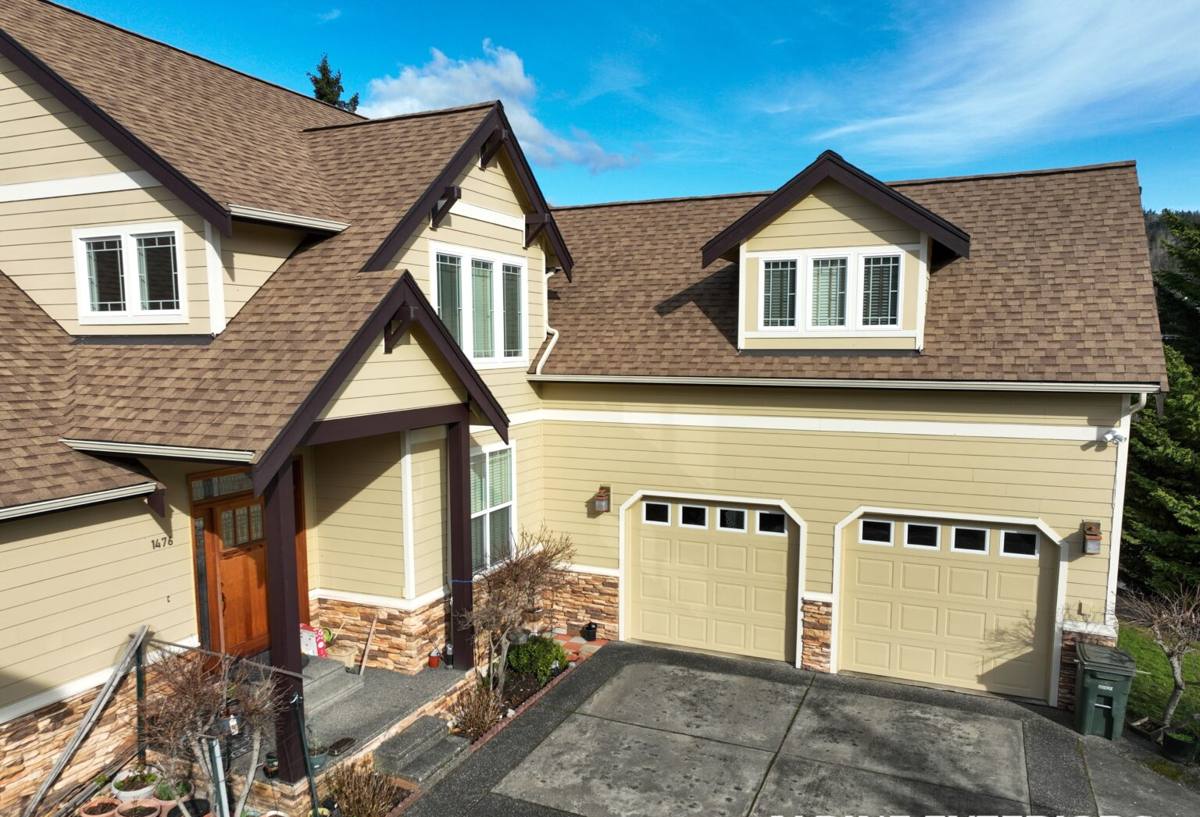
Signs a Repair Won't Cut It Anymore
Most homeowners call us first about a leak or a patch of moss, not because they've decided to replace the whole roof. Part of our job is giving an honest answer about whether a repair will actually hold or whether it's just delaying a bigger problem. Some signs point clearly toward replacement rather than another patch:
- Granule loss heavy enough that you're finding shingle grit in the gutters every season
- Moss that keeps coming back within a year or two of cleaning, even along the same ridge or north-facing slope
- Soft spots in the decking when walked, especially near valleys or old vent penetrations
- Daylight visible through the attic sheathing, or damp insulation after a wind-driven rain
- A roof that's already had two or more repair rounds in the last five years for the same leak
- Shingles curling, cracking, or lifting at the edges — a sign the mat underneath has broken down
If a roof is showing one or two of these in isolation, a repair can be the right call. When several show up together, or the roof is already past its expected service life, replacement is usually the more honest recommendation — and cheaper in the long run than chasing leaks one at a time.
What a Correct Roof Replacement Actually Involves
A roof replacement done right is more than swapping old shingles for new ones. Skipping steps here is exactly how a brand-new roof ends up leaking within a couple of wet seasons in this climate.
Full tear-off, not a layover
We remove the existing roofing down to the deck rather than installing over an old layer. Layovers trap moisture, hide deck damage, and shorten the life of the new roofing — a bad trade anywhere, but a worse one where the roof deals with sustained damp weather for months at a time.
Deck inspection and repair
Once the old roofing is off, we can actually see the plywood or plank decking underneath. Any soft, delaminated, or water-stained sections get replaced before anything new goes down. This step is invisible once the roof is finished, which is exactly why it's the step some crews are tempted to shortcut.
Underlayment built for driving rain
Given how often rain here comes in at an angle rather than straight down, underlayment choice and installation detail — especially at eaves, valleys, and around penetrations — matters more than it would in a drier region. Ice-and-water shield or equivalent self-adhering membrane at vulnerable areas is standard, not an upsell.
Flashing done properly
Chimneys, skylights, sidewall transitions, and valleys are where most roof leaks actually start, not in the open field of shingles. New step flashing, counter-flashing, and valley metal — not reused old flashing — is part of a correct replacement.
Ventilation that matches the new roof
More on this below, but a roof replacement is the right time to fix intake and exhaust ventilation problems, because the roof deck is fully exposed and accessible.
Choosing a Roofing Material for This Climate
There's no single "best" roofing material — there's a best fit for the house, the roof pitch, the budget, and the weather it has to survive. Here's how the common options compare for a Lynden home dealing with salt air, heavy rain, and moss pressure:
| Material | Moss & moisture behavior | Typical lifespan here | Trade-offs |
|---|---|---|---|
| Architectural asphalt shingle | Good with proper ventilation and algae-resistant granules | 25–30 years | Best value; needs periodic moss/debris maintenance |
| Standing seam metal | Sheds moss and standing water very well | 40–50+ years | Higher upfront cost; requires experienced installers for watertight seams |
| Cedar shake | Attractive but holds moisture and feeds moss growth without diligent upkeep | 20–25 years with maintenance | Highest maintenance burden in this climate; we're honest with homeowners about that before they commit |
| Synthetic/composite shake | Mimics cedar look, sheds moisture far better | 30–40 years | Mid-to-upper cost; good option for homeowners who want the shake appearance without the upkeep |
We're not going to tell a homeowner that cedar shake is a bad product — plenty of people love the look and maintain it well. But we will say plainly that in a climate with this much sustained damp weather, it asks more of the homeowner than asphalt or metal does, and we'd rather set that expectation up front than have someone surprised by it in year four.
Our Roof Replacement Process
- On-site assessment — we look at the roof, the attic ventilation, and any trouble spots you've noticed, and give a straight answer on repair vs. replace.
- Written estimate — material options, scope of work, and timeline laid out clearly, no vague allowances.
- Scheduling around the weather — we plan around Whatcom County's rain patterns as much as possible and keep the deck protected if conditions turn while work is in progress.
- Tear-off and deck repair — old roofing removed, decking inspected and repaired as needed.
- Underlayment, flashing, and ventilation — installed to spec, not shortcuts, with attention to the details that actually cause leaks.
- New roofing installed — per manufacturer specification, which is also what keeps material warranties valid.
- Final walkthrough — we go over the finished roof and cleanup with you before calling the job done.
Ventilation and Moisture: The Part Homeowners Don't See
A roof isn't just the shingles on top — it's a system that has to move air through the attic space to control temperature and moisture. In a climate where the outside air is damp for much of the year, poor attic ventilation traps that moisture against the underside of the deck, which accelerates rot and gives moss and mildew a foothold from the inside as well as the outside.
During a replacement, we check that intake (usually soffit vents) and exhaust (ridge vents or equivalent) are balanced and unobstructed. A new roof installed over bad ventilation still has the same underlying problem — it just looks fine for a while before it doesn't.
What Drives the Cost of a Lynden Roof Replacement
| Factor | Why it matters |
|---|---|
| Roof size and pitch | More surface area and steeper pitches take more material and labor |
| Number of layers to remove | Tearing off two old layers costs more than one |
| Deck condition | Rotted or soft sheathing found during tear-off needs replacing before roofing goes on |
| Material choice | Asphalt, metal, and synthetic shakes carry different material and labor costs |
| Roof complexity | Valleys, dormers, skylights, and chimneys all add flashing work |
| Access and site conditions | Steep lots, tight setbacks, or limited staging area affect labor time |
We'd rather walk a homeowner through these factors on-site than quote a number sight unseen — every Lynden roof has its own combination of pitch, layers, and condition.
Why Local Experience in Lynden Matters
A crew that's worked roofs across Whatcom County knows which north-facing slopes hold moss longest, how much wind-driven rain a given roof pitch is likely to see in a winter storm, and which older Lynden-area homes tend to have ventilation that was adequate decades ago but isn't by today's standards. That's the kind of judgment that only comes from doing this work in this specific climate, repeatedly — not from a general roofing checklist.
It also means being reachable and accountable after the job is done, not just during the sale. A roof replacement is a long-term investment in the house, and it should come from a crew that's still going to be working in the area in five or ten years if you ever have a question.
After the Install: Keeping It Right
A correctly installed roof still benefits from basic upkeep, especially with the moss pressure this region sees:
- Clear gutters and downspouts at least twice a year, more often under conifers
- Have moss treated or gently removed before it builds up thick mats, rather than waiting until it's heavy
- Trim back overhanging branches that keep sections of the roof shaded and damp
- Check attic ventilation isn't blocked by insulation or storage after any attic work
- Have the roof looked at after any major windstorm, even if nothing looks obviously wrong from the ground
If your roof is showing its age or you just want an honest opinion on repair versus replacement, we're happy to take a look. The estimate is free, there's no pressure, and you'll get a straight answer either way — just fill out the form below to get started.