 Bellingham
 Siding Replacement Built for Lynden's Climate
Lynden sits inland from Bellingham Bay, but "inland" in Whatcom County doesn't mean dry. Homes here still deal with the same marine-influenced weather pattern that shapes the rest of the county: long stretches of low-intensity rain, damp air that lingers into the afternoon, and a moss and mildew season that can run from fall through spring. Add in driving rain events that come sideways off wind, and even well-built siding takes a beating over 20 to 30 years. When siding starts failing in this environment, it rarely fails all at once — it fails at the seams, the bottom courses, and the corners first, and homeowners often don't notice until the damage has already reached the sheathing underneath.
A siding replacement done right in Lynden isn't just a cosmetic swap. It's a chance to correct whatever let moisture in the first place — bad flashing, missing house wrap, siding installed too close to grade — and to put a product on the house that's actually engineered for this climate instead of one that's simply the cheapest option at the yard.
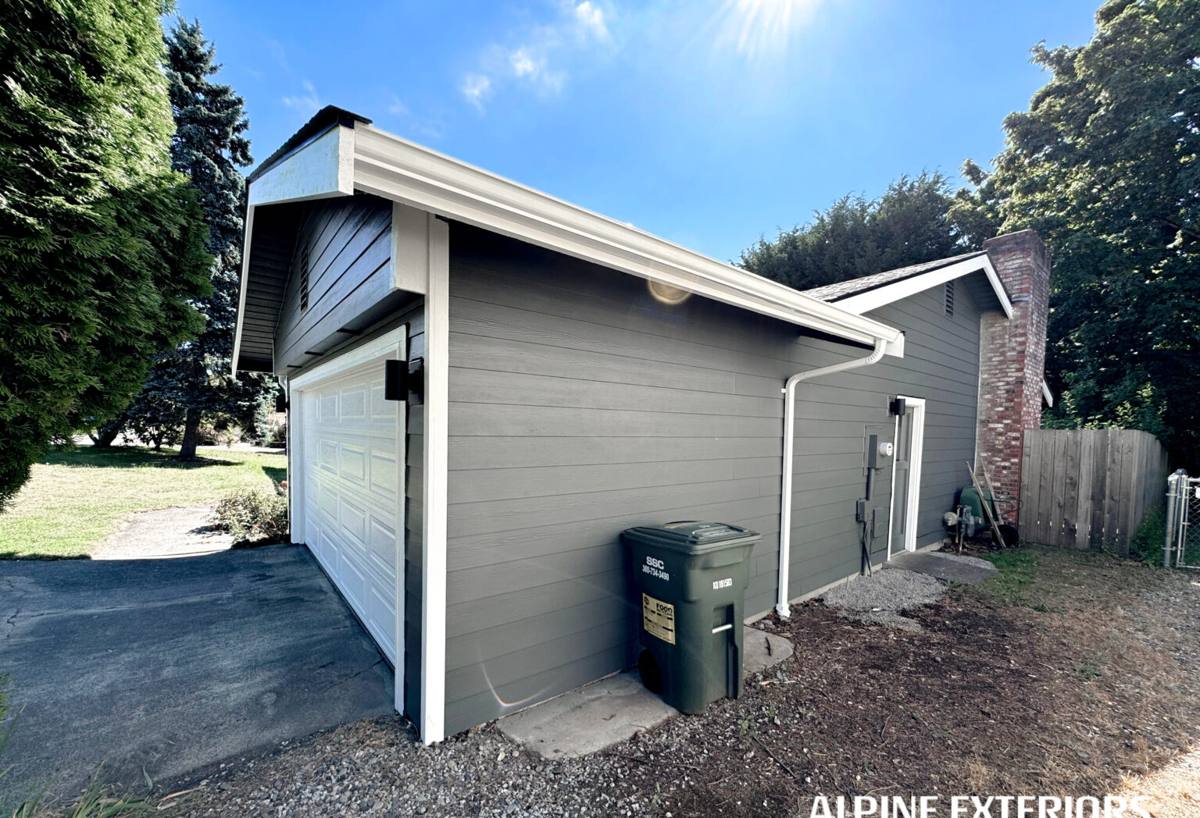
What Salt Air, Rain, and Moss Actually Do to Siding
Three separate stressors compound on Whatcom County exteriors, and Lynden homes get a dose of all three even though the coastline is a few miles away:
- Moisture cycling — siding gets wet, dries out, gets wet again, on a near-constant loop for most of the year. Materials that absorb water and don't release it efficiently stay damp longer, which accelerates rot, delamination, and paint failure.
- Moss and organic growth — shaded north and east walls, tree-lined lots, and roof overhangs that funnel runoff onto lower siding courses all create ideal conditions for moss, algae, and mildew to take hold. Left unchecked, that growth holds moisture against the siding surface and speeds up decay underneath.
- Salt-tinged air — even without direct ocean exposure, prevailing air off the Salish Sea carries fine salt content that accelerates corrosion on fasteners, flashing, and any metal trim. Over time this shows up as rust streaking and failed connections at seams.
None of this is unique to Lynden — it's a Whatcom County-wide reality. But rural and semi-rural properties, which make up a lot of Lynden's housing stock, often have more tree cover and less direct sun exposure than in-town lots, which can mean slower drying times and more moss pressure on north-facing walls specifically.
Signs a Lynden Home Actually Needs Replacement (Not Just Repair)
Not every siding problem calls for a full tear-off. Part of doing this job honestly is telling a homeowner when a repair or partial replacement is the right call versus when it isn't. Here's how we sort that out during an inspection:
| What We Find | Likely Fix |
|---|---|
| Isolated cracked or missing boards, sound wood underneath | Spot repair or partial board replacement |
| Soft, spongy siding at multiple locations | Full replacement — moisture has likely reached the sheathing |
| Persistent moss/algae staining across large wall sections | Cleaning may buy time, but recurring growth often signals a moisture or drainage issue worth addressing during replacement |
| Paint that won't hold, bubbling or peeling within a couple years of painting | Usually a sign the siding material itself is absorbing moisture — replacement recommended |
| Visible gaps, warping, or buckling panels | Full replacement — the material has failed structurally |
| Rot at butt joints, corners, or bottom courses near grade | Full replacement of affected wall sections, minimum, often full elevation |
If you're not sure which category your home falls into, that's exactly what a free inspection is for — we'll tell you straight whether you need a full job or something smaller.
Why We Install James Hardie and Nothing Else
We made a decision early on to install only James Hardie fiber cement siding, and we turn down jobs that call for vinyl, LP SmartSide, primed spruce, cedar, or other fiber cement brands like Cemplank or Allura. That's not a marketing angle — it's a standard we hold because of what we've seen happen to other materials in exactly this climate.
Vinyl siding is inexpensive and easy to install, but it expands and contracts with temperature swings, can crack in cold snaps, and traps moisture behind it if not detailed carefully — a real risk given how much moisture Whatcom County walls are exposed to. Wood-based composite products like LP SmartSide use engineered wood strand technology that performs reasonably well when kept dry, but any breach in the factory coating or field-cut edge sealing gives moisture a path into the wood fiber, and once that starts, it doesn't stop on its own. Cedar and primed spruce are beautiful but demand a maintenance schedule — regular refinishing, caulking, and inspection — that most homeowners underestimate until the siding is already compromised.
James Hardie fiber cement is cement, sand, and cellulose fiber — it doesn't rot, it's not attractive to pests, and it's non-combustible. The ColorPlus factory finish is baked on under controlled conditions, which holds color and resists fading far better than field-applied paint, and it comes with a longer, stronger finish warranty than most repaint-in-the-field jobs can match. Hardie also engineers specific product lines (HZ5, HZ10) for different climate zones, so the siding itself is matched to regional exposure rather than being a one-size-fits-all product. For a house that's going to sit through 20-plus more years of Whatcom County rain and moss season, that combination matters more than upfront cost.
What a Correct Siding Replacement Involves
The siding itself is only part of the job. Most siding failures we find in Lynden trace back to something behind the siding, not the siding material itself. A correct replacement addresses the whole wall assembly:
Tear-Off and Inspection
We remove the old siding down to the sheathing and inspect it for rot, soft spots, or hidden moisture damage. This is often the first time a homeowner sees the actual condition of their walls, and it's where we find out whether previous water intrusion has already done damage that needs to be repaired before new siding goes up.
Weather-Resistive Barrier
A properly lapped, sealed house wrap goes on before any siding. This is the layer that manages bulk water and lets incidental moisture drain and dry out rather than getting trapped against the sheathing — critical in a climate where walls rarely get a long stretch to fully dry out.
Flashing at Every Penetration
Windows, doors, vents, and any wall penetration get proper flashing integrated with the house wrap using correct shingle-lap sequencing, so water is always directed outward and down, never behind the barrier.
Installation to Manufacturer Spec
James Hardie siding has specific fastening patterns, clearances from grade and roofline, and joint treatment requirements. Installing it outside of spec — too tight to the ground, wrong fastener spacing, unsealed butt joints — voids warranty coverage and reintroduces the exact moisture problems fiber cement is supposed to solve. This is where a lot of installation crews cut corners, and it's the step that separates a siding job that lasts three decades from one that fails in five years.
Final Detailing and Cleanup
Trim, caulking at transitions, and a final walkthrough where we point out what was found, what was fixed, and what maintenance (if any) the new siding needs going forward.
Our Process, Start to Finish
- Free on-site inspection — we look at the current siding, check for moisture damage, and give you an honest read on repair versus replacement.
- Written estimate — clear scope, product selection, and pricing, no pressure to sign on the spot.
- Scheduling — we work around Whatcom County's wetter months where possible and plan tear-off in sections to limit how much of the house is exposed at once.
- Tear-off and sheathing inspection — any rot or damage found gets flagged and addressed before we move forward.
- Weather barrier and flashing installation — the part of the job that determines whether the new siding actually lasts.
- Hardie siding installation — installed to manufacturer spec, with correct fastening and joint treatment.
- Final walkthrough — we go over the finished work with you before calling the job complete.
What Drives Cost on a Lynden Siding Replacement
Every home is different, but a few factors consistently move the price on jobs like this:
| Factor | Why It Matters |
|---|---|
| Extent of existing damage | Rot found at tear-off means sheathing repair before siding can go on — this is the biggest variable |
| Home size and wall complexity | More corners, gables, and dormers mean more cutting, flashing, and labor time |
| Siding profile chosen | Lap siding, shingle-style panels, and board-and-batten each have different material and labor costs |
| Trim and accessory scope | Replacing trim boards, fascia, or soffit alongside siding adds cost but avoids mismatched materials aging differently |
| Access and site conditions | Tree cover, slope, and how close the home sits to property lines affect scaffolding and staging |
We give a specific number after we've actually seen the house — broad online estimates for siding replacement tend to be misleading because they can't account for what's happening behind the existing siding.
Questions to Ask Before Hiring Anyone for This Job
Siding replacement is a big investment, and it's worth vetting a contractor properly before signing anything. A few things worth checking:
- Are they licensed and insured to do exterior work in Washington, and will they provide proof without you having to ask twice?
- Do they explain their moisture barrier and flashing details, or do they only talk about the visible siding product?
- Will they put the product line, warranty terms, and scope of work in writing before starting?
- Do they have experience with the specific product they're proposing — installed to that manufacturer's actual spec, not a generalized approach?
- Are they willing to walk you through what they find at tear-off before covering it up with new siding?
A crew that already works regularly in Whatcom County understands the drying conditions, the moss pressure on shaded walls, and how local building departments handle inspections — that familiarity shows up in fewer surprises during the job.
Ready to Talk About Your Home
If your siding is showing moss buildup that keeps coming back, paint that won't hold, or soft spots you can press with a finger, it's worth having someone look before those problems reach the framing. We offer a free, no-pressure estimate for Lynden homeowners — we'll tell you honestly what we find and what it would take to fix it right. Fill out the form below to get started.