 Bellingham
 New-Construction Windows in Barkley: What This Service Actually Covers
"New-construction windows" is a specific term in our trade, and it matters that homeowners in the Barkley area of Bellingham understand the difference before they start a project. New-construction windows are installed into a framed, open wall during the build itself — before siding goes on — using a nail fin (sometimes called a flange) that gets fastened directly to the sheathing and integrated with the house's weather-resistive barrier (WRB). This is different from replacement or "insert" windows, which get fitted into an existing opening after the original frame is cut down or left in place, with no access to the framing or sheathing behind it.
If you're building new in Barkley, adding a bump-out, finishing a room addition, or replacing windows down to the studs, you're in new-construction territory. That distinction isn't just paperwork — it changes how the window has to be flashed, sequenced with the WRB and siding, and sealed. Get that sequence wrong on a new build and you're not fixing a leaky window later, you're fixing rot inside a wall that's supposed to last 40+ years.
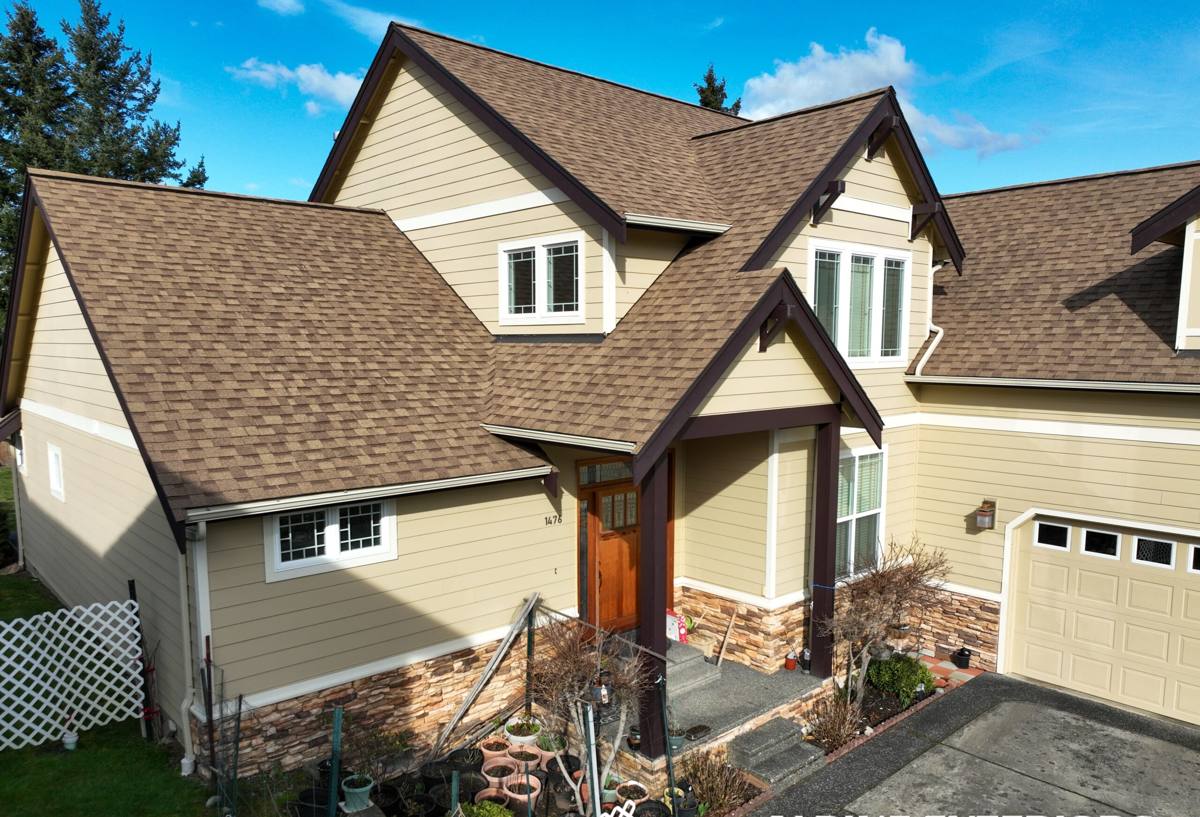
Why Barkley's Climate Changes How We Install
Barkley sits within Bellingham's marine climate zone, and that climate is not gentle on window openings. Three things drive our approach on every new-construction install in this part of Whatcom County.
Salt Air and Coastal Exposure
Proximity to Bellingham Bay means airborne salt is a real factor on fasteners, flashing metal, and exposed hardware. We select corrosion-resistant fasteners and flashing components for new builds here rather than defaulting to whatever ships with a standard window package, because salt-air corrosion on cheap fasteners shows up as staining and failure years before it should.
Driving Rain and Wind-Driven Water
Whatcom County gets a lot of rain that doesn't fall straight down — wind off the water pushes it sideways into wall assemblies. A new-construction window opening has to be built to shed that water outward at every layer: sill, jambs, and head. This is where flashing sequence — not the window itself — is what actually keeps water out.
A Long Wet Season and Moss
Bellingham's wet season runs long, and anywhere moisture sits and shade lingers, moss and algae follow — including on window sills, trim, and the tops of flashing if it's not detailed to drain. A correctly sloped sill pan and drip cap keeps water moving instead of pooling, which keeps organic growth from getting a foothold on your new trim in the first place.
What a Correct New-Construction Window Install Involves
The window unit itself is often the easy part. The water management around it is where installs succeed or fail.
Sill Pans First
Every rough opening should get a sloped, sealed sill pan before the window ever goes in. This is a small, cheap step that does most of the work of keeping bulk water out of the wall if it ever gets past the window itself — and in a climate this wet, it eventually will.
The Flashing Sequence
Flashing has to shingle correctly with the WRB — meaning each layer overlaps the one below it, so water is always directed outward and down, never trapped behind a layer above it. The order is: sill pan, window unit set in sealant, side flashing over the nail fin, then head flashing (with a drip cap where trim allows) lapped over the WRB above the window. Skipping or reversing any layer creates a point where water gets behind the cladding instead of running off it.
Sealants and Backer Rod, Used Correctly
Sealant is not a substitute for flashing — it's a secondary defense, and it has to be applied to clean, dry, compatible surfaces with the right joint depth. We don't rely on a bead of caulk to do a flashing detail's job, because that's the kind of shortcut that looks fine at final walkthrough and fails two winters later.
Choosing a Window Product for a Barkley New Build
Frame material matters more in a marine climate than in a dry one, because you're dealing with constant humidity swings, salt air, and UV exposure from long summer daylight. Here's how the common options compare for new construction in this area.
| Frame Material | Relative Cost | Marine Climate Behavior | Maintenance |
|---|---|---|---|
| Vinyl | Lower | Good moisture resistance; can expand/contract with temperature swings | Low — occasional cleaning |
| Fiberglass | Mid to Higher | Very stable dimensionally; strong resistance to moisture and salt-air corrosion | Low |
| Wood-Clad | Higher | Attractive interior finish; exterior cladding protects wood but seams need attention | Moderate — monitor cladding seams and interior wood finish |
| Aluminum | Mid | Strong but conducts heat/cold; needs a thermal break for this climate | Low, but check thermal break and fastener corrosion |
We also pay attention to glass package on new builds here — a good low-E coating and gas fill matters more for comfort and condensation control in a consistently damp, mild climate than it does somewhere hot and dry. We'll walk through what makes sense for your specific openings, orientation, and budget rather than pushing one product line for every job.
Our Process for Barkley New-Construction Window Jobs
- Plan review and rough opening check — we confirm openings are framed to spec before windows arrive, so nothing gets forced or shimmed wrong on install day.
- Sill pan and flashing prep — sloped pans and flashing tape go in before the window touches the opening.
- Window set and fastening — units are set plumb, level, and square, shimmed correctly, and fastened per manufacturer spec — over-driving or under-driving fasteners is a common cause of frame distortion and seal failure.
- Flashing integration with the WRB — side and head flashing tie into the house wrap in the correct shingled order before siding crews close the wall.
- Interior and exterior sealant — applied last, as a backup layer, not the primary defense.
- Final check — operation, seal, and squareness confirmed before we sign off, and before siding covers the evidence.
Mistakes We See on New-Construction Window Jobs — and Why They Matter
Most window problems on new builds trace back to one of a handful of installation shortcuts, not a defective product:
- Skipping the sill pan, or using an unsloped one that lets water sit against the sill
- Flashing installed in the wrong order relative to the WRB, so water gets funneled behind the barrier instead of over it
- Over-relying on caulk to seal a gap that should have been flashed properly
- Fasteners driven too tight, bowing the frame and breaking the factory seal on the glass unit
- Trim and siding installed before the flashing sequence is fully inspected and confirmed dry
None of these show up at the final walkthrough. They show up as a soft spot in the wall, a stain on interior trim, or a musty smell two or three winters later — right around the time Barkley's rainy season has had a few full cycles to find every gap.
A Checklist Before Your New-Construction Windows Go In
- Confirm your installer flashes to the WRB, not just to the window frame
- Ask whether sill pans are standard practice on every opening, not an upsell
- Check that fasteners and flashing metal are rated for coastal/marine exposure
- Get the glass package (low-E, gas fill, U-factor) in writing, matched to your home's orientation
- Ask how the crew sequences window install with siding and WRB installation — it should never be an afterthought
- Confirm the crew will inspect and document flashing before it's covered by siding
Why It Matters to Hire a Crew That Already Works Barkley
Barkley is a mix of newer construction and ongoing infill development within Bellingham, and the openings we see here share the same climate exposure — coastal air, wind-driven rain, and a long wet season that doesn't leave much room for a flashing mistake to dry out on its own. A crew that regularly works this part of Whatcom County knows what that combination does to a poorly detailed window opening, and details every layer with that in mind from the start, rather than treating this as a dry-climate install with a coat of caulk added on top.
If you're planning a new build, addition, or full window replacement down to the studs in Barkley, we're happy to walk your plans or your framed openings and give you a straightforward, no-pressure estimate — just fill out the form below.