 Bellingham
 Windows Built for Puget's Marine Climate
Homes in the Puget area of Bellingham sit close enough to the water that the weather never really lets up. Salt air off the bay works into unprotected wood and metal year-round, driving rain finds every gap in a tired seal, and the long stretch of gray, damp months every fall through spring gives moss and algae plenty of time to take hold on anything that stays wet. Windows take the brunt of all three. A window that would hold up fine in a drier inland climate can start failing here years ahead of schedule if it wasn't installed with this exposure in mind.
That's the difference between a generic window swap and a custom job done right for this specific pocket of Whatcom County. It's not just about picking a style you like — it's about flashing, sealing, and frame choices that actually account for what this climate does to a house over time.
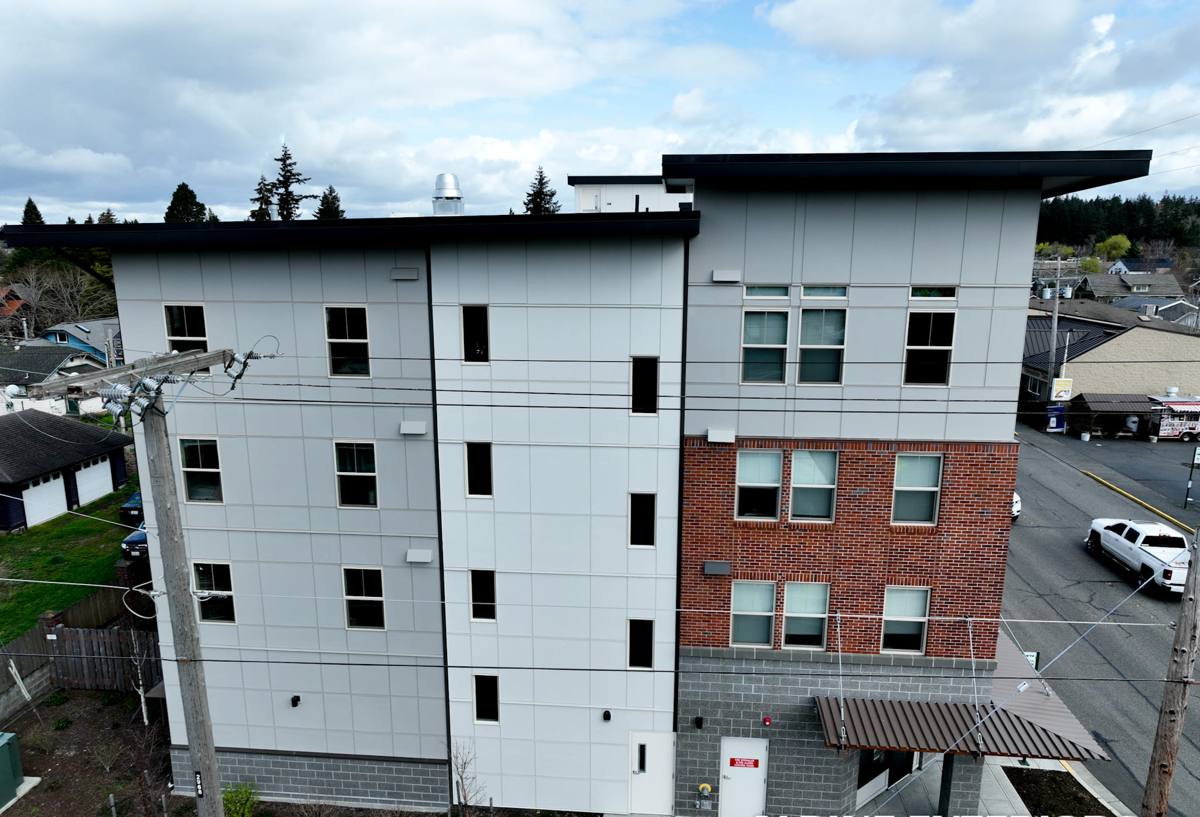
What Makes a Window Job "Custom" in Puget
"Custom" doesn't just mean a fancy shape or an odd size, although that's part of it. Puget has a real mix of housing stock — older homes with settled, slightly out-of-square openings, mid-century houses with original wood windows long past their service life, and newer construction with standard rough openings that still need site-specific detailing for this exposure. Custom work means:
- Measuring and building to the actual opening in front of us, not a catalog assumption
- Matching sightlines and grid patterns across a home so replacement windows don't look like an obvious patch job
- Adjusting flashing and sill details for openings that have already seen years of moisture, some of which may need minor repair before a new window goes in
- Choosing hardware and operation styles (casement, single-hung, awning) that make sense for how wind-driven rain hits that particular wall
On a lot of Puget homes, especially anything with some age on it, no two openings are perfectly identical. Treating every window as a standard off-the-shelf swap is how you end up with gaps that get caulked over instead of properly flashed.
Signs Your Current Windows Are Losing the Fight
Most homeowners don't think about window replacement until something is obviously wrong, but the early signs are usually visible if you know where to look. On homes in this area, watch for:
- Fogging or a hazy film between the panes of a double-pane window — a sign the seal has failed and the gas fill is gone
- Soft or spongy wood at the bottom corners of the frame or sill, often the first place moisture damage shows up
- Moss or dark green film building up on sills, tracks, or the bottom rail, especially on north- and west-facing walls
- Windows that stick, won't stay open, or are hard to latch — often swollen wood or a frame that's shifted slightly
- A noticeable draft or cold spot near the window even when it's fully closed and locked
- Peeling or bubbling paint on wood frames, which usually means moisture is already getting underneath
Any one of these on its own might just need a repair. Several at once, especially on a window over ten or fifteen years old, usually means the unit and its flashing are due for a real replacement rather than another round of caulk and paint.
What a Correct Installation Actually Involves
Flashing and Moisture Management
This is the part that matters most and shows the least once the trim is back on. Every custom window installation should include proper flashing at the sill and jambs so that any water that gets behind the siding has a clear path back out, not into the wall cavity. In a climate with as much driving rain as Bellingham sees, skipping or shortcutting this step is the single biggest reason windows fail early.
Sealing and Insulation
A window can be flashed correctly and still perform poorly if the gap between the frame and the rough opening isn't insulated and air-sealed properly. We use appropriate low-expansion foam or backer rod and sealant around the perimeter, then finish with weather-resistant caulking on the exterior — sized and rated for the material it's touching, not a one-size-fits-all tube.
Fit and Squaring
A window that isn't shimmed and squared correctly will bind, won't seal evenly, and puts stress on the frame over time. On older Puget homes where the opening itself may have shifted slightly, this step takes more care and sometimes minor carpentry before the new window ever goes in.
Choosing the Right Frame Material for Salt Air and Rain
There's no single "best" window material for every home — it depends on your budget, the style of the house, and how much maintenance you're willing to do. Here's how the common options generally compare for a coastal, wet climate like this one:
| Frame Material | Moisture & Salt Air Resistance | Maintenance | Relative Cost |
|---|---|---|---|
| Vinyl | Good — won't rot or corrode | Low — occasional cleaning | Budget-friendly |
| Fiberglass | Excellent — very stable, resists warping | Low | Mid to higher |
| Wood-clad (wood interior, clad exterior) | Good on the exterior; interior wood still needs protection from condensation | Moderate | Higher |
| Aluminum | Fair — can corrode near salt air over time without proper coatings | Low to moderate | Mid-range |
For a lot of Puget homes right on or near the water, we lean toward vinyl or fiberglass for straightforward performance and low upkeep, and reserve wood-clad options for homes where matching an existing architectural style is the priority and the owner is comfortable with the extra maintenance that comes with it.
Our Process, Start to Finish
- On-site assessment — we look at each opening individually, check for hidden moisture or wood damage, and talk through what you actually need from the replacement.
- Measurement and material selection — exact measurements are taken for each opening, and we walk through frame material, glass options, and hardware based on your home and budget.
- Ordering and scheduling — lead times vary by manufacturer and size; we give you a realistic timeline rather than a guess.
- Removal and inspection — old windows come out carefully, and we check the opening for any rot or damage that needs to be addressed before the new unit goes in.
- Installation — proper flashing, insulation, and sealing at every opening, not just the ones that are easy to reach.
- Final walkthrough and cleanup — we test operation on every window, clean up the work area, and go over care basics with you before we leave.
Why a Crew That Already Works Puget Homes Matters
A contractor who works this specific area regularly knows things a crew coming from out of town simply doesn't have a reason to know — which exposures on a house take the worst of the wind-driven rain, how quickly moss builds up on north-facing sills here, and what kind of flashing detail actually holds up through a full Whatcom County winter rather than just looking good on installation day. That local, repeated experience shows up in fewer callbacks and windows that are still performing well a decade later.
It also matters for the practical side of the job — knowing local permitting requirements, understanding typical construction in this part of Bellingham, and being available if a warranty issue or adjustment comes up after the install, rather than being a phone number that's hard to reach once the job is done.
Maintaining Custom Windows in a Marine Environment
Even a well-installed window needs some basic upkeep in this climate to reach its full lifespan. A little attention once or twice a year goes a long way:
- Rinse salt film off exterior frames and glass periodically, especially after storms
- Clear weep holes at the bottom of the frame so water can drain instead of pooling
- Clean moss and algae off sills and tracks before it holds moisture against the frame
- Check exterior caulking annually for cracking or gaps and touch up as needed
- Operate each window a few times through the seasons so hardware doesn't seize up
- Look for soft spots or paint failure on wood-clad or wood-trimmed windows early, before it spreads
None of this takes much time, but skipping it is how a good installation slowly loses ground to the climate it was built to handle.
If your windows in the Puget area are showing their age, or you're planning a replacement and want it done with this climate actually in mind, we're happy to take a look and walk you through honest options. Fill out the form below for a free, no-pressure estimate.