 Bellingham
 Sehome's Siding Has a Harder Job Than It Looks
Sehome sits on a hill close to downtown Bellingham and Western Washington University, with tree-lined streets and a housing stock that spans older single-family homes to newer infill construction. It's a walkable, established neighborhood — but that also means a lot of homes here have siding that's been through decades of Whatcom County weather without much attention. Salt-laden air off Bellingham Bay, near-constant driving rain through fall and winter, and heavy shade from mature trees all combine to put real stress on exterior materials. Siding that looks fine from the sidewalk can be hiding rot, soft trim, or failing caulk lines underneath.
This page is specifically about James Hardie fiber cement siding installed on Sehome homes — not a general overview of siding options. If you live in this neighborhood and you're thinking about a replacement, here's what actually matters.
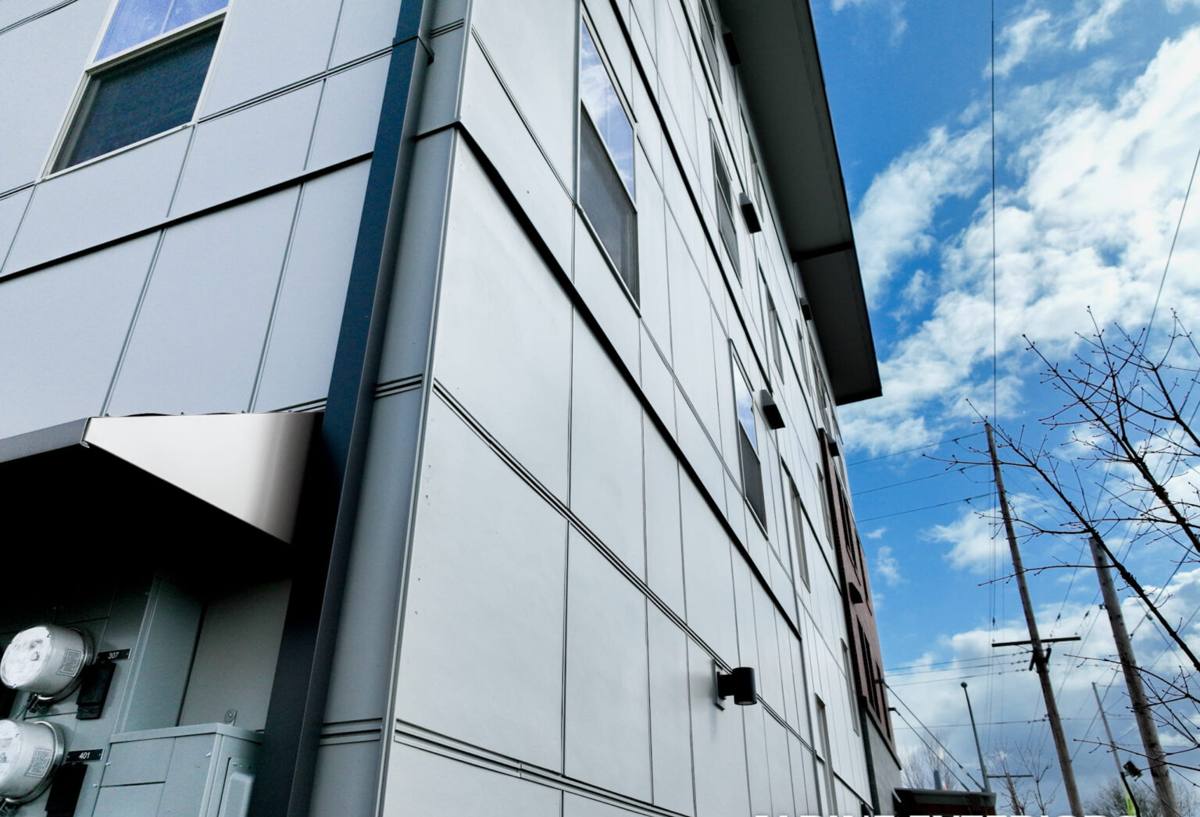
What Sehome's Climate Does to Exterior Siding
Salt Air
Sehome's elevation and proximity to the bay mean homes here get a steady dose of salt-carrying air, especially on west- and south-facing walls that catch weather coming off the water. Salt air accelerates corrosion on fasteners, trim flashing, and any exposed metal, and it degrades cheaper paint films faster than inland exposure would. Siding material that isn't dimensionally stable, or that relies on a factory finish that isn't built for coastal exposure, tends to chalk, fade, or lift at the edges years before it should.
Driving Rain
Bellingham doesn't just get rain — it gets wind-driven rain that hits siding at an angle, not straight down. That matters because it pushes water sideways and upward under laps, around window and door trim, and into any gap where flashing or caulking is even slightly off. A siding system's water-management details — how each course overlaps the one below it, how corners and penetrations are flashed — matter more here than in drier climates where a small installation shortcut might never get tested.
Moss and Shade
Many Sehome lots have mature tree cover, which is great for the neighborhood's character but keeps north- and east-facing walls damp and shaded for long stretches of the year. That's exactly the condition moss, algae, and mildew need to take hold. On absorbent or poorly sealed siding materials, moss growth isn't just cosmetic — it holds moisture against the surface and speeds up any underlying decay.
Why We Install Only James Hardie on Homes Like These
We standardized on James Hardie fiber cement siding for every job we take on, including here in Sehome, and we don't install vinyl, LP SmartSide, Cemplank, Allura, or wood siding like primed spruce or cedar. That's not a marketing position — it's a decision based on how materials actually perform against the specific stresses described above.
James Hardie's fiber cement is non-combustible and dimensionally stable, meaning it doesn't expand, contract, warp, or absorb moisture the way wood-based or wood-adjacent products can. Its ColorPlus factory finish is baked on and engineered to resist fading and hold up in coastal, wet climates — which is directly relevant to salt air exposure and prolonged shade in a neighborhood like Sehome. Hardie also makes climate-specific HZ5 product formulations engineered for wetter, more humid regions like the Pacific Northwest, which is the line we use here. The combination of the material itself and a warranty that's transferable to a future homeowner makes it the product we're willing to stand behind on every home we side.
What a Correct James Hardie Installation Actually Involves
Hardie siding is only as good as the installation. The material is engineered to perform, but water-management details — flashing, clearances, fastening, and joint treatment — are what determine whether a house stays dry for the next 30-plus years or starts showing problems in five.
| Detail | Correct Practice | Common Shortcut We Won't Take |
|---|---|---|
| Ground/hardscape clearance | Minimum clearance maintained per Hardie's installation specs to keep siding off soil, decks, and pavement | Siding installed tight to grade or a deck surface, wicking moisture from below |
| Flashing at windows/doors | Proper head flashing and weather-resistant barrier integration at every penetration | Caulk used alone as a substitute for flashing |
| Fasteners | Corrosion-resistant fasteners driven to Hardie's specified depth and placement | Standard fasteners over- or under-driven, or placed too close to panel edges |
| Panel gaps and caulking | Manufacturer-specified gaps sealed with a quality, paintable sealant rated for the exposure | Panels butted tight with no expansion gap, relying on caulk to hide the joint |
| Field-cut edges | Cut edges sealed per Hardie's guidelines before installation | Raw cut edges left exposed to weather |
None of these are exotic requirements — they're in Hardie's published installation guidelines. But skipping them is exactly how a good product ends up with a bad reputation, and it's why we treat installation discipline as non-negotiable on every Sehome job, not just the ones someone happens to be watching closely.
How We Approach a Sehome Siding Job
Because we work regularly in Bellingham neighborhoods with similar exposure, our process for a Sehome home follows a consistent sequence:
- On-site assessment — we look at wall orientation, tree cover, existing moisture damage, and how the current siding has held up, wall by wall.
- Sheathing and moisture barrier check — once old siding comes off, we inspect what's underneath. Rot or damaged sheathing gets addressed before anything new goes up.
- Weather-resistant barrier installation — a properly lapped and sealed barrier goes down before any Hardie product, sized to the wall's actual exposure.
- Flashing at every penetration — windows, doors, hose bibs, vents, and any other wall penetration get flashed correctly, not just caulked.
- Hardie installation to spec — correct clearances, fastening, and joint treatment as outlined above.
- Final detailing — trim, caulking, and touch-up paint matched to the ColorPlus finish.
Maintenance: What Owning Hardie Siding in Sehome Actually Looks Like
One reason we point homeowners toward Hardie is that ongoing maintenance is genuinely low — but "low" doesn't mean "none," especially with the moss and moisture conditions common in this neighborhood.
- Rinse siding annually, focusing on shaded, north-facing walls where moss and algae are most likely to establish
- Keep tree branches and shrubs trimmed back from siding to improve airflow and sun exposure
- Inspect caulk joints around windows, doors, and trim every couple of years and re-caulk if you see cracking or gaps
- Check that gutters and downspouts are directing water away from siding, not sheeting down the wall
- Watch for any soft spots at the base of walls or near ground contact, which can signal a clearance or flashing issue
- Repaint trim (not the ColorPlus siding itself, which doesn't need repainting on the same cycle) as needed to protect wood accents
What Affects the Cost of a Sehome Siding Project
Every home is different, but the same handful of factors drive most of the cost variation we see on jobs in this neighborhood:
| Factor | Why It Matters |
|---|---|
| Home size and wall complexity | More corners, dormers, and trim details mean more labor and material cuts |
| Condition of existing sheathing | Rot discovered after tear-off adds repair cost before new siding can go on |
| Access and site conditions | Sloped lots, mature landscaping, and narrow side yards common in Sehome can affect staging and labor time |
| Siding profile chosen | Lap siding, panel systems, and shingle-style Hardie products carry different material and install costs |
| Trim and accent work | Matching existing trim details or adding accent bands increases scope |
We give honest, project-specific numbers after seeing the house — not a blanket per-square-foot figure that ignores what's actually going on with your walls.
Why Hiring a Crew That Already Works in Sehome Matters
Siding performance in this neighborhood isn't theoretical — it's shaped by real, observable conditions: which walls get the most driving rain, which ones stay shaded and damp longest, and how older Bellingham-area homes were originally built and flashed. A crew that regularly works in Sehome and similar Bellingham neighborhoods has already seen how these houses behave over time, which means fewer surprises once your old siding comes off and fewer callbacks after the job is done. That local pattern recognition, combined with disciplined installation and a product engineered for this exact climate, is what actually protects a home here — not just picking a good material off a shelf.
If you're weighing a siding replacement on a Sehome home, we're happy to take a look and give you a straightforward, no-pressure estimate — just fill out the form below.