 Bellingham
 Why Sehome's Climate Is Hard on Siding
Sehome sits close enough to Bellingham Bay that salt-laden air reaches the neighborhood's older and newer homes alike, and that air does quiet damage over years, not days. Combine that with Whatcom County's long wet season — months of driving rain off the Sound, followed by a slow-drying, shaded moss season under tree cover common in this part of Bellingham — and you have a climate that punishes siding materials that can't handle sustained moisture exposure. It's not one storm that fails a wall. It's the fortieth wet week in a row, water finding a seam that was never quite sealed right, and staying there.
Homes on sloped or tree-shaded lots near Sehome Hill see less direct sun on at least one elevation, which means that side of the house dries slower after every rain event. Less drying time means more time for moisture to work into seams, fastener holes, and butt joints — which is exactly where cheaper or improperly installed siding starts to fail first.
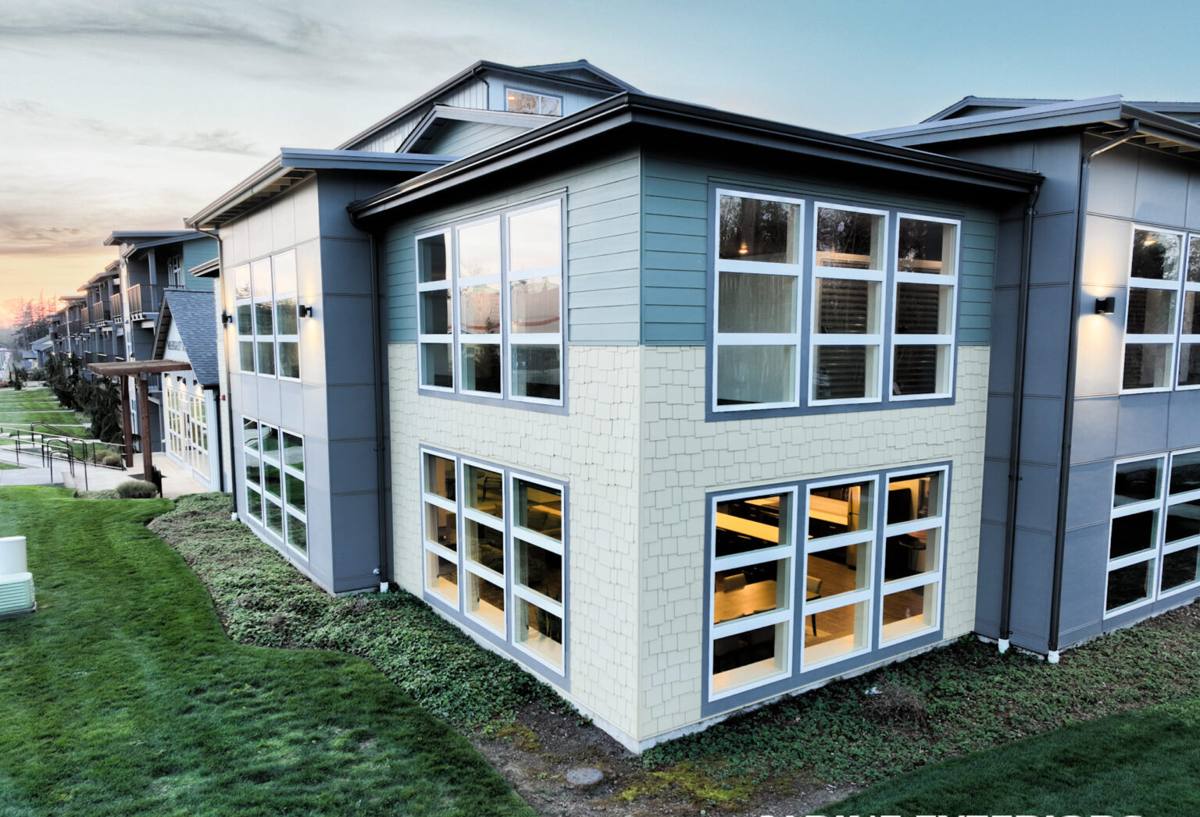
What Siding Failure Looks Like Here
Most Sehome homeowners don't call us because siding suddenly looks bad. They call because something changed slowly enough that it took a while to notice.
- Soft or spongy spots when you press on the siding, especially near the bottom courses and around window trim
- Persistent green-black staining or moss growth that comes back within weeks of cleaning
- Visible cupping, warping, or delamination of panels, most common on north- and west-facing walls
- Paint that won't hold — bubbling, peeling, or needing repainting far more often than it should
- Gaps opening up at seams, corners, or trim where caulk has failed and not been replaced
- A musty smell in an interior room that shares a wall with a suspect section of siding
Any one of these can be a minor fix. Several together, especially on an older home, usually means the siding and the moisture barrier behind it have been compromised for a while and repair is just delaying a full replacement.
Repair vs. Replacement: How We Make the Call
We don't default to "replace everything" — that's not an honest way to run a siding business, and it's not what most homes need. On a Sehome inspection, we're looking at how much of the wall is affected, whether the damage is cosmetic or structural, and what's happening behind the siding itself.
Repair usually makes sense when:
Damage is isolated to one or two panels or a single elevation, the sheathing underneath is dry and sound, and the rest of the siding is performing well. Localized impact damage, a failed section of trim, or a small area of moisture intrusion caught early often falls into this category.
Replacement usually makes sense when:
Moisture has reached the sheathing in multiple areas, the siding material itself is at the end of its service life, or repairs would cost a meaningful fraction of full replacement without solving the underlying moisture path. On older Sehome homes with original siding, we frequently find that what looks like a paint problem is actually a substrate problem — and painting over it just hides the clock still running underneath.
What a Correct Siding Replacement Actually Involves
Siding replacement done right is not just removing old panels and nailing up new ones. The siding is the last layer of a system, and every layer underneath it matters as much as the finish.
Tear-off and inspection
We remove the existing siding and inspect the sheathing underneath for rot, soft spots, or prior water damage before anything new goes up. This is the step that gets skipped by crews trying to move fast, and it's the step that determines whether your new siding lasts 30 years or fails again in five.
Water-resistive barrier
A properly lapped, correctly installed weather-resistive barrier is what actually keeps bulk water out of your wall assembly — the siding sheds most of it, but the barrier behind it is the real backstop. In a climate like ours, this layer is not optional and it is not interchangeable with "whatever's cheapest."
Flashing at every penetration
Windows, doors, vents, hose bibs, and any other wall penetration need proper flashing integrated with the water-resistive barrier — not just caulk. Caulk fails; correctly lapped flashing directs water down and out by gravity, which is the only method that reliably works over decades.
Correct fastening and clearances
James Hardie fiber cement has specific fastening patterns, nail penetration depths, and minimum clearances from grade, roof lines, and decks. These aren't suggestions — they're what the product warranty is actually built on, and getting them wrong is the single most common cause of premature siding failure we see on homes that were "recently redone."
Finish and trim details
Proper caulking at trim joints, factory-finished ColorPlus panels installed to avoid unnecessary field-cutting through the finish, and clean, consistent reveals — the details that separate a siding job that looks good for one photo from one that still looks good in year fifteen.
Why We Install Only James Hardie Fiber Cement
We don't carry vinyl, LP SmartSide, or other fiber-cement alternatives, and that's a deliberate standard, not a limitation of what we know how to install. In a marine climate with heavy rain and long wet stretches, the material has to hold up to sustained moisture exposure without warping, delaminating, or feeding moss and mildew — and it has to do it for decades, not just through the warranty period on paper.
James Hardie fiber cement is non-combustible, engineered specifically for climate zones like the Pacific Northwest through its HZ5 product line, and finished with the ColorPlus factory finish system, which holds color far longer than field-applied paint and resists the fading and chalking that Bellingham's rain and UV cycle causes over time. It's also backed by a strong, transferable limited warranty — meaningful for Sehome homeowners who may sell in the years after installation.
We're not going to tell you every other product on the market is worthless — that's not honest, and it's not how we talk to homeowners. What we will say is that after years of working on homes in this exact climate, we standardized on one product system because it's the one we're willing to put our name behind for the long haul, and we'd rather install one thing correctly than several things adequately.
Cost Factors for a Sehome Siding Replacement
Every home is different, and we won't quote a number without seeing your walls, but these are the factors that actually move the price on a replacement in this area.
| Factor | Why It Matters |
|---|---|
| Extent of sheathing damage found at tear-off | Rotted sheathing must be replaced before new siding goes on — this is the most common source of a revised estimate |
| Home size and wall complexity | More corners, gables, and trim details mean more labor and material cutting |
| Siding profile chosen | Lap, shingle-style, and panel Hardie products differ in material and labor cost |
| Number of window and door penetrations | Each one needs individual flashing and trim work |
| Access and site conditions | Sloped lots, tight setbacks, and mature landscaping near the house can affect staging and labor time |
| Existing paint or lead concerns on older homes | Homes built before 1978 may require lead-safe work practices during tear-off |
Our Process, Start to Finish
An initial walk-around inspection where we look at every elevation, not just the obvious problem area, followed by a written scope that tells you plainly whether you need repair or full replacement and why. If it's a replacement, we schedule tear-off, sheathing inspection and any necessary repair, water-resistive barrier and flashing installation, then Hardie panel or lap installation to manufacturer specification, and a final walk-through with you before we call the job done. We keep the site reasonably clean and staged throughout — this is still your home and yard while the work is happening.
Why a Crew That Already Works Sehome Matters
A contractor who's done siding work across Bellingham and Whatcom County has already seen how this specific climate treats different wall orientations, how moss establishes on shaded siding, and where flashing tends to fail first on homes of a given age. That's not marketing — it's the practical difference between a crew guessing at best practices from a manual and a crew that's opened up enough walls in this exact weather to know where the water actually goes.
Local crews are also easier to hold accountable. If an issue shows up two years after installation, you want a contractor who's still working in your neighborhood, not one that did a handful of Bellingham jobs and moved on.
Questions worth asking any siding contractor before you hire
- Will you inspect and repair damaged sheathing before installing new siding, and is that itemized in the quote?
- What water-resistive barrier and flashing details will you use, specifically?
- Are your installers factory-trained on the siding product you're proposing?
- What does the manufacturer's warranty actually cover, and is it transferable if you sell the home?
- Can you walk me through why you recommend this product over the alternatives for a home in this climate?
If your Sehome home's siding is showing any of the signs above, or you just want an honest read on whether you're looking at repair or replacement, we're happy to come take a look. The estimate is free, there's no pressure, and you'll get a straight answer about what your home actually needs.