 Bellingham
 Windows Built for South Hill's Hillside Climate
South Hill sits up in elevation compared to much of Bellingham, and that elevation changes what your windows deal with every year. Homes up here catch more open wind off Bellingham Bay, more driving rain that hits window faces at an angle instead of falling straight down, and longer stretches of damp shade where moss and algae get a foothold on siding, trim, and window sills alike. Add in Whatcom County's salt-tinged marine air, and you have a combination that is hard on window frames, glazing seals, and the caulk lines that are supposed to keep water out.
None of this means South Hill homes need anything exotic. It means the windows and the installation details need to match the exposure the house actually gets. A window that would be fine on a sheltered, low-elevation lot in town can fail years early on a hillside lot that takes wind-driven rain straight on. We treat that difference as the starting point for every custom window job we quote in this neighborhood.
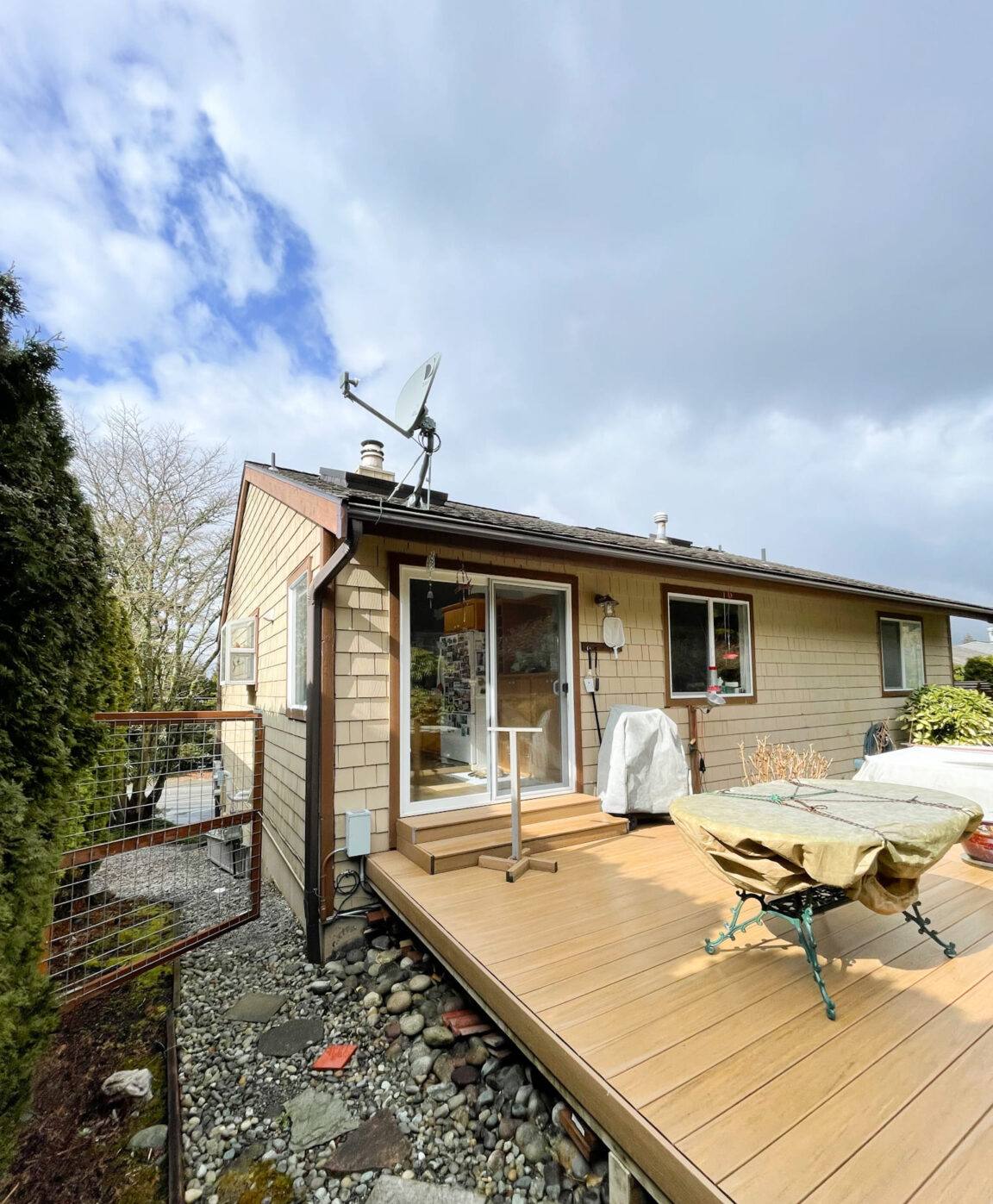
How This Climate Shows Up in Older and Newer Windows Alike
South Hill has a mix of older homes with original wood-frame windows and newer homes with vinyl units installed sometime in the last few decades. Both types show wear from the same causes, just differently.
Older wood-frame windows
Original wood sashes and frames were often built well, but decades of driving rain and shaded, slow-drying moss growth around the sill and lower rails will eventually get past even good paint and glazing putty. Once water gets into end grain at the corners, rot follows, and by the time it's visible from inside, the frame has usually been wet for a while.
Newer vinyl replacements
Vinyl windows installed without proper flashing or with gaps left in the sealant line can let wind-driven rain track behind the frame and into the wall cavity, where it's invisible until it shows up as staining, soft drywall, or a musty smell. Vinyl itself holds up fine to weather; the failures we see almost always trace back to installation details, not the material.
Signs Your Windows Need Attention
Most window problems give warning signs well before a full failure. On South Hill homes, watch for:
- Sashes that stick, won't stay open, or feel loose in the frame
- Visible gaps, cracked caulk, or gaps in the sealant where the frame meets siding or trim
- Fogging or condensation between double-pane glass (a sign the seal has failed)
- Soft or discolored wood trim or sill, especially on the side of the house facing prevailing wind and rain
- Moss or dark staining building up on the sill or lower trim, holding moisture against the frame
- Drafts or a noticeable temperature difference near the window in winter
- Difficulty opening windows meant for emergency egress, especially in bedrooms
Any one of these on its own might just need a repair. Several together, especially on an older window, usually means it's more cost-effective to replace than to keep patching.
What "Custom" Actually Means for a Window Job
We use the word custom deliberately rather than as a sales term. On South Hill, very few window openings are a standard modern size, and very few homes are all one style throughout. Custom window work generally covers:
Non-standard openings
Older homes on the hill often have openings built to older lumber dimensions or historic proportions that don't match today's stock window sizes. Rather than reframing the whole opening (which adds cost and disturbs more of the wall and siding than necessary), we typically order windows built to the exact opening dimensions.
Matching sightlines across a home
If you're replacing some windows now and the rest later, we account for sash proportions, grille patterns, and trim depth so the finished look is consistent instead of a patchwork of mismatched styles as work gets done in phases.
Shapes and specialty units
Arched tops, picture windows paired with operable units, and other non-rectangular shapes fall under custom work too, and each needs its own flashing plan since stock trim details don't always apply.
Code-driven requirements
Bedroom egress sizing, tempered glass near doors and low sills, and energy code glazing requirements all apply in Whatcom County, and a custom order is often the only way to meet code in an opening that predates current requirements.
Framing Material Comparison
Material choice matters more on a wind- and rain-exposed hillside lot than it does in a sheltered spot. Here's how the common options hold up under South Hill conditions specifically:
| Material | Moisture Behavior | Maintenance | Best Fit |
|---|---|---|---|
| Vinyl | Won't rot; performance depends entirely on installation quality | Low — occasional cleaning | Most homes, budget-conscious replacements |
| Fiberglass | Very stable in wet/dry cycling, minimal expansion movement | Low | Exposed elevations, larger units, long-term durability |
| Wood-clad | Exterior clad protects wood, but any cladding breach lets moisture reach wood core | Moderate — interior wood finish upkeep | Historic-style homes wanting a wood interior look |
| Aluminum | Prone to condensation and thermal transfer in our damp climate | Low, but poor insulating value | Rarely our first recommendation for this area |
We don't push one material on every job. A shaded, wind-exposed north or west wall on a South Hill lot might call for fiberglass even if vinyl is used elsewhere on the same house, simply because that elevation takes more abuse.
The Installation Details That Actually Keep Water Out
A window is only as good as the flashing and sealing around it. This is where most of our attention goes, because it's where most failures start.
Flashing sequence
Water-resistive barrier and flashing tape need to be layered correctly — sill pan first, then jamb flashing, then head flashing, each one overlapping the layer below it, so water is always directed outward and down, never trapped behind the window.
Sill pans
A sloped sill pan under the window gives any water that does get past the exterior seal a way out instead of pooling at the bottom of the frame — this one detail is responsible for a large share of long-term window durability.
Integration with existing siding
Window replacement almost always means removing and reinstalling a section of siding and trim. We tie the new flashing into the existing wall's drainage plane so the window isn't just watertight on its own but consistent with how the rest of the wall sheds water.
Sealant, not just caulk
Exterior sealant around a window frame needs to be a proper backer-rod-and-sealant joint in the right locations, with the frame itself left to breathe where it should — a bead of caulk smeared over gaps is not the same thing and tends to fail within a couple of seasons in this climate.
Our Process for a South Hill Window Job
- On-site inspection of each window opening, checking framing condition, existing flashing, and any moisture or rot already present
- Measurement and material recommendation based on the home's exposure, style, and any code requirements for that room
- Written estimate covering materials, labor, and any trim or siding repair the opening needs before the new window goes in
- Removal of the old window and inspection of the framing underneath — this is often the first time hidden rot or past water intrusion becomes visible
- Repair of any damaged framing or sheathing before the new window is set — installing over a compromised opening just hides the problem
- Installation with full flashing integration, sill pan, and correct sealant detailing
- Exterior trim and siding tie-in so the finished look matches the surrounding wall
- Final walkthrough covering operation, care, and what to watch for going forward
What Affects Cost
| Factor | Why It Matters |
|---|---|
| Opening size and shape | Standard sizes cost less than custom or arched units |
| Framing repair needed | Rot found during removal adds labor and material before the new window can go in |
| Material choice | Vinyl, fiberglass, and wood-clad carry different unit costs |
| Glazing package | Double vs. triple pane, and coatings for energy performance, change the price per window |
| Access and elevation | Upper-story or steep-lot access on hillside homes can add setup time |
| Trim and siding tie-in | Matching existing trim profiles or siding material adds finish work |
We give a written, itemized estimate before any work starts so you know exactly what's driving the number rather than a single lump sum.
Why Local Experience on South Hill Matters
A crew that already works this neighborhood knows a few things going in that save time and prevent surprises: which elevations on a hillside lot tend to take the worst wind-driven rain, how older South Hill homes were typically framed and what that means for custom sizing, and how the region's long damp season affects material choices and cure times for sealants and finishes. That familiarity means fewer change orders mid-job and a better first-time fit between the window ordered and the opening it's going into.
It also matters for something less visible: knowing which failure patterns to check for before they become a bigger repair. On a hillside lot in Whatcom County, that's often moss-driven moisture at the sill and wind-driven rain intrusion at the head flashing — the two spots we inspect most closely on every South Hill job.
Caring for New Windows Through the Wet Season
- Keep sills and tracks clear of moss, leaves, and debris that hold moisture against the frame
- Check exterior sealant lines once a year for cracking or separation, especially after a hard winter
- Operate windows periodically even in winter to keep weatherstripping seated and moving parts free
- Address any new staining or softness in surrounding trim right away rather than waiting for it to spread
- Keep gutters and downspouts clear so roof runoff isn't sheeting down over upper windows
New windows installed correctly shouldn't need much beyond this, but a quick seasonal check catches small issues before they turn into water damage behind the wall.
If you're dealing with drafty, foggy, or aging windows on your South Hill home, we're happy to take a look and give you a straightforward, no-pressure estimate — just fill out the form below to get started.