 Bellingham
 South Hill Decks Face a Different Kind of Wear
South Hill sits up above downtown Bellingham with some of the best views in Whatcom County, but that elevation and exposure come with a trade-off: decks up here take on driving rain, wind off Bellingham Bay, and a moss season that can run from October well into May. A deck that looks fine from a distance can be hiding soft framing, rusted fasteners, or a ledger connection that's been slowly failing for years. We repair decks all over South Hill, and the damage we find almost always traces back to the same source — trapped moisture that had nowhere to go.
This page is specifically about deck repair, not full replacement or new builds. Most decks we look at in this neighborhood don't need to be torn out — they need the right sections opened up, the rot cut back to solid wood, and the moisture path fixed so the problem doesn't come right back.
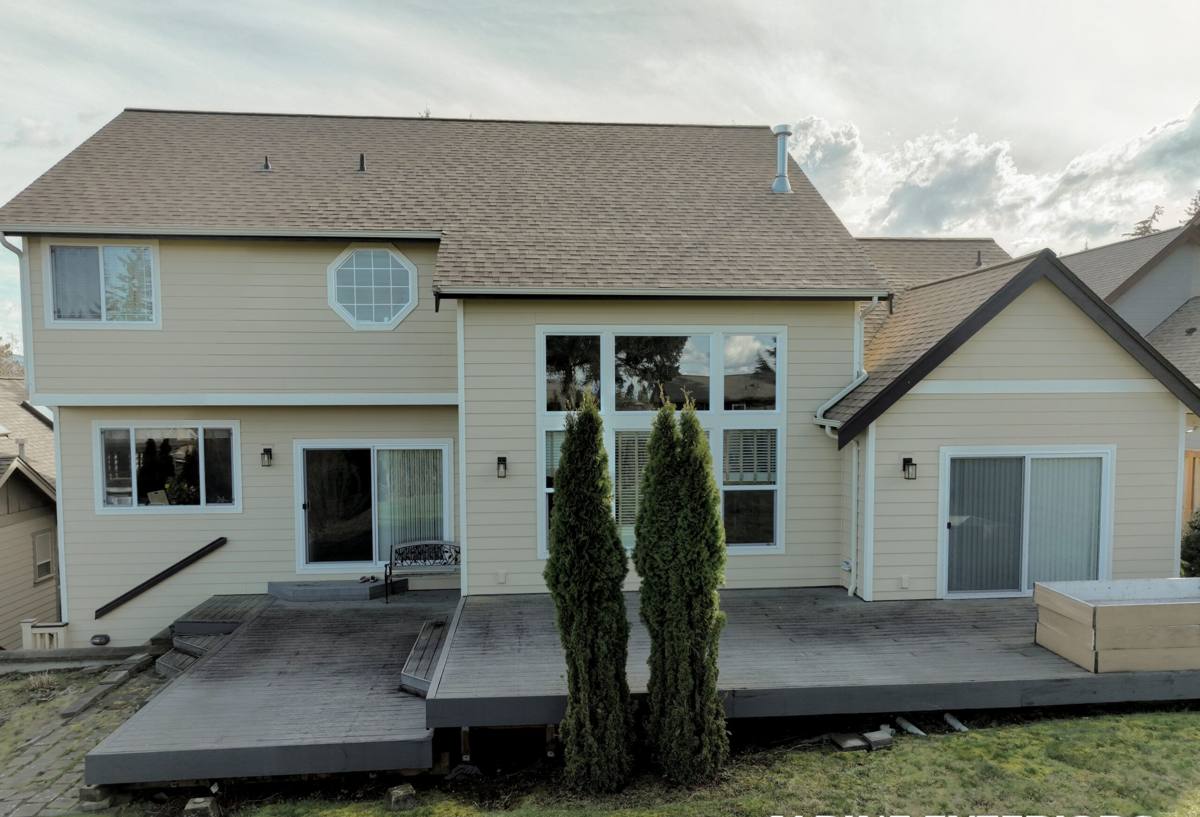
How Bellingham's Climate Breaks Decks Down
A few things about our local weather matter a lot when it comes to deck longevity:
- Long wet season: Whatcom County gets extended stretches of steady, low-intensity rain rather than short heavy downpours. That means wood surfaces and joints stay damp for days at a time instead of drying out between storms.
- Salt-tinged air near the bay: Decks closer to the water side of South Hill see faster corrosion on nails, screws, and metal connectors than decks further inland.
- Shade and moss: Mature trees and hillside lots mean a lot of shaded decking that never fully dries, which is exactly what moss and algae need to take hold.
- Freeze-thaw cycling: Whatcom County doesn't get brutal winters, but we do get repeated freeze-thaw swings, and water that's already worked into a crack or joint expands and pushes the damage further each time it happens.
None of this means decks here can't last — it means they need to be built and repaired with drainage and drying in mind, not just fastened together and left alone.
Signs a South Hill Deck Needs Repair
What homeowners usually notice first
Most people call us after noticing one of these:
- Boards that feel spongy, bouncy, or soft underfoot, especially near the house or along the edges
- Visible gaps opening up where the deck meets the house siding
- Railings that wiggle or have more play than they used to
- Dark staining, green-black streaking, or moss buildup that keeps returning after cleaning
- Stairs that feel less solid than the rest of the deck
- Rust bleeding out around screw heads or metal hardware
What we look for that owners often can't see
A deck can look presentable on top while the framing underneath is failing. We check the ledger board connection to the house, the condition of joist hangers and fasteners, post bases where they meet concrete footings, and any spot where two pieces of wood meet and water can sit. These hidden connections are where the vast majority of serious deck problems start.
What a Correct Deck Repair Actually Involves
A repair that just replaces the boards you can see and leaves the framing alone is a temporary fix, not a real one. A proper repair follows the damage back to its source:
- Identify the moisture path. Rot doesn't happen randomly — it follows water. We trace where it's getting in before we decide what to cut out.
- Open up the affected area. Decking, and sometimes railing or skirting, comes off wherever needed to expose the framing underneath.
- Test the framing. Joists, beams, posts, and the ledger get checked for soft spots, not just visual inspection — a screwdriver or probe tells the real story.
- Cut back to solid wood. Any compromised material gets removed, not patched over. Sistering a joist or replacing a section only works if it ties into wood that's actually sound.
- Fix the water source. This is the step that gets skipped too often. Flashing, drainage gaps, or grading around a post base has to be corrected, or the same repair fails again in a few years.
- Rebuild and refasten. New lumber, hardware rated for exterior use, and fasteners sized correctly for what they're holding.
- Reassemble and finish. Decking goes back down with proper spacing for drainage and airflow underneath.
Where Deck Repairs Most Often Go Wrong
The ledger board
The ledger is the board that attaches the deck directly to the house, and in this climate it's the single most common failure point we see. If it was installed without proper flashing — or if the flashing has failed over time — water runs behind the ledger and straight into the rim joist and wall framing, often for years before anyone notices from the outside. Any deck repair on a ledger-attached deck should include a real inspection of the flashing, not just a visual check of the board's face.
Post bases and footings
Posts that sit directly on or too close to concrete, or that were never lifted off grade with a proper base, wick moisture up from below. This shows up as rot starting at the bottom of the post, sometimes hidden by skirting or landscaping right up against it.
Fastener corrosion
Older decks around South Hill were sometimes built with fasteners that aren't rated for treated lumber or coastal exposure. Mismatched metals corrode faster and weaken connections well before the wood itself would otherwise need attention.
Repair Approach by Material
The right repair method depends heavily on what the deck is built from. Here's how we typically approach the materials we see most often in this area:
| Material | Common Local Issue | Typical Repair Approach |
|---|---|---|
| Pressure-treated lumber | Surface checking, softening at joints and ledger, moss on shaded boards | Replace damaged boards and framing sections; re-treat cut ends; correct drainage and flashing |
| Cedar decking | Graying, splintering, rot at fastener points where finish has worn through | Sand or replace affected boards; address the moisture source before refinishing |
| Composite decking | Fading, surface flaking on older first-generation products, framing beneath still wood-based | Repair or replace underlying wood framing as needed; swap composite boards individually where the board itself, not the frame, has failed |
| Older or mixed hardware | Rust staining, loosened connections, galvanic corrosion between dissimilar metals | Replace with corrosion-resistant, code-rated fasteners and connectors matched to the lumber type |
Railings, Stairs, and Code
Railings and stairs get more direct stress than deck surfaces — they're grabbed, leaned on, and take the brunt of foot traffic on uneven steps. A loose railing or a stair stringer that's lost integrity is a safety issue, not just a cosmetic one. When we repair a deck, we check railing post connections and stair stringers as part of the job, and if anything doesn't meet current safety expectations for height, spacing, or attachment, we'll flag it and explain the options rather than just patching around it.
Our Process for South Hill Deck Repairs
We keep this straightforward because most homeowners just want an honest read on what's actually wrong:
- On-site assessment. We walk the deck, check the framing where accessible, and test suspect areas rather than guessing from the surface.
- Clear scope and estimate. You get a plain explanation of what's damaged, what's causing it, and what it will take to fix — no pressure toward a full replacement if a targeted repair will genuinely hold up.
- Scheduled repair work. We work around Bellingham's weather patterns to avoid opening up framing during extended wet stretches whenever possible.
- Moisture-source correction. Flashing, drainage, and grading get addressed as part of the repair, not treated as optional extras.
- Final check. Before we consider the job done, we confirm the repaired sections are solid and the surrounding structure wasn't compromised by the original damage.
Keeping a Repaired Deck in Good Shape
Once we've fixed the underlying problem, a little seasonal attention goes a long way in this climate:
- Clear leaves and debris from between boards before fall rains set in — trapped debris holds moisture against the wood
- Treat moss and algae buildup early rather than letting it establish, especially on shaded sections
- Check that gutters and downspouts near the deck are directing water away, not onto it
- Look at the ledger-to-house connection once a year for any new gaps, staining, or caulking failure
- Reseal or refinish wood decking on the manufacturer's recommended schedule rather than waiting until it visibly needs it
- Keep plantings and mulch pulled back a few inches from posts and skirting
Why a Crew That Works South Hill Regularly Matters
Deck repair isn't just carpentry — it's understanding how water moves through a structure over a Whatcom County winter and where it tends to collect on the specific lot orientations common in this neighborhood. A crew that repairs decks across South Hill on a regular basis has already seen how shaded, hillside, and bay-exposed lots behave differently, and that shows up in where we look first and how we prioritize the fix. We're not guessing at what "usually" causes rot in this climate — we're working from what we consistently find on decks like yours, in this exact area.
If you've got a soft spot, a wobbly railing, or a deck that just doesn't feel as solid as it used to, we're happy to take a look and give you a straightforward assessment. Reach out for a free, no-pressure estimate using the form below.