 Bellingham
 Storm Damage in Happy Valley: A Different Kind of Wear
Happy Valley sits close enough to Bellingham Bay and the surrounding lowlands that its roofs deal with a combination most inland neighborhoods don't: salt-tinged air off the water, wind-driven rain that comes in sideways during winter storms, and a moss season that runs longer here than in drier parts of Whatcom County. None of these three things is dramatic on its own. Together, over years, they wear a roof down faster than the calendar would suggest.
Storm damage repair in this neighborhood isn't just about patching what an obvious windstorm tore loose. It's about catching the slower damage that storms accelerate — lifted shingle tabs that let wind-driven rain work its way underneath, flashing that's been rocked loose by gusts, and moss mats that hold moisture against the roof deck long after a storm has passed. We treat all of it as one job, because on a Happy Valley roof, it usually is.
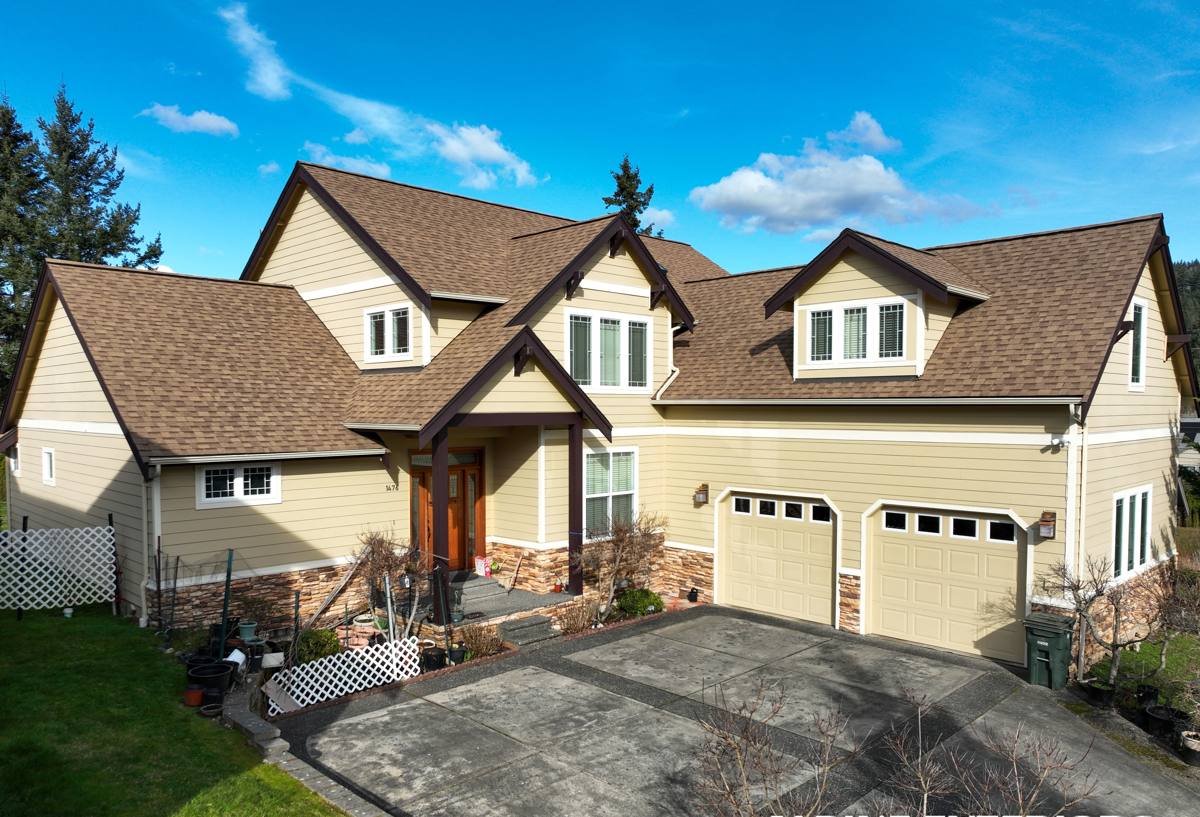
What Storm Damage Actually Looks Like Here
Wind and Driving Rain
Pacific storms that roll through Whatcom County rarely bring the straight-line gusts you'd see in the Midwest. Instead, we get sustained wind paired with heavy rain, often from a shifting direction. That combination is harder on a roof than a single strong gust, because it works rain into any gap the wind creates — lifted shingle edges, loosened ridge caps, nail heads that have backed out over time. A roof can look intact from the ground after a storm like this and still be taking on water.
Salt Air and Metal Fatigue
Homes closer to the bay see faster corrosion on exposed metal — flashing, drip edge, gutter fasteners, and any exposed nail heads. Salt-laden air accelerates rust in ways that inland Whatcom County roofs don't experience to the same degree. A flashing seam that would hold up for a decade elsewhere can start failing sooner here, and a storm is often what finally pushes a weakened seam past its limit.
Moss and Trapped Moisture
Bellingham's moss season is long, and Happy Valley's tree cover and shade patterns give moss plenty of opportunity to establish itself on north-facing slopes and shaded valleys of the roof. Moss holds moisture against shingles and roof decking well after rain has stopped elsewhere. When a storm adds a heavy, sudden load of rain on top of an already moss-saturated roof, that's often when a slow leak becomes an active one.
How We Assess Storm Damage
A proper storm damage assessment isn't a walk around the yard looking up. We get on the roof (weather permitting) and check the things that actually determine whether you have a repair, a bigger repair, or something more.
- Shingle condition: lifted tabs, cracked or missing shingles, granule loss in the gutters or at downspout outlets
- Flashing integrity at chimneys, vents, skylights, and roof-to-wall transitions
- Fastener condition: backed-out or corroded nails, especially on older roofs
- Moss and organic buildup, particularly on shaded and north-facing slopes
- Roof deck condition where any staining or soft spots are visible from the attic
- Gutter and downspout function, since blocked drainage turns manageable rain into standing water
We document what we find with photos and a plain-English explanation, not a sales pitch. If the damage is minor and isolated, we say so. If it points to a bigger underlying issue, we explain why, and what happens if it's left alone through another wet season.
Repair or Replace: The Honest Factors
Most storm damage on a Happy Valley roof is repairable, especially when it's caught within a season or two of occurring. The table below covers the factors that actually decide which direction makes sense — not a guess, but the practical trade-offs we walk through with homeowners.
| Factor | Favors Repair | Favors Replacement |
|---|---|---|
| Roof age | Under 12-15 years, materials still in good general condition | Nearing or past expected service life |
| Extent of damage | Isolated to one slope or a specific detail (flashing, a section of shingles) | Widespread across multiple slopes |
| Moss/moisture history | Recent buildup, deck still sound underneath | Long-term moss coverage with visible deck staining or soft spots |
| Underlying material | Original materials still available or close-matchable | Discontinued or badly mismatched shingle style/color |
| Storm frequency | First significant damage event | Recurring damage each storm season, same weak points |
We'd rather do an honest, well-executed repair on a roof with useful life left than push a replacement it doesn't need yet. We'd also rather tell you plainly when a repair is just delaying an inevitable, more expensive fix.
What a Correct Storm Damage Repair Involves
Matching, Not Just Patching
A repair that doesn't match the surrounding shingle color, profile, and exposure creates a visible patch and, more importantly, can create a seam that doesn't shed water the way the rest of the roof does. We source materials that match as closely as possible, and we're upfront if an exact match isn't available due to product age.
Flashing Done Right
A large share of storm-related leaks trace back to flashing, not shingles. Flashing that's been re-bent by wind or corroded by salt air needs to be replaced and properly integrated with the roofing material above and below it, not caulked over as a shortcut. Caulk is a short-term patch at best; it's not a flashing repair.
Underlayment and Deck Checks
Where a leak has been active for any length of time, we check the underlayment and roof deck in that area before closing anything back up. Covering damaged decking with new shingles just hides a problem that will resurface, usually at a worse point in the season.
Moss Treatment as Part of the Repair
If moss contributed to the damage, we address it as part of the job — clearing buildup and discussing longer-term moss management — rather than repairing the leak and leaving the cause in place to cause the same problem again next season.
Our Process for Happy Valley Storm Calls
- Initial contact and triage. We ask what you're seeing (active leak, missing shingles, storm event you're concerned about) so we can prioritize accordingly.
- On-site inspection. We assess the full roof, not just the reported problem area, since storm damage often shows up in more than one spot.
- Clear written findings. You get a straightforward explanation of what we found, what needs attention now, and what can reasonably wait.
- Repair plan and estimate. A scoped plan with a real cost range, not a vague placeholder number.
- The work itself. Done to match your existing roofing system and built to hold up through the next storm, not just look fixed.
- Follow-up. We stand behind the repair and are reachable if anything about it doesn't sit right after the next round of weather.
Insurance Claims and Documentation
Many storm damage repairs are at least partially covered by homeowners insurance, depending on your policy and the cause of damage. We're not your insurance adjuster and won't promise coverage that isn't ours to promise, but we can provide clear photo documentation and a written scope of damage that you can submit as part of a claim. Getting an inspection soon after a storm — rather than waiting until a small leak becomes a bigger one — also tends to make claims more straightforward, since the damage is easier to tie directly to a specific weather event.
Why a Crew That Works Happy Valley Regularly Matters
A roofer who mainly works drier, inland areas of Whatcom County can still do competent work, but they may not have the day-to-day feel for how salt air ages flashing, how long moss actually persists on shaded Happy Valley slopes, or which storm patterns tend to hit this part of Bellingham hardest. That local pattern recognition shapes real decisions — where we look first during an inspection, which details we treat as higher-risk, and how we sequence a repair so it holds up through the specific weather this neighborhood sees year after year.
Signs You Should Have Your Roof Checked After a Storm
- Granules collecting in gutters, downspouts, or on the ground below roof edges
- Shingles that look lifted, curled, or out of alignment from the ground
- Any new staining on interior ceilings or in the attic after a storm
- Visible moss patches that seem to have grown or spread quickly
- Debris strikes from falling branches, even if no leak is apparent yet
- Gutters overflowing or draining unevenly during heavy rain
If you're noticing any of these after a recent storm, it's worth having a look before the next system rolls through. Small issues caught early are almost always cheaper and simpler to fix than the same issue after another few weeks of Bellingham rain.
If a recent storm has you wondering about the condition of your roof, we're happy to take a look and give you a straight answer — no pressure, no upsell. Request a free estimate using the form below and we'll get back to you with next steps.